



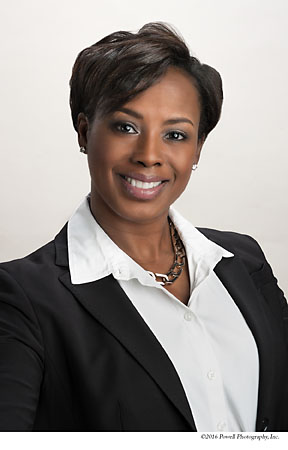
Today we’d like to introduce you to Suzet McKinney, DrPH, MPH.
So, before we jump into specific questions about the business, why don’t you give us some details about you and your story.
I am a native Chicagoan. I attended Whitney Young High School, here on the west side of the city. After high school, attended Brandeis University in Waltham, MA where I completed my Bachelor of Arts Degree in Biology and was also a Howard Hughes Medical Institute Fellow. After graduation, I returned to Chicago and attended Benedictine University in Lisle, IL where I received my Master of Public Health degree (Health Care Administration) and certificates in Managed Care and Health Care Administration. I later earned my Doctorate degree from the University of Illinois at Chicago School of Public Health, with a focus on preparedness planning, leadership and workforce development.
I’ve been the CEO/Executive Director of the Illinois Medical District (IMD) for almost two years. Prior to joining the IMD, I spent 13 ½ years at the Chicago Department of Public Health (CDPH). I served multiple roles at CDPH, but for nearly 7 years I served as Deputy Commissioner of the Bureau of Public Health Preparedness and Emergency Response. In that capacity, I oversaw the emergency preparedness efforts for the Department and coordinated those efforts within the larger spectrum of the City of Chicago’s Public Safety activities. I also oversaw the Department’s Division of Women and Children’s Health.
In academia, I serve as an Instructor in the Division of Translational Policy and Leadership Development at Harvard University’s T.H. Chan School of Public Health and as Adjunct Assistant Professor of Environmental and Occupational Health Sciences at the University of Illinois at Chicago School of Public Health. I also serve as a mentor for the Biomedical Sciences Careers Project, also at Harvard University.
Great, so let’s dig a little deeper into the story – has it been an easy path overall and if not, what were the challenges you’ve had to overcome?
I think we all experience challenges at one point or another in our careers. I don’t think the challenges I’ve faced have been much different than those many women face. For most of my career, I’ve worked in a male-dominated field. I’ve also experienced being in situations where I was the only woman, the only minority, or the only female minority. However, I don’t consider these challenges at all. Instead, they are motivators to continually give more than 100% effort and to be the best me that I can be.
Please tell us about Illinois Medical District.
By training and experience, I am a public health practitioner. I specialize in disaster preparedness/ response and national security, including but not limited to biodefense and emerging/re-emerging infectious disease outbreaks. About two years ago, I accepted the opportunity to become CEO and Executive Director of the Illinois Medical District, or IMD.
The IMD is a special-use zoning district in the City of Chicago. Established in 1941 to attract and retain academic centers of excellence, healthcare facilities, and emerging high technology enterprises. A 24/7/365 environment that includes 560 acres of medical research facilities, labs, a biotech business incubator, universities, raw land development areas and more than 40 healthcare related facilities, it is the second largest urban medical district in the US, and a major contributor to the city, state, and regional economy.
The IMD fosters economic growth by supporting healthcare, research, program, technology commercialization and real estate development initiatives. The IMD facilitates collaboration among clinicians, academic researchers, private industry and patients, acting as an independent third party convener that brings institutions and individuals together around common needs, goals and themes. Our mission is to be a leader in patient care and medical research utilizing our diversity and unique assets while driving economic growth. As the nation’s second largest urban medical district, the IMD is most proud to be the home of four world-class hospitals, two of which are university-affiliated. With over 50,000 visitors per day and 30,000 employees, the IMD serves the most diverse patient population in the country.
What sets the IMD apart from other medical innovation districts is the large amount of vacant land available for development in such close proximity to the City’s Central Business District (less than 3 miles). Other well-established innovation districts have maximized their land usage and often need to demolish existing facilities to make room for new facilities. We have the benefit of having a solid foundation of existing anchor institutions and assets, but additional land available for development to facilitate continued growth and diversification of partner institutions and businesses. The IMD has an abundance of diverse assets and resources that are already in place, which gives us a clearer path toward the future of the District as a major health/life destination.
Do you look back particularly fondly on any memories from childhood?
We’re overseeing a project called the Gateway Development Project that will break ground in the coming weeks. Gateway is 1.2 million square foot development on 9.5 acres of IMD land at the intersection of Ogden, Harrison and Damen. It will include a hotel, a young professional’s residential tower, restaurants, retail space, laboratory space, office space, a physical fitness facility and a parking facility. We expect this project to enhance our visibility by bringing jobs to the community and providing much needed amenities for those who live and work in the district. It is a major step toward the overall revitalization of the IMD.
Many district stakeholders are currently experiencing growth. All four major hospitals have plans for future expansion or redevelopment. Earlier this year, Cook County Health and Hospitals System (CCHHS) broke ground on a nine-story 282,000-square-foot central campus health center. This will allow CCHHS to improve and expand outpatient services, reduce operating costs, improve patients’ experience and increase clinical and administrative efficiency. CCHHS sees more than 100,000 unique patients through over 550,000 clinic visits annually on its central campus.
We also welcomed The Chicago Center for Arts & Technology (CHICAT) to the IMD earlier this year. CHICAT provides arts and technology education and job training skills to underserved communities. Additionally, the Jane Byrne Interchange construction and CTA Blue Line modernization will help improve transportation and connectivity between the IMD and the Central Business District.
We also developed a new strategic plan this year in partnership with Remedy Chicago. The strategic plan is comprised of four strategic initiatives aimed at positioning the IMD as the next great innovation district in the U.S.
Contact Info:
- Address: ILLINOIS MEDICAL DISTRICT
2100 West Harrison Street
Chicago, Illinois 60612 - Website: www.medicaldistrict.org


Getting in touch: VoyageChicago is built on recommendations from the community; it’s how we uncover hidden gems, so if you know someone who deserves recognition please let us know here.


