




Today we’d like to introduce you to Sarah Kammerer.
Sarah, please share your story with us. How did you get to where you are today?
A few years ago, I wrote a blog for the Gates Foundation celebrating Malala Yousafzai’s 16th birthday. In it, I wrote about what I was most likely doing on my 16th birthday: worrying about my latest crush, getting my driver’s license, or my next soccer practice. In other words, I grew up in a safe environment, and instead of worrying about domestic violence, gun violence in my neighborhood, or my next meal, my worries were focused on smaller, more age-appropriate concepts of love, freedom, and health that would shape the way I see the world.
It’s for these reasons that I decided to dedicate my life to service. Simply, I believe that young people – all people – should be able to play, create, and fail with the knowledge that someone will be there to help them up and dust them off. Because if there is one thing I have learned in my professional career, it’s that we rarely do anything without someone else’s support.
My professional career has always been focused on how to best bring people together to drive change: from working in Congress, on a presidential campaign, and health policy, to an MPH, living and working in rural India, and philanthropy. This experience helped me directly realize the importance of supporting the next generation of leaders so they too can work to make this world a better place, which is why I am so passionate about the mission of The People’s Music School.
What excites me about my current role is that I am a part of a loving community that puts trust in each other to accomplish the collective mission of building great humans through music education. It is a heavy, but joyful burden: if I fail as the chief fundraiser for the organization, it directly impacts the lives of the students and families we serve. Failure now is not an option. The only difference between 16 year old me and 35 year old me is now I feel confident that I have the tools, the humility, and the experience to help our students grow into all that they can become, despite the obstacles that may come their way.
Great, so let’s dig a little deeper into the story – has it been an easy path overall and if not, what were the challenges you’ve had to overcome?
In my late 20s, I lived in the small rural town of Chakradharpur in Jharkhand, India, and worked with an NGO called Ekjut. It is a very beautiful place – think Disney’s The Jungle Book: vast, flat plains full of rice patties, set between dense forests and steep, rolling, hills – and a very poor place. While the state may account for more than 40% of the mineral resources of India, 39% of the population live below the poverty line, less than 50% of women can read, and 20% of the kids under 5 are malnourished. In addition, only 40% of the homes have electricity, and something like 25% of the villages are connected by roads. Lastly, it is infiltrated by a violent Maoist group called the Naxalites, another symptom of the systemic failures of the region.
My time was spent shadowing, interning, and ultimately collaborating as a result of a Fulbright grant, with an organization called Ekjut. To give you a taste: they have reduced infant mortality in the region by nearly half simply by bringing women together, asking them to identify and prioritize the biggest health challenges in their communities, and then supporting the women to develop, implement, and evaluate their own solutions (to read more: https://www.thehindu.
As you can imagine, nothing was familiar as compared to life in Chicago. For the 100,000 people that live in the town, there were only a few restaurants — instead, we cooked and ate together at home. Regular electricity was not an option I chose — I relied on candles, headlamps, and the glow of my computer screen, and did not have refrigeration or air-conditioning. I heated my bath water by sinking an electrical coil into a bucket full of water (safe enough!). Yet, while these are foreign conditions to many who live in America, they ultimately were choices for me: I could have paid for the amenities to live a more comfortable life, or if it became really, really tough, I could have come home.
I grew professionally and personally while in India. It helped me to identify what I care about, how change can happen, and the power of community. It was also really hard. Living there challenged everything I knew about the world, helped me to recognize my privilege, and it taught me the power of patience, kindness, care, and, most importantly, asking questions. It was an uncomfortable, awkward, and well, human time in my life; one I think about every day.
The People’s Music School – what should we know?
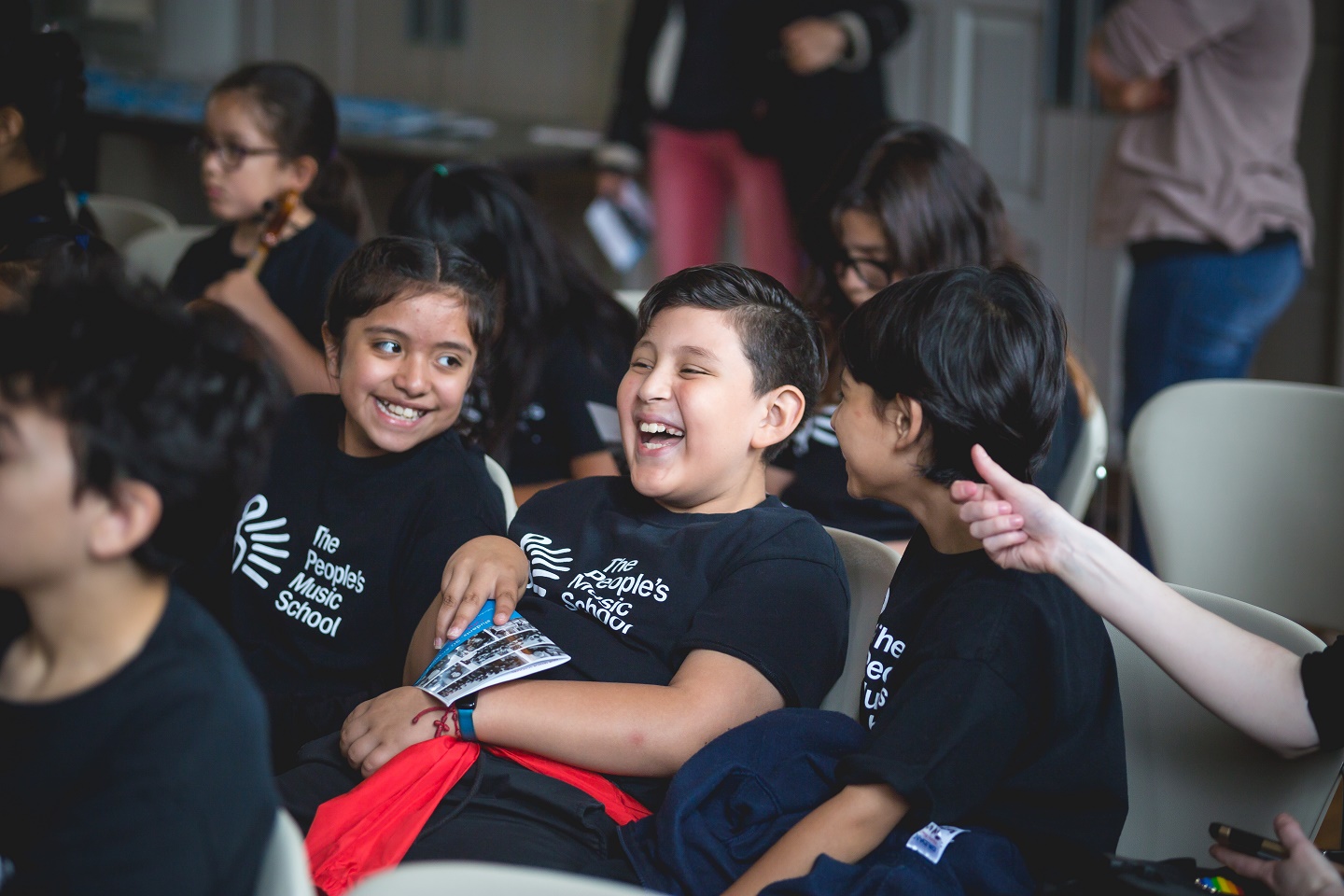
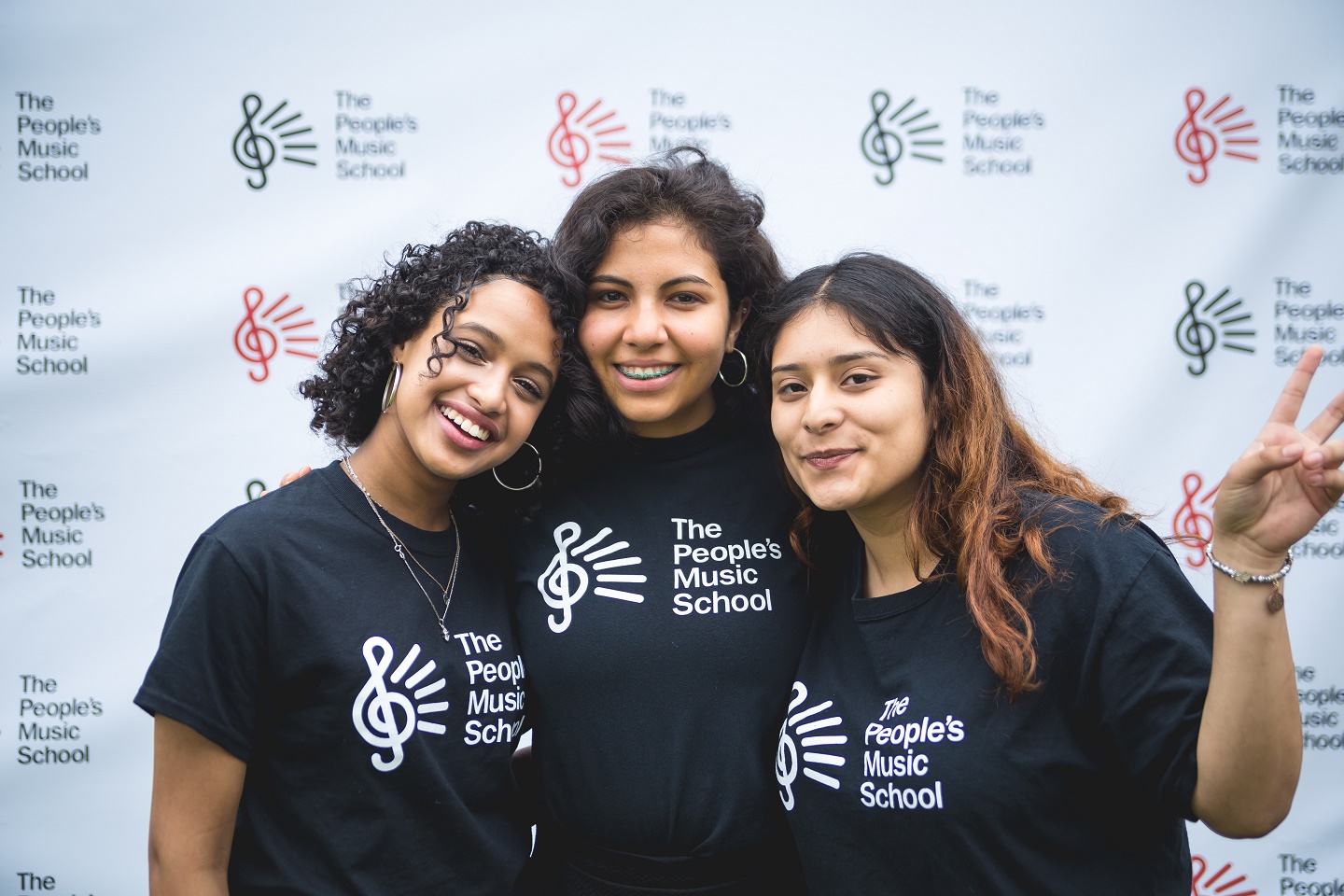
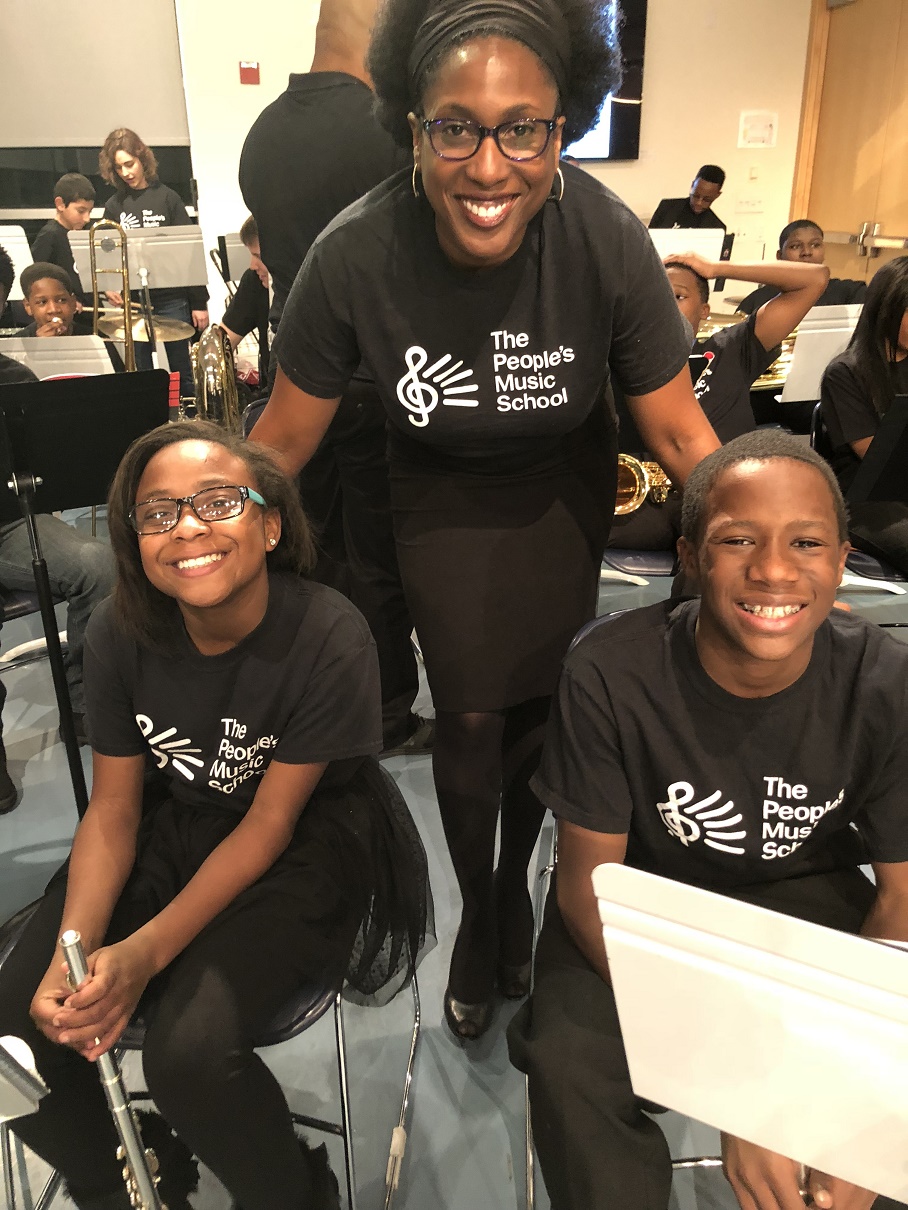
I serve as the Director of Growth and Engagement for The People’s Music School (TPMS). Founded in 1976, TPMS is completely free and seeks to provide the benefits of music education to low-income kids across 50 different Chicago zip codes. Our robust, holistic community-based model is designed to develop the next generation of civic leaders though performance, theory, and individual and group instruction. It’s a stellar, passionate, and accomplished team and I am honored to be a part of it. A few organizational highlights:
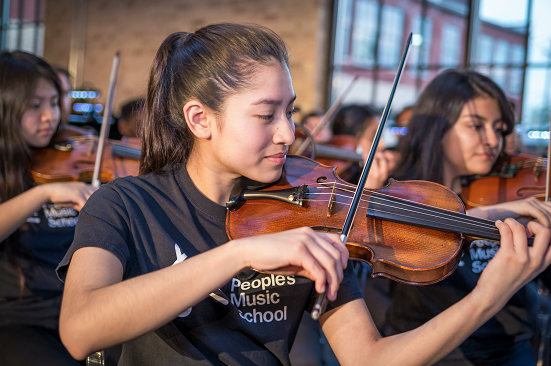
• Practice: This year, 850 kids between ages of 5-18 will take between 4-12 hours of instruction per week on 14 different instruments. Students stay with our program for an average of 7 years.
• Talent: Our 60 teaching artists, all of whom have degrees in music or music education, are paid a competitive hourly wage, receive sick leave, professional development, and performance honoraria.
• Service: Families provide 1 hour of volunteer service per student per month per semester, equating to over 20 FTE positions that support the school and community every semester.
• Opportunity: Our kids have performed with Yo-Yo Ma, Jimmy Chamberlin of the Smashing Pumpkins, Grammy-Award winning Third Coast Percussion, the Chicago Symphony Orchestra, for the Obama Foundation, and many more.
Contact Info:
- Address: 931 W Eastwood, Chicago, IL
- Website: http://
peoplesmusicschool.org - Email: sarah@
peoplesmusicschool.org - Instagram: peoplesmusicschool
- Facebook: https://www.
facebook.com/ PeoplesMusicSchool/ - Twitter: @PeoplesMusicSch
Photographed by Juan Carlos | © 2018 TK Photography | www.tkphotographychicago.com
Photographed by Juan Carlos | © 2018 TK Photography | www.tkphotographychicago.com
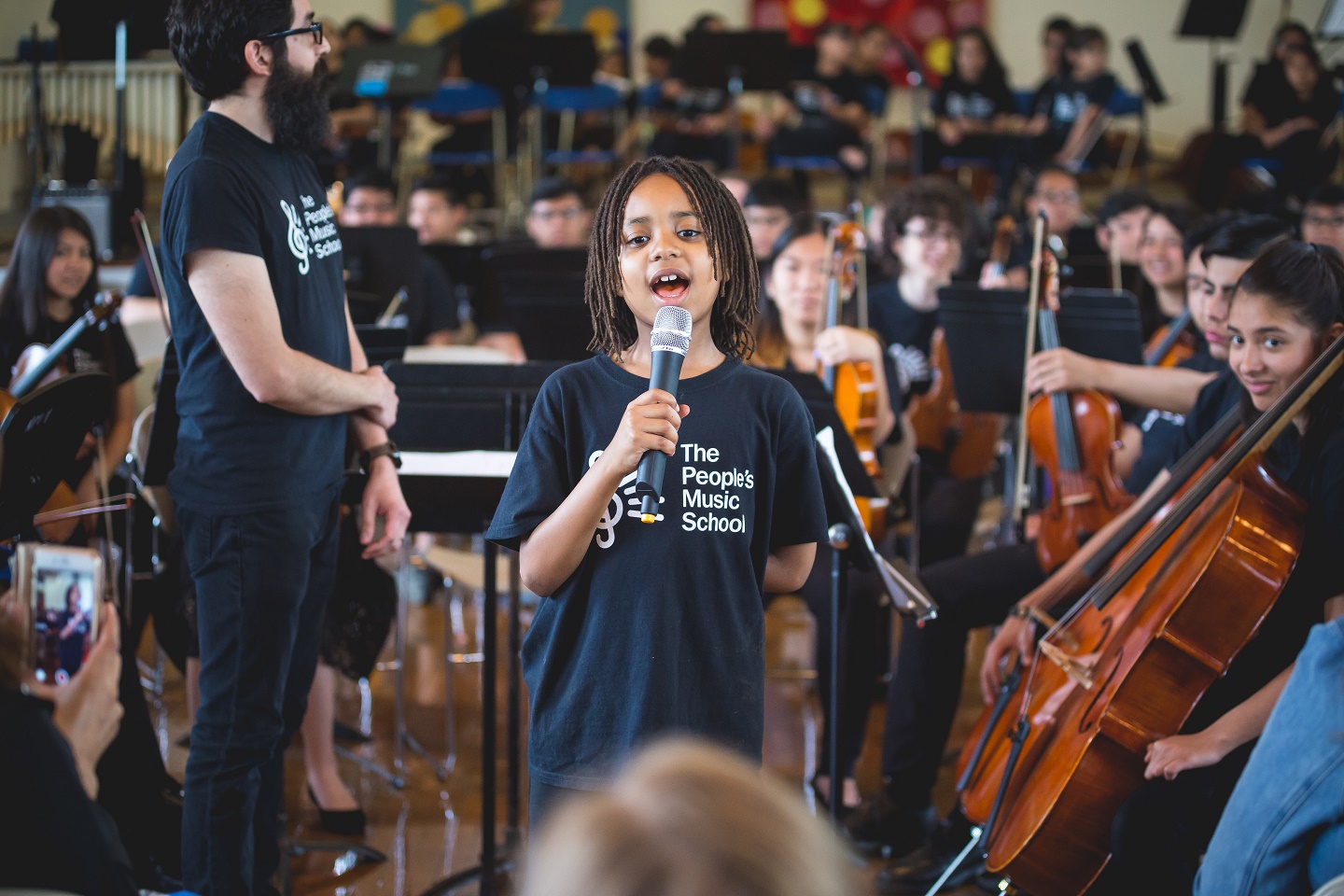
Photographed by Juan Carlos | © 2018 TK Photography | www.tkphotographychicago.com
Getting in touch: VoyageChicago is built on recommendations from the community; it’s how we uncover hidden gems, so if you know someone who deserves recognition please let us know here.


