



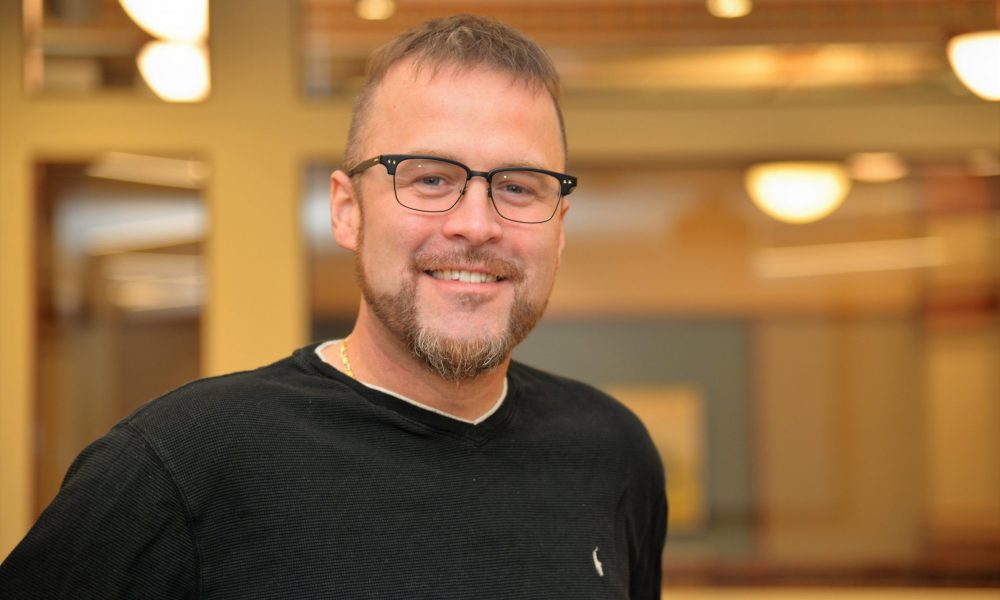
Today we’d like to introduce you to Patrick James Murphy.
Patrick, can you briefly walk us through your story – how you started and how you got to where you are today.
I am a student of life. My passion for learning and education is intense, and I got it from my mother and some fantastic mentors. My teachers taught me that curiosity is a superpower. That got me started and it is what keeps me going today. I am more attracted to questions and problems than to answers and solutions. In the Chinese language, the word for “problem” is also the word for “question” (问题). It is a useful orientation. Curiosity feeds on interesting questions, and knowledge grows only through correcting error or, in other words, through resolving problems. These principles got me into music and languages at a young age. Attending multiple schools in different parts of the US turned me into a consummate observer of the world around me, which fueled a lot of songwriting as a teenager. In high school I volunteered for the US Navy and eventually was the youngest harbor tugboat chief engineer in Navy history. I entered college full-time the same week I left the Navy, ran middle-distance track, and went on to spend two summer semesters in a language immersion program in China. Immediately after college I entered a doctoral program in human factors and organizational psychology, then took a full-time organizational development assignment at a French multinational company, before entering a business school to complete my doctorate. I became a tenure-track professor as I finished my degree and eventually became the youngest faculty member in the business school to be promoted from assistant to associate to full professor. I have had thousands of students, published almost 30 scholarly papers, and authored a 300-page book based on original research. I never planned to be a professor. It was the result of doing what gives me energy, a function of living only for today, and some luck.
My way of living a values-centered life means not caring what others think of me but earnestly helping others when there is an opportunity to do so. My mentors taught me that helping others to develop is the best way to develop oneself. I avoid activities that are not interesting or useful, am suspicious of most things that are popular, and never spend time thinking too much about where my decisions might be leading me.
The future is a matter of faith. If one applies oneself in authentic ways that are meaningful personally and make positive external impact, than one finds great power in faith about the future. It is the foundation of what Plato’s teacher, Socrates, regarded as the “examined life.” Faith is the handmaiden of reason. The realization that one’s rational knowledge has the character of wise expectations about the future is a powerful lesson for today’s students – or anyone – as they learn how to thrive in an uncertain world.
Overall, has it been relatively smooth? If not, what were some of the struggles along the way?
The road has not been smooth but it has been quite positive. Like most people, I have incurred many rejections, challenging circumstances, struggles, and public failures. I have committed serious faux pas in foreign cultures and once I crashed an automobile I was driving on a business trip with a senior Vice-president in the passenger seat. I could go on and on. Such experiences are not negative in the context of anyone’s life journey. They are opportunities for wisdom and enjoyable humor. What matters is how one responds to them, and how one corrects the ramifications of such errors.
Generally speaking, if one does not have struggles, then it should make one a bit nervous. Too much comfort usually signifies the death of thought. One should always find something worth struggling over. Lifelong learners recognize that learning is a fun struggle, similarly to how learning is so much fun for young children. Children learn languages and other skills incredibly quickly because they do not see learning as a chore. Instead, it is interesting and useful. As human beings develop, we take on more social responsibilities that can and do change the way that our learning is demonstrated, but the basic underlying mechanism remains. It is important not to lose perspective on that mechanism over time, because it gives us a key to dealing with struggle.
The best leaders, teachers, and students view the struggles of learning tough lessons as luxuries. Being rejected or failing is not usually a preferred outcome, to be sure, but it is important to recognize the nature of those learning experiences. My perspective on knowledge is the same as that of Kant, the 18th century enlightenment philosopher. It is a radical perspective, for it shows us the power of human enlightenment. Kant did not regard knowledge in merely intellectual terms, but in terms of individual courage. Using one’s knowledge as a unique individual, especially to learn and grow, requires boldness. It is hard, and it can be embarrassing. Thus, struggle is part of the experience. It is an act of courage to use one’s knowledge to take action without being told what to do or how to think. It is the foundation of his famous use of the Latin phrase, “Sapere aude!” It means, “dare to be wise.” This notion is particularly important to entrepreneurs, who typically use their knowledge to go in bold and different directions against the norm, and in spite of uncertainty and likely failure.
Alright – so let’s talk business. Tell us about DePaul University – what should we know?
The business school at DePaul University, where I am a professor, connects with Chicago in very authentic ways. We train a lot of first generation university students who have a lot of hustle and are from the families who have made Chicago a world-class city. Many of these families hail from other countries and an array of cultures, and they love Chicago and America. It makes for a uniquely talented student population; upwardly mobile, with no sense of entitlement, and an amazing amount of entrepreneurial energy. As an entrepreneurship scholar, I am fortunate to be able to train and mentor them. Many of my former students are now successful entrepreneurs.
Entrepreneurship is a very difficult topic to teach effectively because it is defined by growth-oriented action. It is very different in many ways from other business school topics. I have my own conceptual approach and a framework that I have used for years at DePaul and at other universities in the US and around the world. It should be published later this year.
Any shoutouts? Who else deserves credit in this story – who has played a meaningful role?
I have had so much support from mentors and colleagues that it is difficult to start naming them. There is one I will name, however, who played a big role in my professional development early in my career. Michael Murray was a senior faculty member when I arrived and he helped me think more intelligently about my career.
It is hard for a lot of people to understand the nature of the opportunities and challenges tenured professors face. Michael’s mentoring helped me to thrive in this environment. There are significant pressures to conform in academia, and those pressures have a negative effect on the system. Many professors follow the herd when they could be setting out in exciting new directions in terms of research and teaching. The professors who use their gifts to dare to go their own unique way are the ones who eventually make the best contributions. That is why we award tenure to professors. I did not understand that at first.
Michael Murray died unexpectedly in 2010. On my desk I keep a framed photo of myself with him and his wife at a large party I threw for my colleagues in the Foundation Room at the House of Blues to celebrate when I earned tenure. The photo was taken just a few months before he died. Mentors are so vital to one’s individual growth and development, but they are also good for society because they keep the wisdom of the past alive.
Contact Info:
- Website: profpjm.com
- Twitter: @profpjm


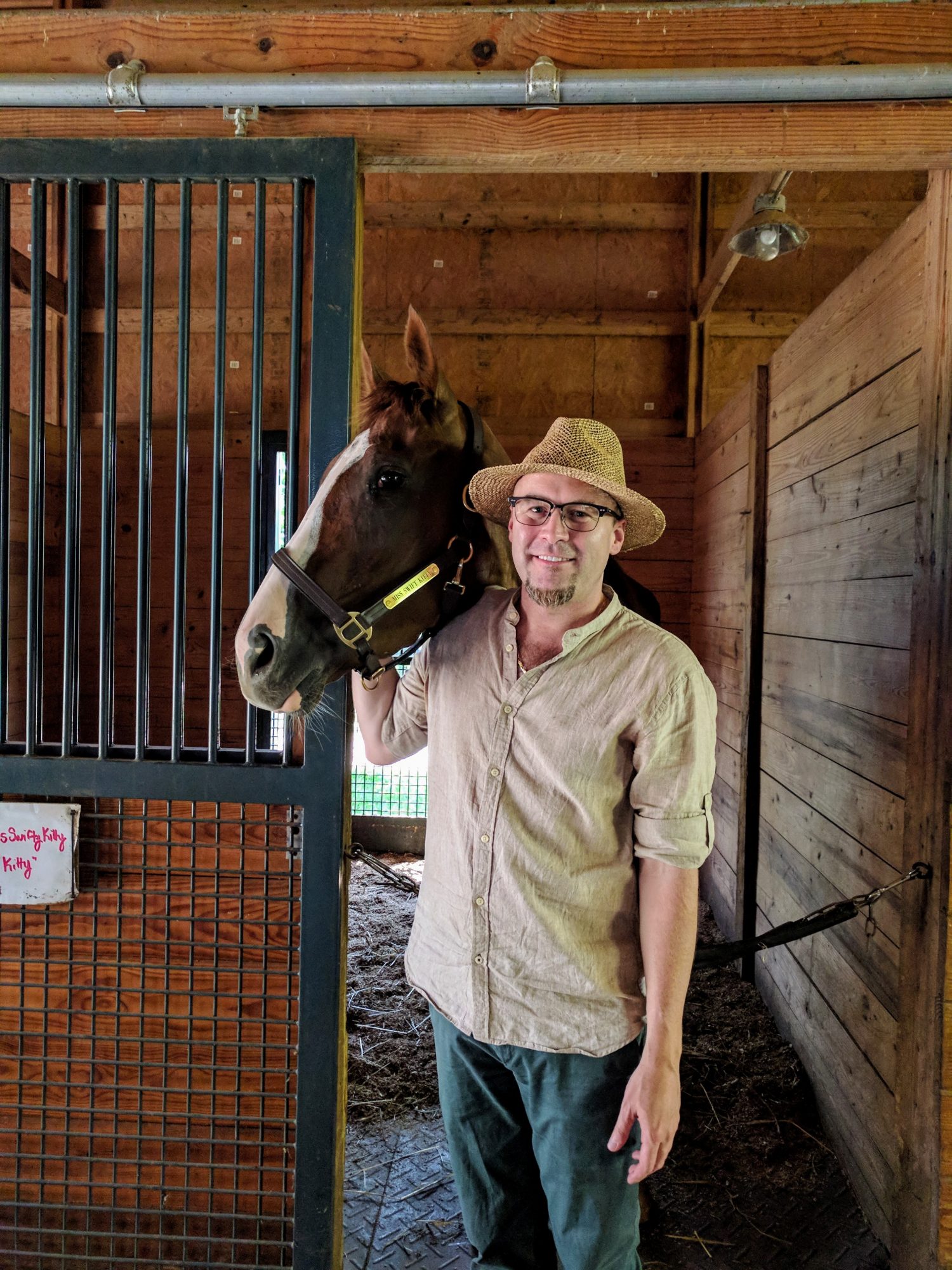
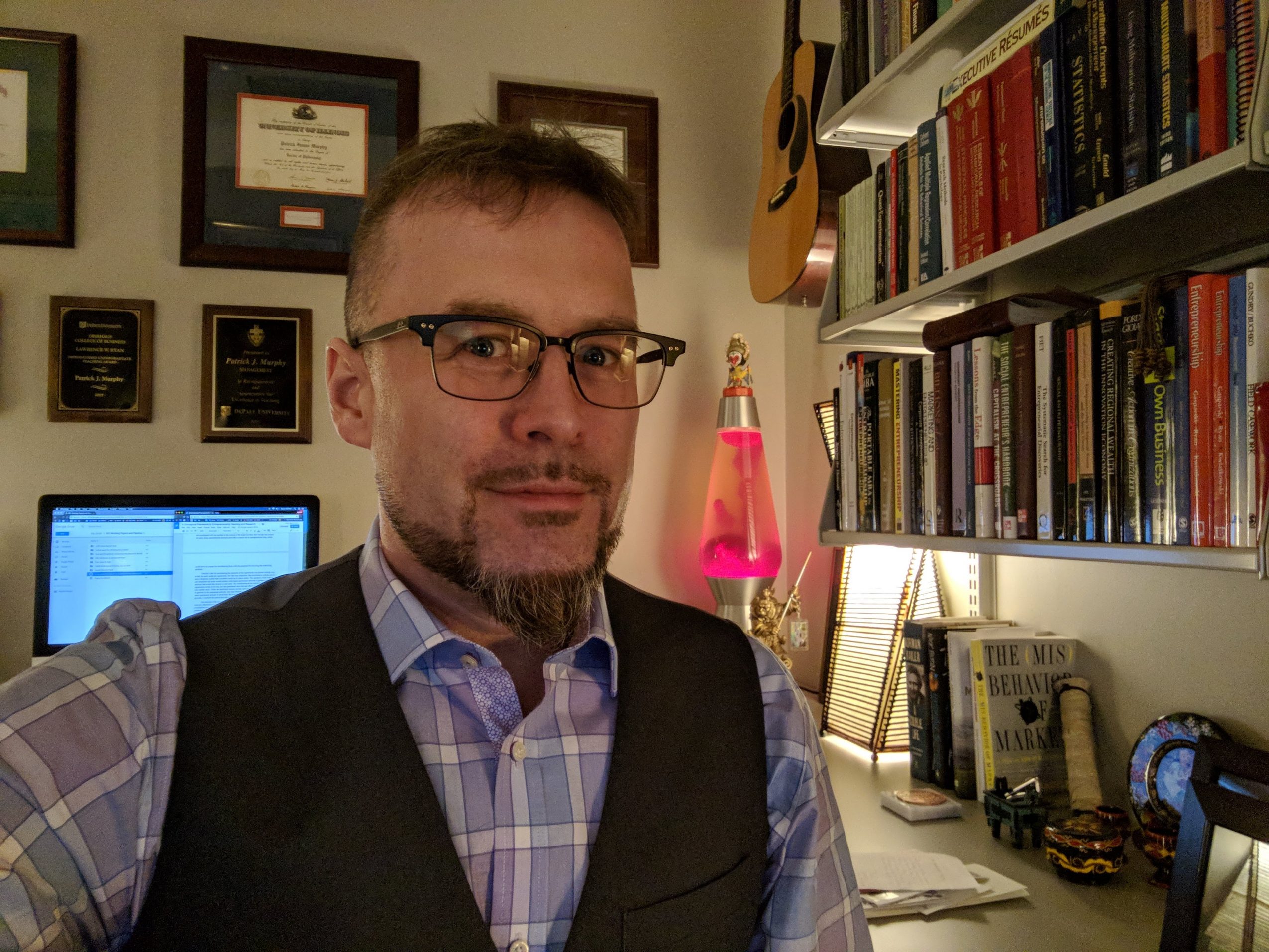
Image Credit:
Robyn Garmon
Getting in touch: VoyageChicago is built on recommendations from the community; it’s how we uncover hidden gems, so if you know someone who deserves recognition please let us know here.


