




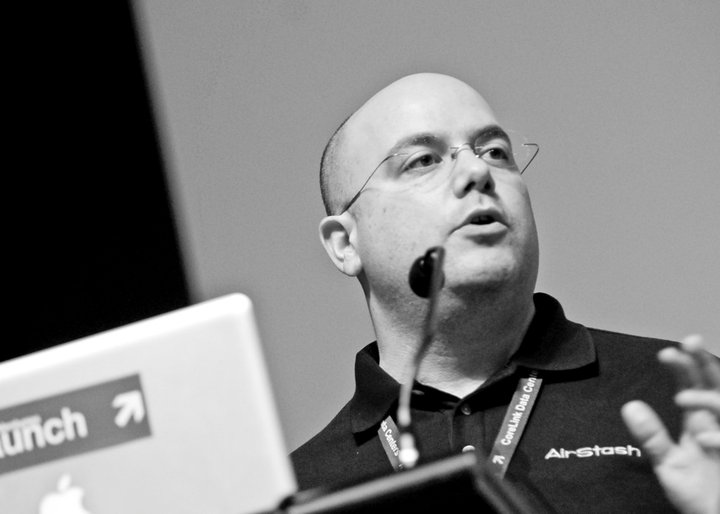
Today we’d like to introduce you to Matthew Klapman.
Matthew, can you briefly walk us through your story – how you started and how you got to where you are today.
I’ve always been fascinated by design and innovation. My drive to realize my designs fueled my fascination for engineering–I wanted to build the future. I started my first company while an undergrad at the University of Illinois and sold it to Fujitsu while studying for the Illinois State Bar exam. We pioneered 3D graphics silicon ICs (our technology still lives on with Nvidia today) and commercialized the first mass consumer virtual reality headset back in the early 1990s. I went on to invent a system to measure the speed and force of a boxer’s punch during a live bout, but I was too early. I joined Motorola out in Silicon Valley, moved back to Chicago and built a user experience research and development team that designed mobile phones that changed how people communicate. After meeting Brian Mastenbrook at Motorola, we left and pioneered mobile wireless storage, anticipating online cloud storage security breaches we see daily. Our AirStash wireless flash drive products sell worldwide today.
Has it been a smooth road?
All of my work, with Wearable Inc. and before, didn’t have the advantages of today. Crowdfunding didn’t exist, the VCs in Chicago were not as savvy as Sandhill Road, silicon vendors mostly did not want to work with small companies, and internet advertising was throwing money away. We always knew that with a complex technology business, it’s the dependencies that kill a small company.
We knew that as long as we could overcome each obstacle and develop quickly before running out of cash that we would be successful because we thought through our value and future steps while being nimble to change. This is true today, but we have more efficient tools at our disposal. I self-taught myself mechanical CAD on YouTube and explored 3D printing at my local library. I still remember hooking up coax Ethernet to share a printer at my first company, so it’s come a long way.
So let’s switch gears a bit and go into the Wearable Inc. story. Tell us more about the business.
At Wearable Inc. we develop quality products that are attentive to the customer. We are staunch believers in the concept of privacy and choice, and our products reflect that. We follow three main tenets that a product should: be easy to use, have durable software, and have durable hardware. Too many companies ignore one or more of these, mainly software. Like our hardware, we engineer our software, which is different than writing it like prose, as most companies do. Like some of the pioneering work we did for our country through DARPA, formal methods ensure a much higher quality and security of software. We have sent out tens of millions of firmware updates into the field without issue. No one has yet hacked our AirStash software, and we remotely control our software in Shenzhen along with other methods to prevent tampering and gray market production. We spend the time and money to do things right and we always improve over time, even when lowering the cost in a next generation product. As for ease of use, while we have that design background from shipping a hundred million phones, we incorporate customer feedback continuously to keep improving the product, which has shown results in greater sales and less returns.
How do you think the industry will change over the next decade?
The last two decades have mainly been about realizing the concepts that crystalized in the 1990’s. Now we all need to think about human values going forward as new technology integrates into our mind and body. Security and privacy can be improved simultaneously if thought through properly and not treated as an afterthought.
Augmented Reality (AR) will become the next hit mobile device within five to ten years and more of our private lives will get pulled into the corporate cloud for exploit and lock-in. Ethical software is more important than ever with the massive rise of machine learning technologies (AI). The use and misuse of biotechnology is critical as its use exponentially rises over the next several years. Mining meteors for gold and other minerals will have even more impact on wealth distribution. And environmental technologies that help clean up the environment efficiently and safely are critically needed now. As a society, we need to find a balance between creation and destruction, where destruction today means disposal as an afterthought.
Contact Info:
- Website: https://airstash.com
- Facebook: https://www.facebook.com/airstash
- Twitter: @airstash
- Other: https://wearable.com


 Image Credit:
Copyright Wearable Inc.
Getting in touch: VoyageChicago is built on recommendations from the community; it’s how we uncover hidden gems, so if you know someone who deserves recognition please let us know here.