



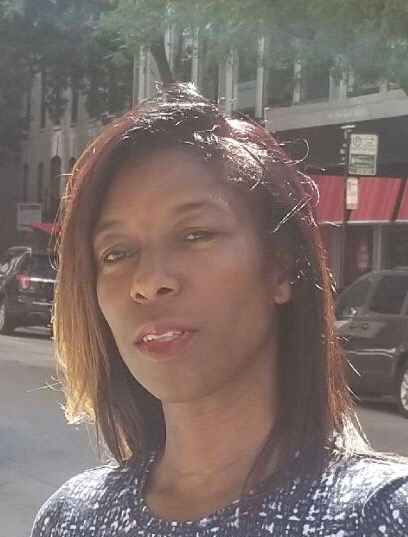
Today we’d like to introduce you to Bisi Williams.
So, before we jump into specific questions about the business, why don’t you give us some details about you and your story.
At university, I met my husband, Bruce Mau, who is a designer. He was looking at a textbook of mine, rolling it over in his hands and flipping the pages, and he said, “I am a book designer.” I was confused. “What do you mean, book designer? You glue the books together?” He put the book down and, after explaining all about typography, space, cover art, and color, he said, “You know, everything is designed.” Up until that point, I only thought design happened in fashion and aesthetics. It never occurred to me that every single thing in my life was a design construct. It was the best, and quickest, class I ever took.
I was born in Winnipeg, Canada, to two immigrants, a Nigerian father and Jamaican mother, who migrated to Canada for a university. My father became a professor in microbiology and my mom a nurse. I earned a degree in journalism from Ryerson, which satisfied my basic tenets: work with people, have an impact, and travel. As a liberal arts student in a medical family, the design never came up in our discussions. We did things somewhat passively. We purchased things we liked or needed and that was the extent of the design thinking.
After college, I worked in academic publishing and then in program development for television, and we eventually became the parents to three awesome daughters. After my husband sold his Toronto-based studio, Bruce Mau Design, we joined forces in 2010 and started the Massive Change Network in Chicago. Our mandate: Put design tools in as many hands as possible.
As I look around, I always think, “How can I make things better?” This is both a blessing and a curse. I notice things that are funky or clunky, but I don’t judge the circumstance. That’s the curse. The blessing is that there’s usually a solution. I have a vision and then step by step I work to execute the vision. It is important to note that in this day and age, things are not ‘fixed’ once and done. Situations, people, and the world are constantly evolving, so I advise clients that design is a journey, and part of the work is to leave space in the process for change and updates.
Everyone, whether a doctor, engineer, schoolteacher, poet, philosopher – whatever you’re doing, if you apply design to it, it will enhance your world. When a doctor first sets up practice, for instance, she’ll need chairs, examining tables, even stationary. It’s her brand and sets her apart. I would visit my father’s office and instinctively I knew this, though it just didn’t occur to me that everything is designed. Not yet.
In the early days, I used to joke, don’t leave home without a designer. If you’re going to start a business, you should include a designer alongside your lawyer and accountant. Design is simply a smart allocation of resources. It will save you money and heartache, and improve your world. At our Studio, we sketch and prototype everything before making a client purchasing decision. Lots of conversation happens. And by listening, and imagining, the solution reveals itself. We not only highlight the opportunity, we identify potential pitfalls and design solutions before our clients build. Our job is to help people design what they do, not what they say.
I, too, am evolving. I’m no longer passive — now, I’m passionate.
Overall, has it been relatively smooth? If not, what were some of the struggles along the way?
Several years ago, I asked a friend, a retired Fortune 100 CEO and my business mentor here in Chicago, why most businesses don’t use designers. His answer? “CEOs are embarrassed to admit that they don’t know what to do with their design or creative departments.” This was in 2010, a time before Walter Isaacson wrote his book about Steve Jobs and Apple, and people all over the world recognized the power of smart design. My friend’s response was an epiphany for me. Given that our mission was to put design tools and design thinking methodology into as many hands as possible, it reinforced the significance of sharing our skills and insights with companies that considered design something soft or extra. And of course, highlighted the challenge.
The biggest obstacle we overcame in the early days of our enterprise design work was clients’ confusion about how we could be of service, given that we were not experts in the problems we were being hired to solve. But designers care, and empathy helps make us fast learners. Since we don’t know it already, we learn a business more rigorously, and more deeply, than an expert might because they don’t need to learn — they already know.
When considering some of our past projects – a 1000-year plan for the holy city of Mecca, creating a museum of biodiversity for Panama, designing a social movement in Guatemala, re-thinking design in Denmark, or reimagining health care service delivery in the United States – I recollect all the challenges, and all the amazing adventurers we’ve had as designers, adding value and expertise to complex projects with our unique ability to synthesize information, identify the opportunity, formulate the strategy and design the roadmap for communication and execution.
Massive Change Network – what should we know? What do you guys do best? What sets you apart from the competition?
When you design, you create the future. We often work as thought partners for C-Suite Executives and their teams. It is incredibly difficult for executives to keep the organization running while at the same time redesigning or reorganizing their business in order to keep it sustainable and profitable. We provide a safe environment for leaders to think out loud and imagine the optimum state for the business or project while they still run the business. Massive Change Network helps translate the vision of leaders and then communicates the collective goals and objectives, as well as the wishes of the leader, to the entire organization.
Within an organization, everyone is so specialized that they don’t actually understand what the person sitting across the room does. Accounting needs information in one way, legal needs it in another, and so on. They all speak a different language in terms of their professions and skill sets. So we’re helping design what you do as a business and also have everyone inside the business understand what everyone does, how to communicate needs, and foster collaboration.
This all makes it easier for members within an organization to follow instructions. Not only that, people understand they have agency. Clearly defined purposes and values empower employees, and leadership for that matter, to make the right decision within their job level. It frees up precious time and resources for higher ordered thinking and problem-solving. This not only sustains equity, it builds it.
In addition to our consulting work, we’re now finding time to shift attention from big to small. By that I mean, it’s fantastic working for large multinational corporations that obviously use design as a great asset to enhance their business, but it really tugged at me that small businesses, even mom and pop shops, weren’t using design. Looking at the landscape of business, it would be really fantastic for Main Street, so to speak, if they could understand the power of design. It would really help their businesses and their communities thrive and grow. And we’re starting to do just that. The methodology that we designed to give insight into companies – our 24 Principles for Massive Change – is agnostic. You can design a book, you could design a city, and each would see unique results. These are the foundational principles we use and teach in speaking engagements and in workshops, now with every size enterprise.
Right now, we are embarking on a gigantic design project, in collaboration with Jason Helgerson, who was the Director of Medicaid for the state of New York for 7 years. We are combining forces to reimagine health care, and we’re using design thinking to make it happen. Our goal is to inspire the world to have a conversation not about what’s wrong with health care, but what we could do to make it right. It is profoundly exciting.
What is “success” or “successful” for you?
Success is working on what you love. Both the client and everyone in our Studio, learn and grow intuitively from the process when that lives in the room. And we laugh! Joy is the key to everything.
When we first started working with Freeman, one of the largest events companies in America, they were seeking executive design training for their senior employees. That’s what they said — but not what they were really doing. We realized that the better idea would be to collaborate with them and inject design into their business. In essence, redesign the company.
Over 2 years, we imagined a process and methodology exclusive to them that we called OFBD: Opportunity, Formulate, Build, and Debrief. It shifted the way different employees and suppliers approached one another, so they could utilize seamless deliveries of event experience concepts to build, along with a learning process to continually evolve and improve on their work. That new way of thinking – of not systematizing the output, but systematizing the process – allowed for freedom, creativity and better margins for everybody. They now enjoy the capacity to imagine bigger, bolder ideas — and company-wide, the morale skyrocketed. Joy!
We had another insight, too. Given they were changing from an operations-based company to both a design- and operations-excellence company, design really needed to sit at the table. They needed a chief design officer. Bruce has temporarily assumed the role, so that design is not an afterthought; it’s embedded in all of their processes. It’s part of the conversation.
We helped change the culture at Freeman. It marked them as a business leader, as the go-to company for people who want to do live events. They love it — and we really love that it happened.
Contact Info:
- Address: 1316 Sherman Avenue, Suite 200, Evanston, IL 60201
- Website: http://www.massivechangenetwork.com/
- Phone: 888-976-2688
- Email: info@Massivechangenetworknetwork.
com
 Image Credit:
Janice Barnes-Davis, Tom Sandler, Robyn Woodford, Shuxin Cheng, R_Hijortshoj, Emmy Burns
Getting in touch: VoyageChicago is built on recommendations from the community; it’s how we uncover hidden gems, so if you know someone who deserves recognition please let us know here.


