



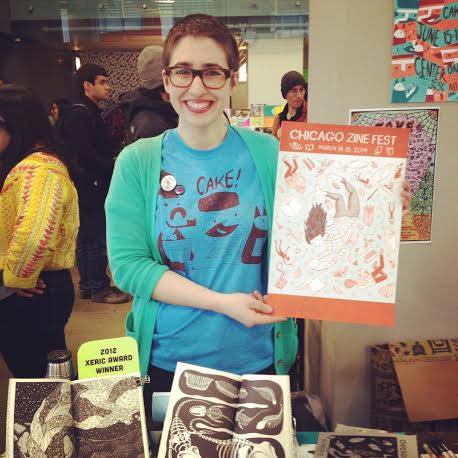
Today we’d like to introduce you to Marnie Galloway.
Every artist has a unique story. Can you briefly walk us through yours?
Sure! I was born in Austin, Texas, and spent my childhood and teenage years moving often–all around Texas, Virginia, Alabama, Arkansas, and then back to Texas in time for high school. I was a high-achieving and competitive student academically, in all the AP classes and serving in leadership in a variety of clubs, but my heart was always in literature and art-making. I didn’t think that being an artist was something that people could actually *do* with their lives–my dad’s career was in construction, my mom was a first-generation college student who started taking classes when I was in elementary school, and it’s not like Huntsville Alabama had a huge artist community I could learn from. I saw paintings in my mom’s art history textbooks, but that was history to study, not something living that I could aspire towards. I embraced an academic path and graduated with honors in philosophy & symbolic logic at Smith College with intentions of going to grad school and becoming a professor.
I took the GRE and immediately afterward had a huge panic attack: my body was screaming at me that this was not what I wanted to do. I went on a long walk with my then-boyfriend/now-husband and talked about what I really wanted to do, and decided I’d kick myself if I didn’t at least try being an artist. It was a long, meandering journey from that point to where I am now: I tried painting and was very bad at it; I spent a year in an MFA program that was falling apart, so I fled along with the majority of the rest of my cohort after the first year; I apprenticed in an offset printmaking shop and a letterpress shop and learned a lot, including that printmaking didn’t scratch my itch for narrative. I did all of this while working office day jobs and evening nannying jobs, paying down student loans and supporting my husband through his PhD program.
Eventually I decided to make work for myself, exactly the way I wanted to, working invisibly for months in the corner of my living room in Rogers Park. That project became my first graphic novel, “In the Sounds and Seas.” Once I found comics as a medium, I was hooked and haven’t looked back. The Chicago comics community is vibrant, full of some of the most interesting, experimental cartoonists working in the medium today. It is an exciting time to be making comics, and Chicago is the best place to do it.
In 2016 I became a parent, and I am now splitting my time between paid illustration work, making comics, and parenting my two-year-old son and my three-week-old daughter. My time to make comics is scarcer, but that also makes it feel more urgent: it has pushed me to be more efficient with my time, and braver with the content of my writing.
Please tell us about your art.
As a cartoonist I write and illustrate long-form fiction and short-form comics, sometimes working with publishers and sometimes self-publishing my books. All of my comics are made with traditional mediums (ink or graphite on paper) rather than digitally; I admire digital illustrators, but I think most clearly when I look at paper rather than a screen. My first graphic novel, “In the Sounds and Seas,” was published by One Peace Books in 2016, collecting the self-published wordless comic I worked on for five years. Since then I have been exploring shorter form projects, fiction (“Burrow,” 2016) and memoir (“Particle/Wave,” So What Press, 2016) and poetry (“Slightly Plural,” 2018), to experiment and learn more about ways of making comics before diving into my next novel-length project.
The work I try to do in my comics is to convey a feeling or sequence of feelings, to create within the form of a book the opportunity for the reader to be carried through a series of complex states. The rest of the process—research, writing & editing, material considerations, book design, character development, even the particular details of the story—is all in service of trying to communicate that feeling. It is exciting to work in a medium that allows for so many ways to shape the temporal and emotional experience of encountering a story. A lot of the comics I write take place in space or at sea; there is something about losing the sense of human scale that helps make those feelings more potent. It’s a convenient short-cut. I consider a finished book successful or disappointing based on how well I have translated the feeling I want the book to embody in to a form that the reader can carry with them. It is a thrilling alchemy when I think I have done it correctly, which, to be honest, is rarely the case, but I’m getting better.
Do you have any advice for other artists? Any lessons you wished you learned earlier?
Oh tons! Here are a few:
– Very, very few artists (especially those of us without generational inherited wealth) support themselves from their art, especially in the first few years of their practice. There is no shame in having a day job, or in needing to prioritize paid work over your art! The trick is to find a way to keep sacred space in your schedule to make your work.
– Anyone with a message like “all artists do X” or “if you want to break through you have to do Y” is universalizing their own experience, which often doesn’t acknowledge structural privilege or access to elite resources. That isn’t to say that all wisdom is bad–definitely listen to advice from folks with experience, but take it with a grain of salt! As a very minor example of this: I often hear the advice that “to be a cartoonist, you have to draw every day,” which sounds innocuous but can be unintentionally harmful to folks who don’t have space in their lives to draw every day. If I were just starting out took that advice to heart, I would think I could never be a cartoonist. I have children who need care, friends who I want to support, family members who need help, and I usually have to prioritize paid work to pay for medical bills and childcare. I have gone months at a time without drawing for myself, and have to intentionally strategize and plan to create blocks of time to make new work. This strategy works for me & my circumstances: I have published 3 new books in the past two years, and I certainly don’t draw every day!
– Give more to your community than you hope to receive back. Go to book launches, drink cheap wine at gallery openings, invite peers over for group critique, email gratitude to artists whose work you enjoy, call or message friends who are celebrating an accomplishment if you can’t attend in person, seek out ways to create opportunities for your peers. The more you give you your community, the more vibrant the art world; the more vibrant the art world, the more opportunities for everyone. Plus, friendship and love and care grow, too.
How or where can people see your work? How can people support your work?
Most of my comics can be read on my website, www.marniegalloway.com, but they were designed as books and are best read in hand. I don’t want that to sound like a hard sell, but there are some spreads and page-turns that are much better served in a book rather than reading digitally!
You can buy my graphic novel “In the Sounds and Seas” online via your preferred online book seller, and any of my comics at my web store www.marniegalloway.com/store or via my distributor Radiator Comics https://www.radiatorcomics.com/creator/marnie-galloway/
I also have a Patrron, where I share behind-the-scenes process photos and digital previews of all of my work to backers: https://www.patreon.com/marniegalloway
Contact Info:
- Website: www.marniegalloway.com
- Instagram: @marniegalloway_comics
- Twitter: @marniegalloway
- Other: https://www.patreon.com/marniegalloway
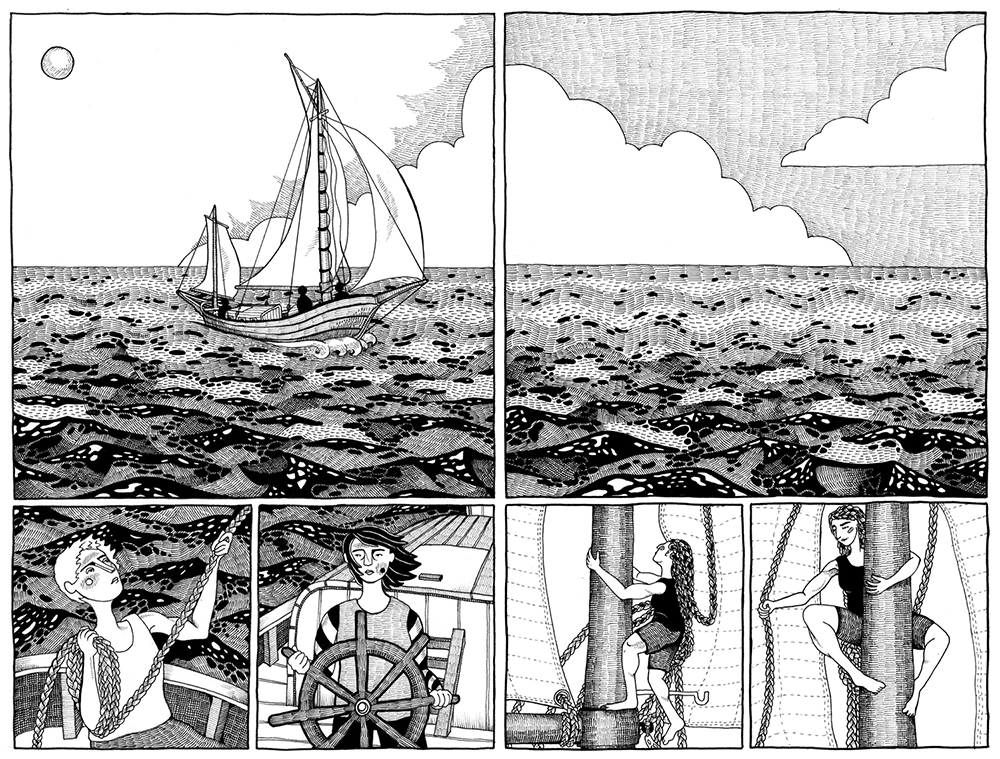
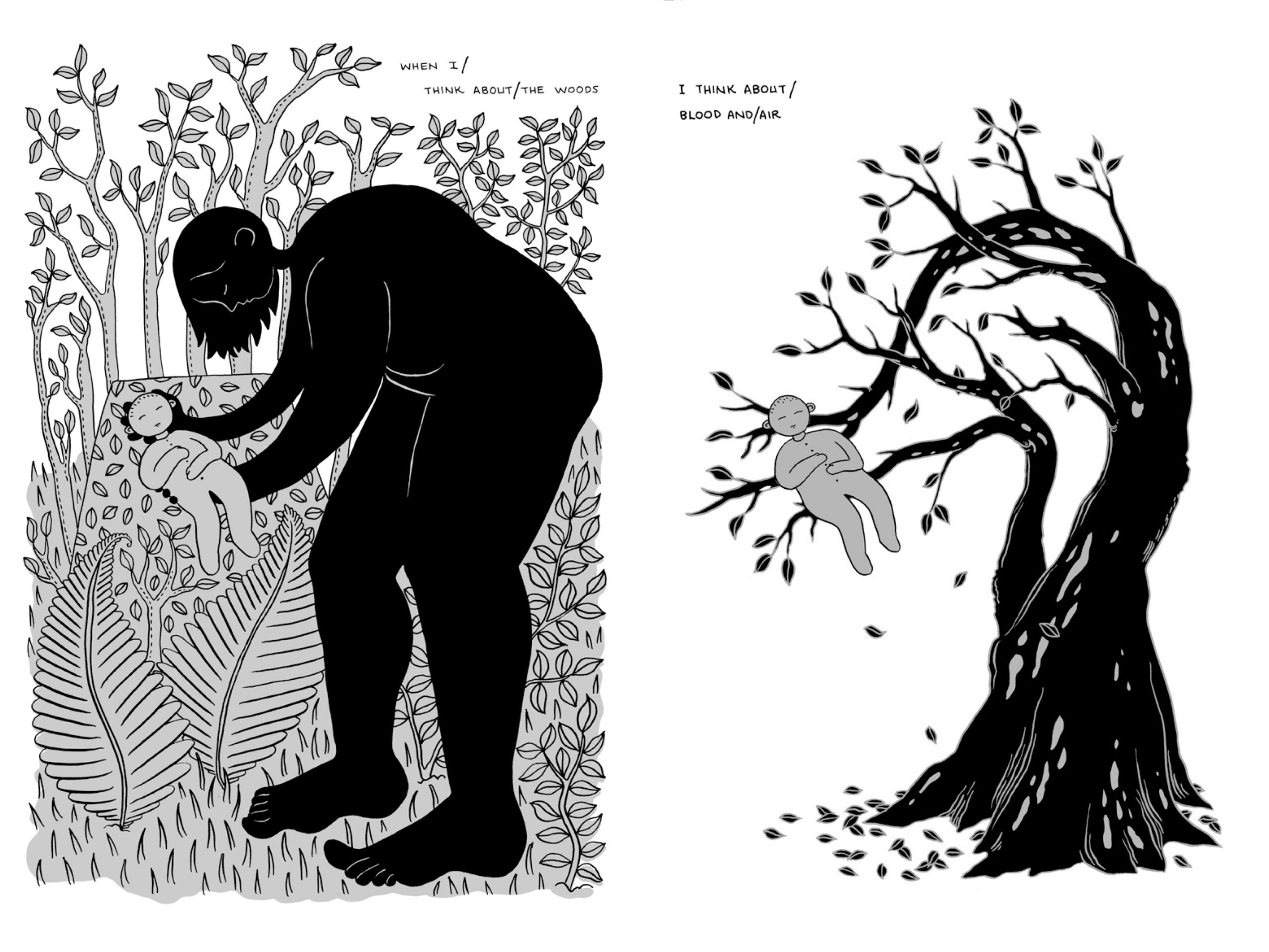
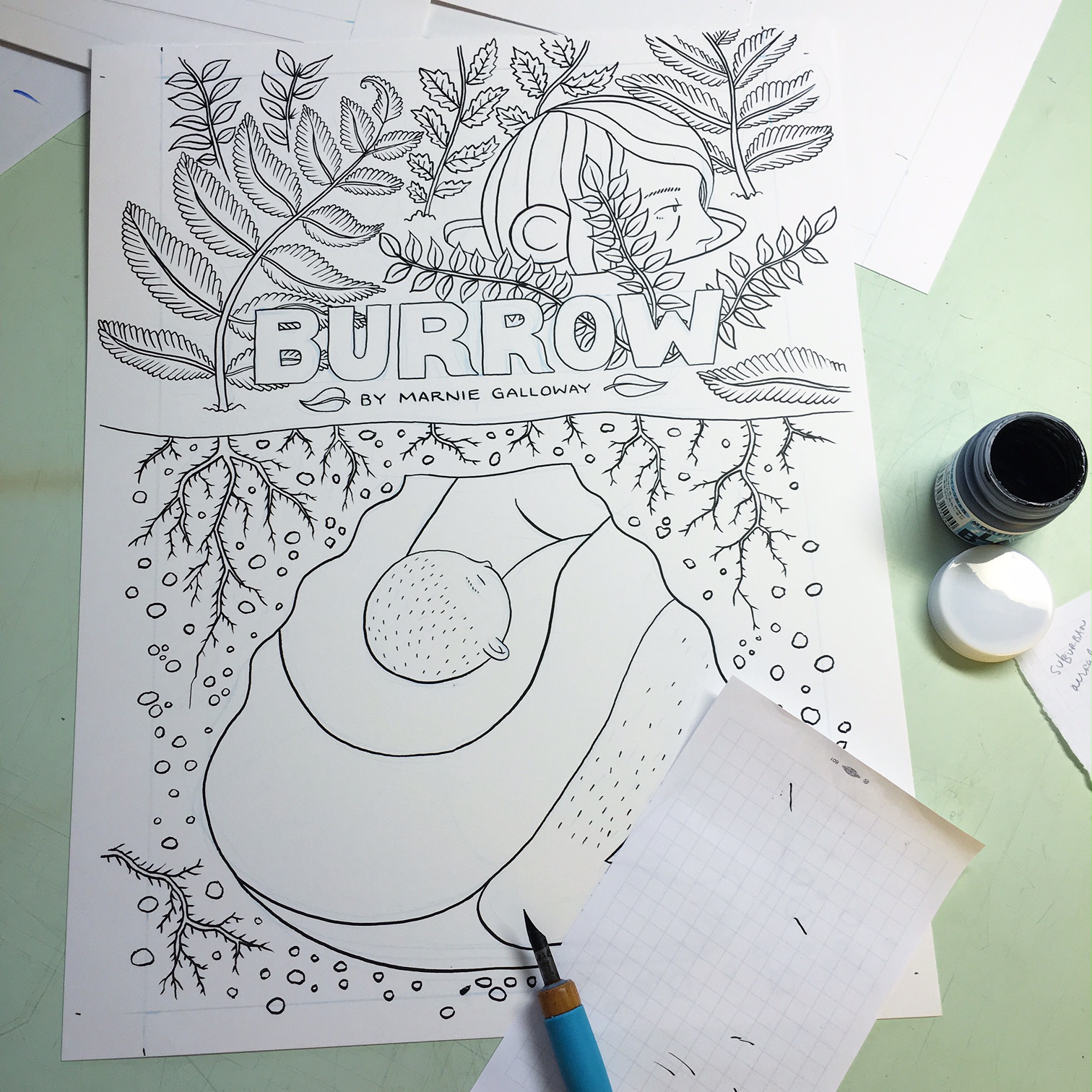
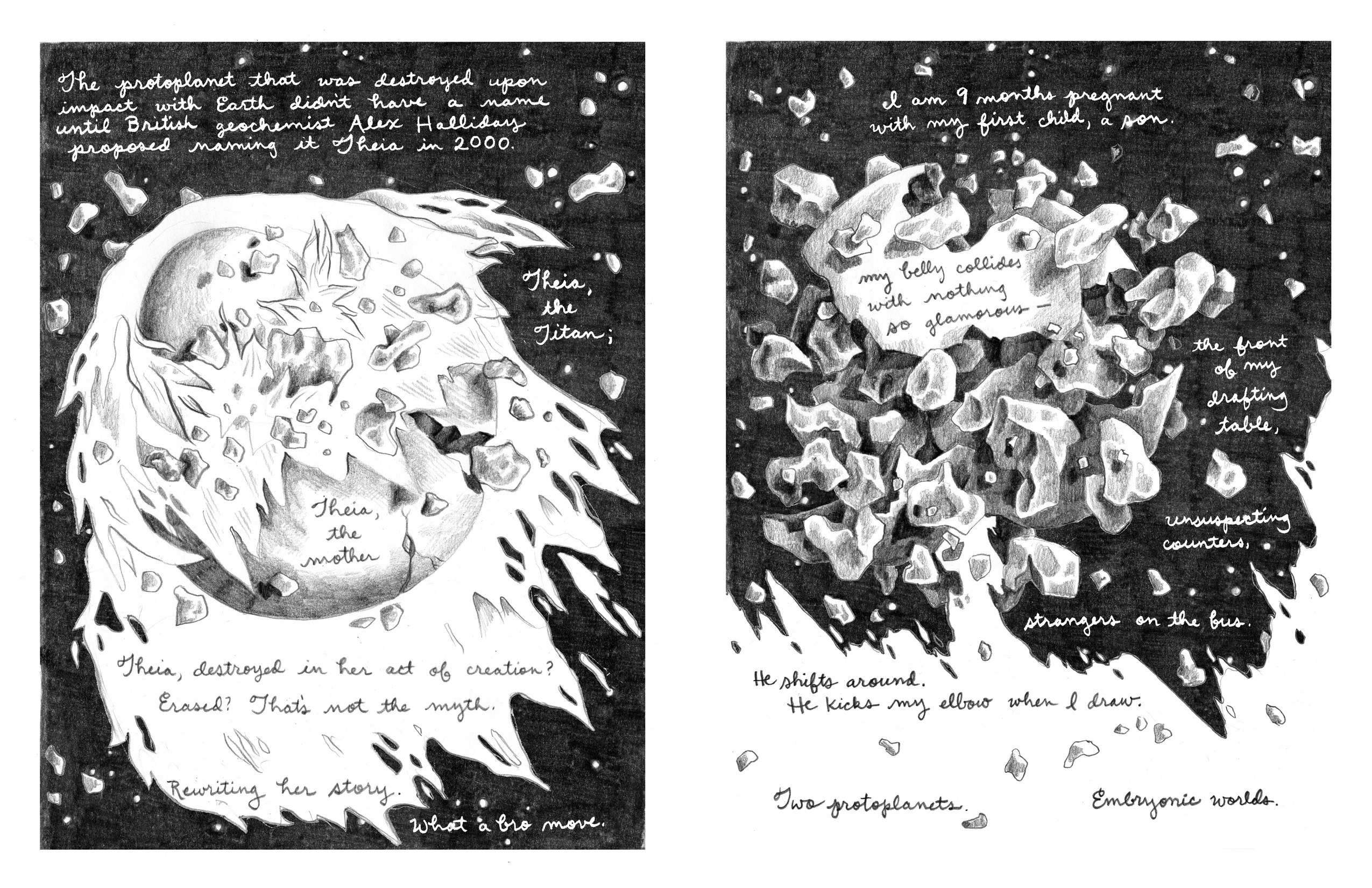
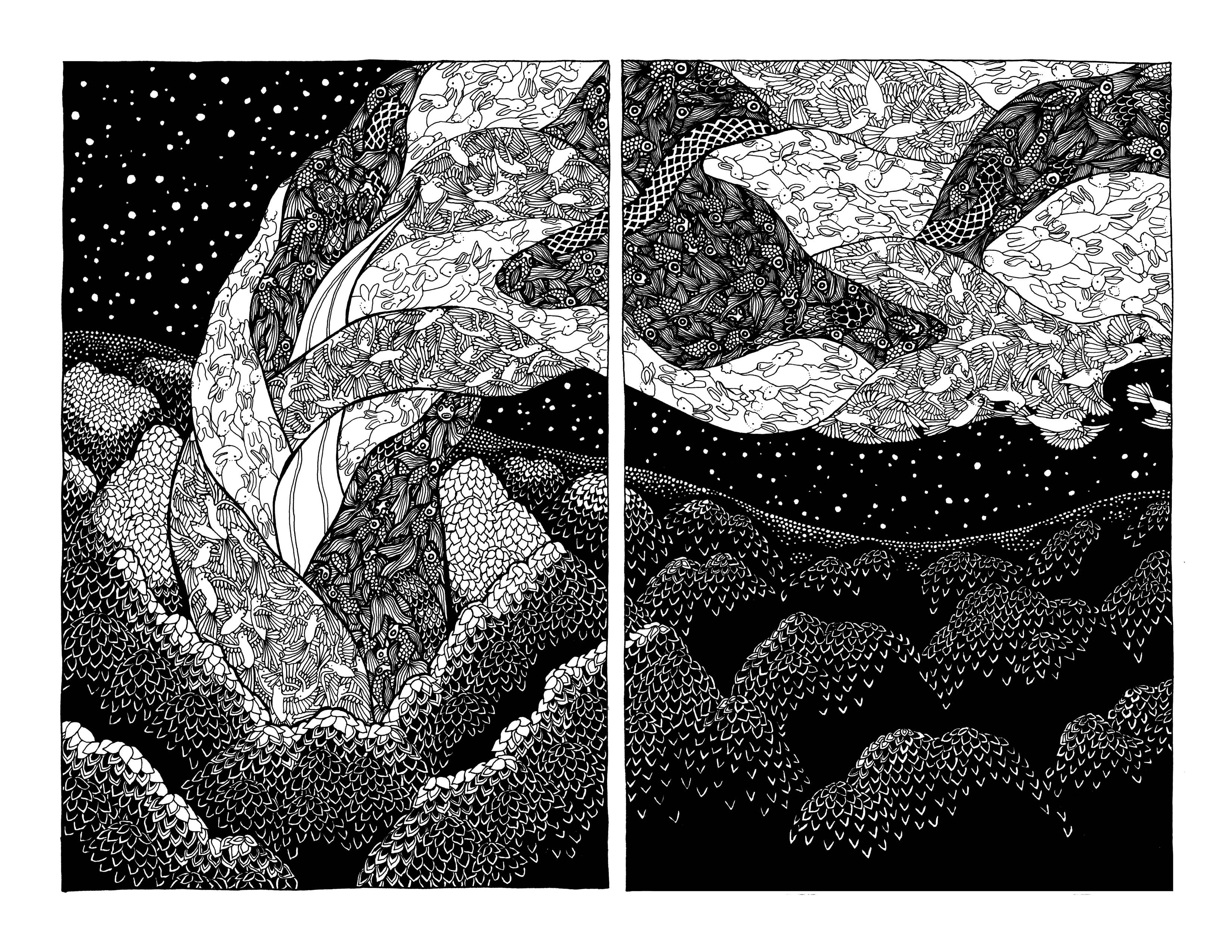
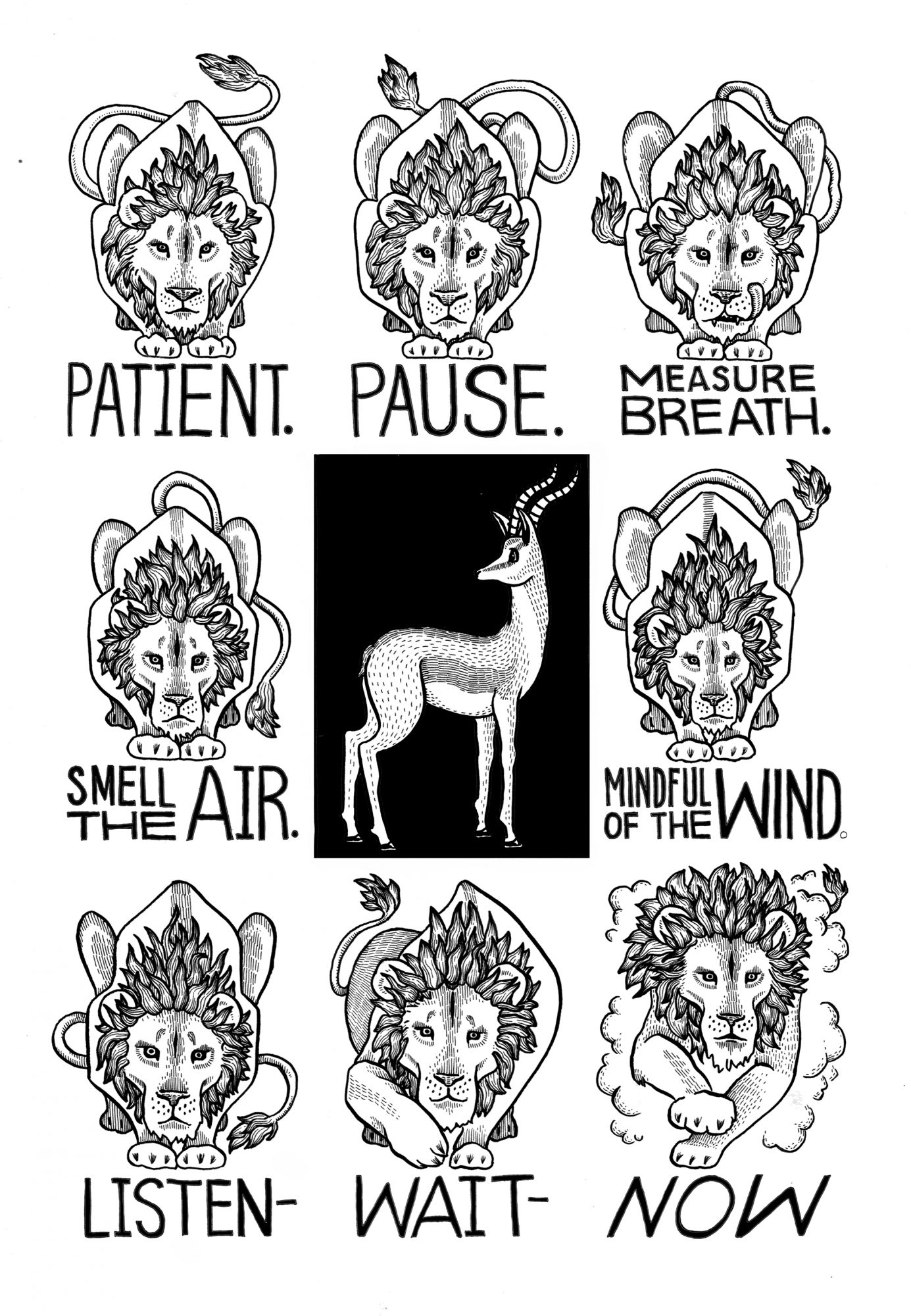 Image Credit:
Marnie Galloway
Getting in touch: VoyageChicago is built on recommendations from the community; it’s how we uncover hidden gems, so if you know someone who deserves recognition please let us know here.


