Today we’d like to introduce you to Marc Menet.
Marc, can you briefly walk us through your story – how you started and how you got to where you are today.
I have always been passionate about cameras and movies, but when I was younger I never imagined that it would become my career. If you had asked then what I wanted to be when I grow up, I would have said a scientist of some kind. I have always been fascinated with how things work as well as building models and Legos. I actually pursued science and engineering throughout high school and into college.
I do remember having a Fisher Price camera and taking pictures of family and things I found interesting or unusual. I found it fascinating to see the world through a viewfinder and decide what to frame in or out. At the same time, my retired grandfather would rent movies from the local libraries and we would watch films together after school. It was quite the experience, we would watch everything A-Z. I lived down the street from the Pickwick Theater, so that became an additional escape for me as well. The Pickwick is such a great classic movie palace. It feels sort of like a Cathedral for film. Needless to say, all of these early experiences helped to plant the seeds for my future career in Cinematography.
My first job in the Performing arts was working lights and sound for the Performing Arts Center at Oakton Community College. It was there I met Tony Churchill, who was an early mentor and friend. I fell in love with the whole creative process as well as the camaraderie and bond you form working long hours with fellow crew. I was hooked. This job really gave me the confidence to take a chance and continue my education at Columbia College in Chicago and study cinematography. What I didn’t realize earlier is that you can make a living working in the arts and it can be a legitimate career choice.
While at Columbia, I took full advantage of my opportunities and worked on as many productions as possible. Between class projects, fellow students films, and independent projects I worked on nearly 100 films in various capacities. By the time I graduated, I had shot the thesis film “An Assignment” for John Rangel, who was a grad student at Chapman at the time, that went on to win Best of Chicago and the Chicago International Film Festival and was bought by Showtime and shown nationally. The film ended up screening at festivals around the world. I also shot a 35mm film for Rod Kirkman called “No Coincidence” that also festivaled well and was shown on ABC. While in my senior year, I shot a documentary and concert film for the band Better Than Ezra called “Close, but not Touching” that you can still buy on Amazon today. Soon after graduating, I won the Rising Star Cinematographer award from Screen Magazine which was a real honor. I was very blessed to start working in the field before I even graduated and I haven’t looked back since.
We’re always bombarded by how great it is to pursue your passion, etc – but we’ve spoken with enough people to know that it’s not always easy. Overall, would you say things have been easy for you?
I learned early in my career that working in the arts is definitely the road less traveled, so to speak. It is in no way the safe choice, but if you are passionate about it you do it anyway. Going into it I didn’t know what it meant to be freelance. This is not a traditional Monday-Friday, forty hour a week, and 9-5 job. You also don’t get a paycheck every two weeks, which takes getting used to. Ultimately, this adjustment is what causes many to leave the industry. The lifestyle is not for everyone.
I have been blessed with great opportunities along the way, but there were times when I was starting out that were tough. One of the greatest gifts I received was being mentored by veterans of the industry like Bob Long, Rich Christian, Andy Cook, David Seman, and Bob Boyer. Columbia did a great job to prepare me for the artistic and technical side of the industry, but I was not prepared for the business side. I had to learn about billing, invoicing, and other standard industry practices.
What’s tough for anyone to prepare for are the swings of being busier than ever and being slower during holidays and the winter. However, one of the greatest parts of my job is that my schedule is not fixed and I have no idea what opportunities await just around the corner. This can also be the most daunting part… the not knowing. Now that I have a family that I love and adore, my wife Erin and daughter Emma, it definitely makes it a bit tougher. I have had to miss the occasional birthday and school meeting, but I think this can happen in any field. Balancing it all out can be a struggle however. I could not make this work without the support of my wife. I never take it for granted and still feel blessed every time I get paid to do what I love
So let’s switch gears a bit and go into the Marc Menet Cinematography story. Tell us more about the business.
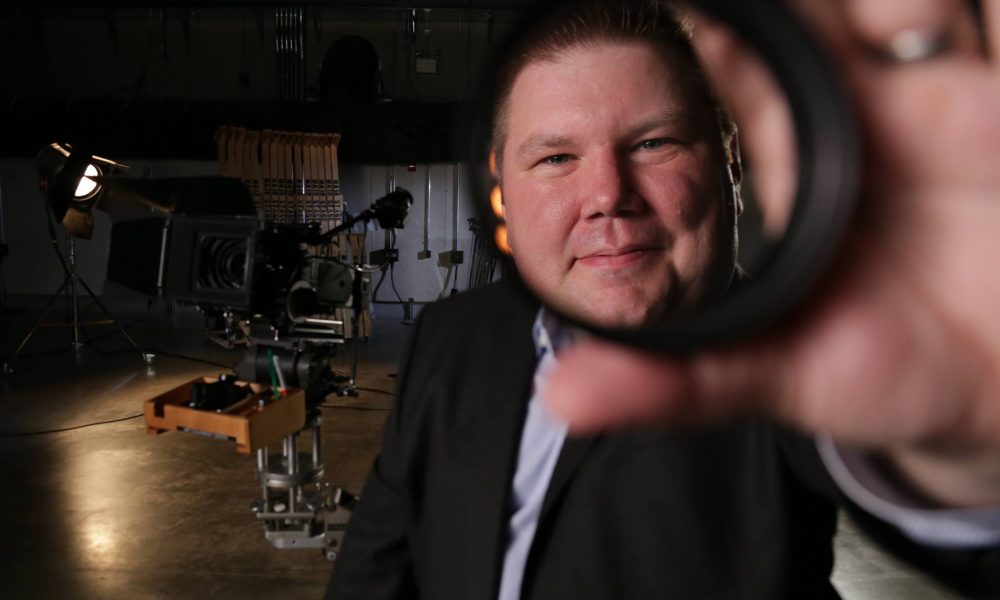
As a freelance Cinematographer, I have had the opportunity to work on a wide variety of projects over the years. To me, this is the greatest part of the job. I get to work with interesting people from around the world and experience different things every day. When I first started, my dream was to go to LA and make a name for myself shooting big movies. Initially I did work mostly in narrative film making, but recently I have made the switch to more documentary, corporate/commercial, and television productions. While I still love narrative film making, there is something about the nature of smaller crews that suits me.
One of my first professional cinematography jobs out of school was as an additional cinematographer on a documentary for PBS about Milton Friedman called The Power of Choice: The Life and Ideas of Milton Friedman. It was an incredible experience. I was the first camera person that Milton and his wife Rose allowed to film in their home in over twenty years. At one point, I found myself at lunch with the producer, Nobel Prize winner Milton Friedman, Secretary of State George Shultz and myself. What do I add to that conversation? I was hooked. I could not believe that I was being paid to have these adventures.
Some of my other experiences were working on television shows for a company in Chicago called Towers Productions. My first television credit as a Cinematographer was for a show on The History Channel called “Conspiracy?” about FDR and Pearl Harbor. I went on to shoot a number of shows for National Geographic, Discovery, Animal Planet, the Weather Channel, and PBS. At the same time, I was shooting independent movies here in Chicago, films like 8 of Diamonds with Eric Roberts, The Thirsting with Mickie Rooney, Devil’s Dominoes with Danny Baldwin, and many more. Most of the films that I shot ended up being distributed internationally. I remember the first time I saw a film I shot on the shelf at Blockbuster. I turned over the cover and sure enough, there was my name. That felt like a huge dream achieved.
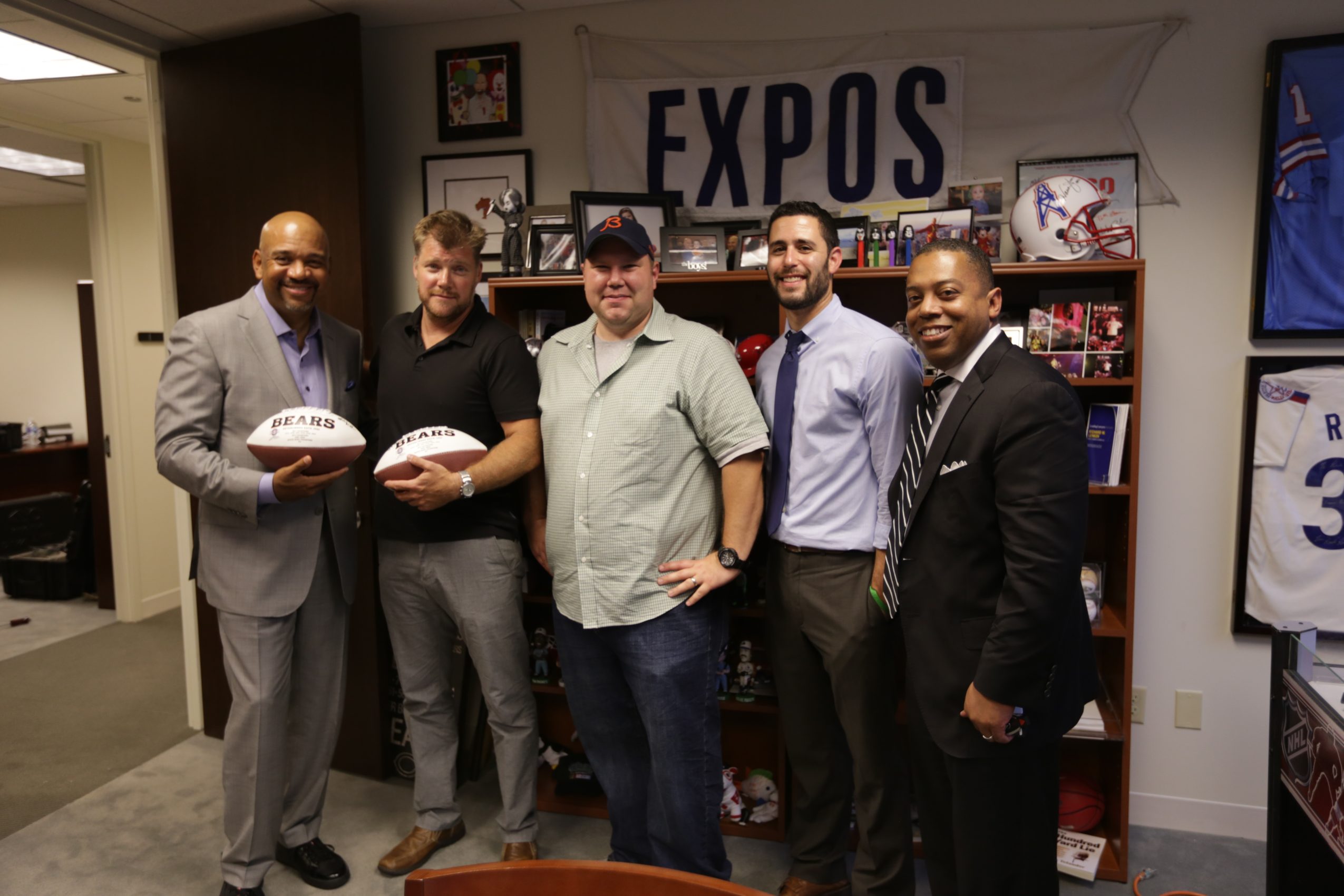
Another notable thrill for me was working on separate feature length sports documentaries for the Cubs, Bears, and Bulls. I shot the Emmy Award winning “Find Yourself a Dream”, which is the story of former Chicago Bull Bob Love. One of the highlights of that film was traveling with Bob to his home town in Louisiana and having butter beans with his family. Bob Love’s nickname was Butterbean, so to be able to have the name sake beans with his family was a thrill. In 2008, I was hired to shoot a dream project, “We Believe” a documentary about the Chicago Cubs. We filmed at games, flew around the country interviewing celebrity fans, and documented the players throughout the season. I am a huge Ron Santo fan, so getting to interview him was surreal. When I shook his hand, I told him that “Mr. Santo it is an honor to meet you.” He put his hand on my shoulder and said to me, “call me Ron son.” I couldn’t believe it. That film had its premiere at the Chicago Theater downtown. Most recently, I shot a film for the Chicago Bears called “85: the Greatest Team in Football History” which was a celebration of the Super Bowl winning Bears. Roeper gave the film 3.5/4 stars and it premiered theatrically earlier this year across the country.
One of the biggest thrills of my career still has to be getting reviewed by Roger Ebert. I was one of several cinematographers to work on Joe Winston’s documentary adaptation of Thomas Franks “What’s the Matter with Kansas?” Not only did Roger Ebert give it a thumbs up, he had it on his top ten list of documentaries that year. The day he died I am not ashamed to admit that I cried. Watching his reviews on TV was such a part of my early film memories.
I just finished my first film as a Director/Cinematographer, “Defending a Monster”, and it is something that I am extremely proud of. It is the story of Judge Sam Amirante and his experience of defending John Wayne Gacy at trial. The film is based on the book of the same name written by Sam and Danny Broderick. One of my dad’s best childhood friends was one of Gacy’s victims, so growing up I heard stories about Gacy. The film is co-directed by Scott Prestin, edited by Jason Madeja, and produced by Joe Klest. Jim Belushi has also been a collaborator on the project and lent his voice for the narration. Getting to direct his VO session was a thrill. We are hoping the film will be premiering soon.
I think what separates me from others is my positive attitude, technical expertise, and calmness under pressure. We always hope that shoots go perfectly, but there are so many things that can go wrong. Being able to adjust on the fly and determine solutions to these problems is something I pride myself on. At this point, I have nearly 20 years of experience to draw from. This experience has also allowed me to form instincts that help speed up the production process.
What I would say makes me most proud about my work is that I put my heart and soul into everything that I do. I am fully aware that I am living out a dream and make sure to keep reminding myself how lucky I am. I don’t settle and continue to try to better myself and grow as an artist. I make it my goal that my best work is whatever I am working on right now. Cinematography is an art that relies heavily on technology, so you constantly have to adjust to what’s coming out next. I feel like a lifelong student trying to constantly evolve.
Has luck played a meaningful role in your life and business?
I would say that luck, which could also be described as timing, has played a huge role in my life and business. I have found myself on the good and bad side of luck at various points in my career. In addition to working as a cinematographer, I have been teaching film for the last ten years at DePaul University and Columbia College. One of the things I teach students is that luck will play a factor in their careers too. You can study, work on a wide variety of projects, and prepare yourself for your career as best you can, but luck still plays a part.
I had an early experience with this while in college. Janusz Kamiński, who is best known as Steven Spielberg’s preferred cinematographer, went to Columbia College. For each of his films, he would take on an intern to work with him in LA. I was selected by the school to be his next intern on an upcoming Spielberg film. As a kid of the 80s, this was a dream opportunity. I remember putting my stuffed animal, which happened to be an Ewok, in the basket of my bike and trying to fly like Elliot from E.T. (I was unfortunately unsuccessful every time). I sent my reel in to his agent for approval and everything was a go. This was going to be my big chance to move to LA and live the Hollywood dream. Then I got a call that Janusz was divorcing his wife at the time, Holly Hunter, and did not think he could take on an intern. I was crushed. As a consolation, the school helped me get an internship on “Barbershop”, which actually worked out great.
I often look back on this one moment and think of how different my life might have been. I think it worked out for the best, but it reminds me how much luck and happenstance is at play in this industry.
In my experience, the best way to mitigate the luck factor is to work hard and put yourself out there. I often use the analogy of fishing with a net vs. fishing with a pole. With a pole there is a possibility of catching a fish. With a net you have the chance to catch a number of fish. The more collaborators I meet and projects I work on, the bigger chance I have of luck going my way rather than against me. I’m not the most religious person, but I do naively believe in good things happening to good people. I like to think of it as good energy or karma that you put out that can lead to good things.
Contact Info:
- Address: 6116 Lane Pl.
Downers Grove, IL 60516 - Website: marcmenet.com
- Phone: 3123752594
- Email: marcmenet@gmail.com
- Instagram: https://www.instagram.com/marcmenet/
- Facebook: https://www.facebook.com/chicagodp/
- Twitter: https://twitter.com/marcmenet
- Other: panandtilt.com