


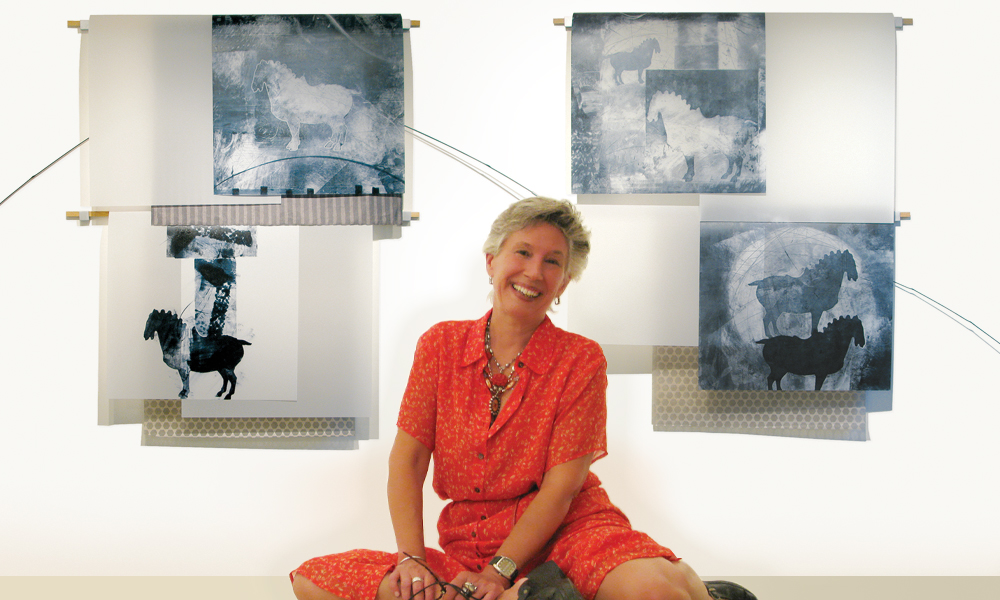
Today we’d like to introduce you to Kim Laurel.
Every artist has a unique story. Can you briefly walk us through yours?
Chicago has been my home for 36 years but I’m originally from Lyndhurst, an east side suburb of Cleveland, Ohio. As I child when I began making marks and then images, I knew that was what I wanted to do in life. I was a natural lefty and had a lot of educational conflicts even though I attended public schools. It was the 1950’s and many institutions still looked down on left handedness. This caused me to be a rebel at an early age. I drew outside the bounds of the coloring books and multicolored areas that were defined as monochromatic fill-in-the-blanks. Additionally, my family had artists on both sides, all independent and self-contained. My father was a Chief Engineer on a great lakes ore ship (steamboat) nine months of the year and in the summer months I would sometimes go along and tour the great lakes.
Aboard ship, I had to entertain myself with drawing and making things, I knew how to be alone at an early age and trust my own instincts. I traveled with my family and saw many beautiful things in other cities and museums at an early age, kind of a Little Miss Sunshine meets Playhouse Ninety. I had an eclectic start to life, shipyards and steel mills one minute, opera and high tea the next.
By the 1970’s, I had intended on being a professional career artist and support myself through teaching or possibly art restoration. I studied at Oberlin College, The Cleveland Institute of Art, Cleveland State University and Illinois State University. My education was in fine art but after graduate school I moved to Chicago and went into graphic design, advertising and publishing. I supported myself on that and did my personal fine artwork in my spare time. I became a member of the Chicago Artists’ Coalition, the Chicago Printmakers Collaborative and many other organizations to keep current and involved with the art world. Chicago is a great place to be an artist. If you work at it, you can survive in style. I’ve taught public and private classes in art, curated shows and participated in many art exhibitions both nationally and internationally. My works are placed in both public and private collections. In recent years I participate on a limited basis in art fair venues for that face to face contact and that “joy of the direct sale” experience.
Please tell us about your art.
I’m compelled to make things, whether they are in two or three dimensions, crafted objects or part of a visual narrative. My mind, eye and hand, thankfully, continue this investigation. For many years I have been pursuing ecology and the study animals in my work. My work is symbolic commentary on sociological and environmental issues in a complex and alienating society. Some themes are about the inadequacies in society and posed as allegory. Primal experiences, nature and personal identity, for example, so basic to our understanding of existence, are symbolized in this allegorical world. Cultural icons are used to enhance or countermand the associations of the figurative images and symbols, emphasizing the dichotomy between physical self-survival and spiritual isolation.
I like to investigate abstract form along with deconstructed kite and kimono studies through monoprint, mixed media and installation. My fascination with Japanese art and kites goes back to childhood. I used to go to kite shops in Toronto and made my first serious art kite structures back in the 1970’s.
I also love the monoprint experience of the control, the unexpected and the process. That freedom to investigate is so very important, to go beyond category restrictions. There are so many nuances within the monoprint form and the integration of mixed media makes it a very rich and dimensional adventure. I work in both oil and water media; sewing into my work is an extension of my textile interest. Sculpture, installation work and photography are some of the other media I work in.
Sometimes I enter into the “Tiny World” with my work. Making small works is a Zen-like experience and a peaceful place. Through teaching, I learn about different perspectives and problem solving. Variation is where my interests are focused. Mixed print media has always remained fresh for me and part of my teaching philosophy.
Many thanks again to Susan Aurinko for recommending my work to Voyage Chicago.
What do you think about conditions for artists today? Has life become easier or harder for artists in recent years? What can cities like ours do to encourage and help art and artists thrive?
Authenticity, “only you know where your art is”. That said, I believe in this methodology to find it: Art is about persistence, a life study and discipline. It is part of your life. If you pursue it a lot or a little at any one time makes no difference… just return to it again and again. Embrace the new with reference to all that you have learned.
Regarding economic survival as an artist: My recommendation is to always seek fair compensation for your efforts, even as a student. As an artist always, always seek fair compensation. Artists are under-compensated for their skills and with do-it-yourself technology the committed creative is further undervalued. Everyone has to learn to market themselves.
Back in the 1970’s there seemed to be a giant schism between the careers of a fine art practice, graphic designer, arts educator, and arts administrator to name a few. A whole lot of specialization, some with excellent programs and structure toward fruitful careers but then some huge gaps on how to get there. Today that is changing, thanks to technology but we still have far to go in finding a viable way to make a living as an artist throughout a lifetime.
One of the things that always bugged me is the qualification game: in which life experience and doing has no “street cred” within some institutions or workplaces. It is counterproductive to learning and a kind of an intellectual elitism. Yes, everyone needs fundamental skills, but there are many ways to get them. Those acquired skills need to be recognized in the “real”, not just be given lip service when it comes time for a job placement. Everyone has to pay so much for their education now, it is a travesty. Universities provide a very expensive forum to learn in but no solid guarantees of placement, just a giant debt. Assistantships and internships provide low cost and free labor to schools and corporations that undermine the very existence of entry level full-time jobs in the arts. Which is kind of a paradox when you think about it. It can make it hard for careers to get a start beyond the halls of an educational institution. That’s where self-marketing and the web come in so very handy. These are tools that should be used in school and a real necessity after a formal education. We should always be self-educating ourselves, always reaching out and reinventing ourselves with more skills.
In fairness, I do believe everyone has the creative feathers to spread out and learn to fly. We now live in an era where we can pursue more creative opportunities than ever before. A forum like this one (Voyager) did not exist 40 years ago. It is an inclusive forum of promotion and information on contemporary cultural. That inclusiveness, in all of the arts is the wonderful by-product of technology. We can share, we can see, we can evaluate and then we can choose for ourselves. Then we can give back. Feel really lucky if you can do both at the same time and throughout your lifetime. Be prepared to work for it.
When was the last time a plumber did a job for the benefit of the experience? Play smart, give where the giving is really needed. Subjective in many cases but do the thinking first. Then go be Zen.
How or where can people see your work? How can people support your work?
I will be participating in the “To arrive where we started” exhibition at the Chicago Printmakers Collaborative (CPC), September 8th – November 3rd. My work will be part of the upcoming Chicago Alliance of Visual Artists (CAVA) “Later Impressions” exhibition at the Old Town Triangle Association Gallery, September 4th – 26th. The artists group Brevity Code Visual (Kim Laurel and Fletcher Hayes) will be participating in the 2018 Ravenswood Artists Walk (RAW) with an exhibition space at Beyond Design on September 15th and 16th. In the spring of 2019 my work will be featured in a solo show in the gallery at the Union League of Chicago. The Chicago Printmakers Collaborative has represented my work since 1989.
Price range: $200 to $10,000
https://www.instagram.com/brevitycodevisual/
http://chicagoartmagazine.com/2010/11/printmakers-creator-and-technician-2/
https://www.artslant.com/global/artists/show/62887-kim-laurel?tab=ARTWORKS
https://www.chicagoprintmakers.com
Contact Info:
- Website: http://www.kimlaurel.com
- Email: zuma2@earthlink.net
- Instagram: https://www.instagram.com/brevitycodevisual/
- Facebook: https://m.facebook.com/kim.laurel.3
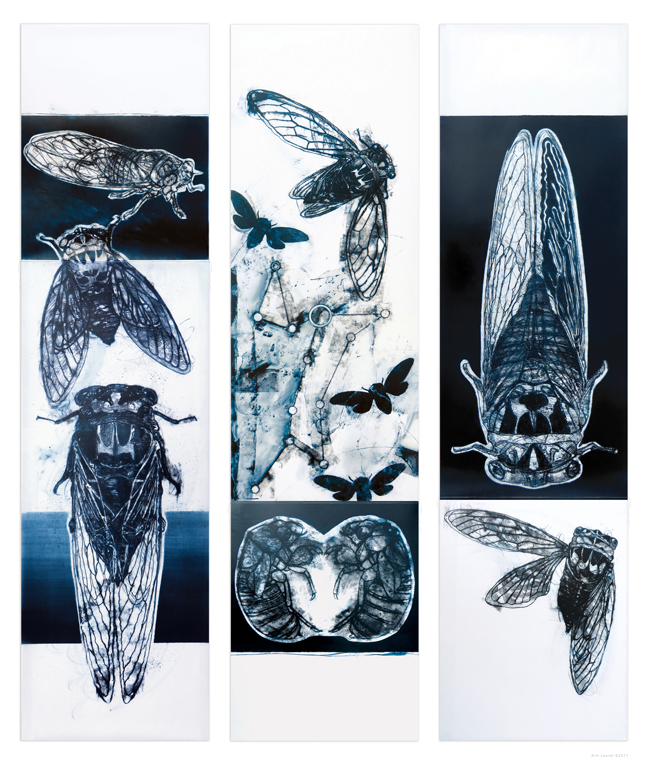
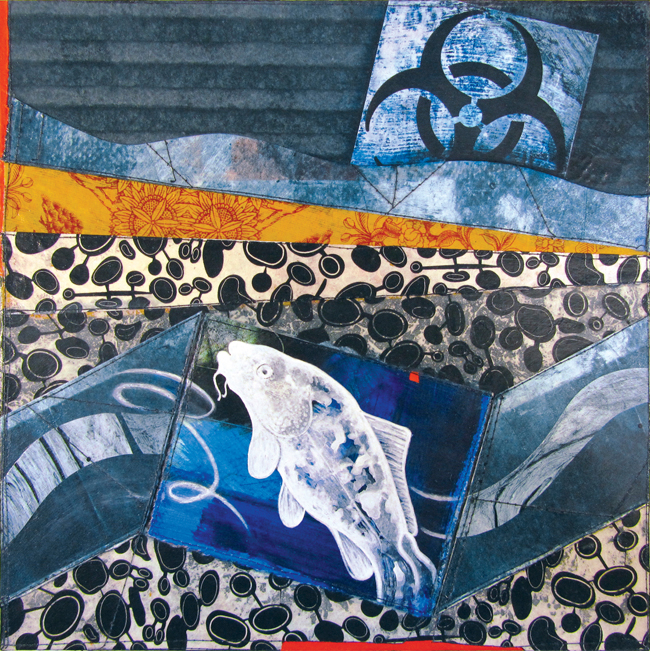
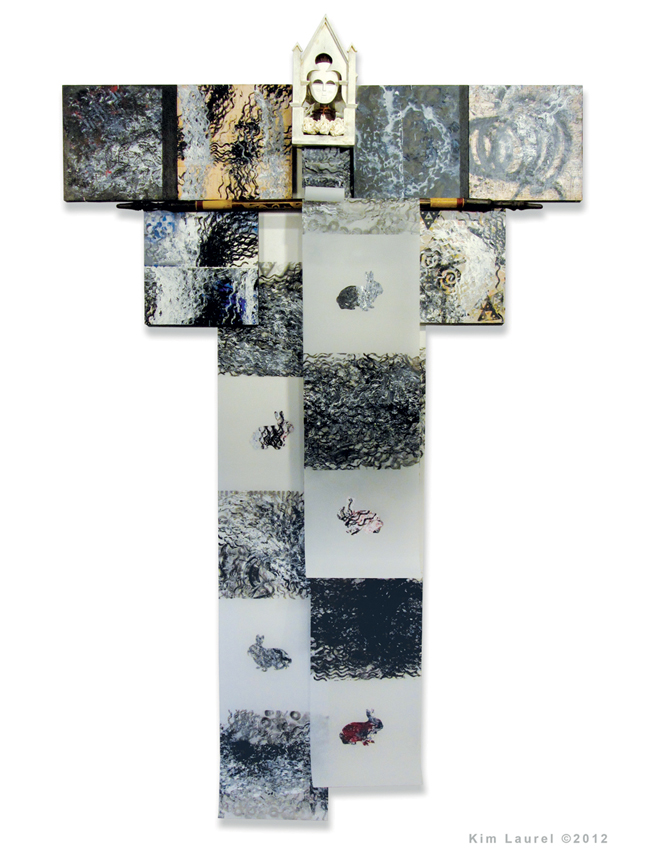
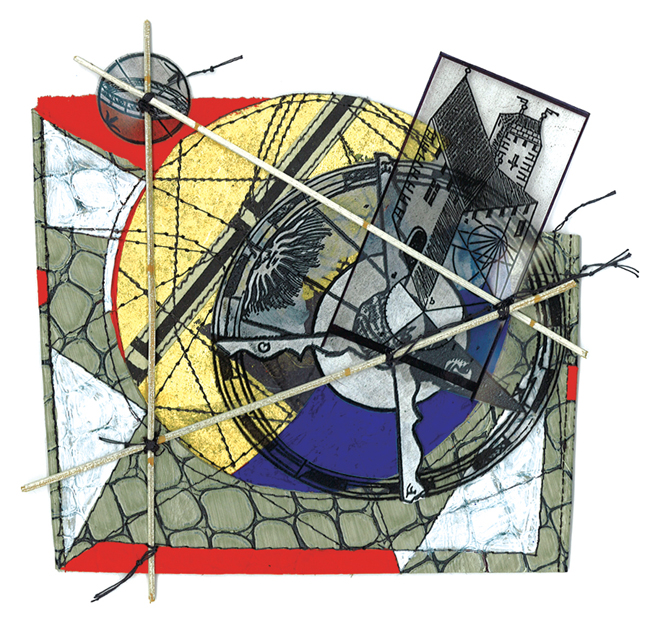
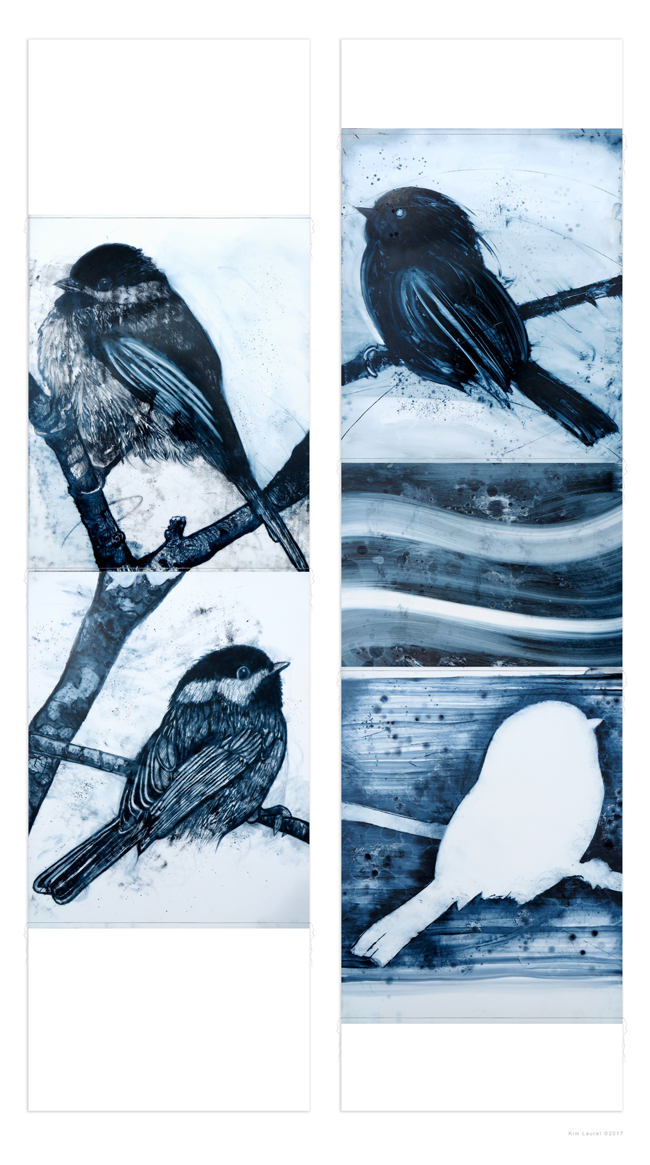
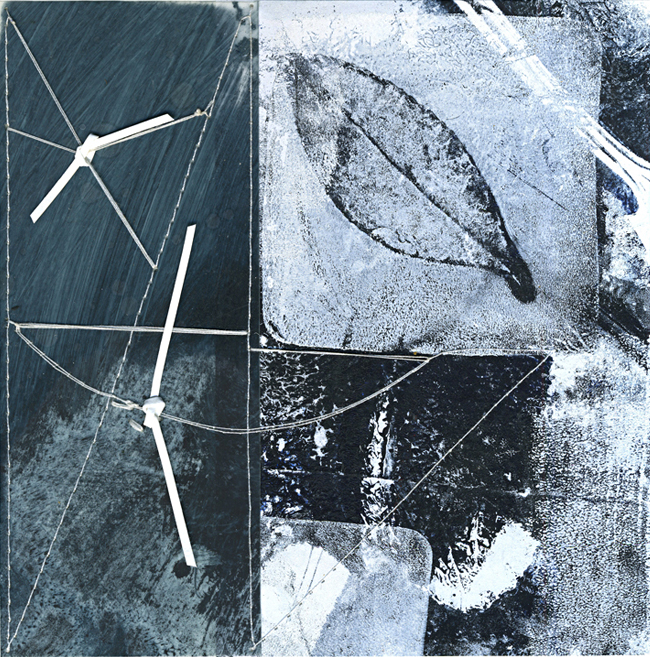
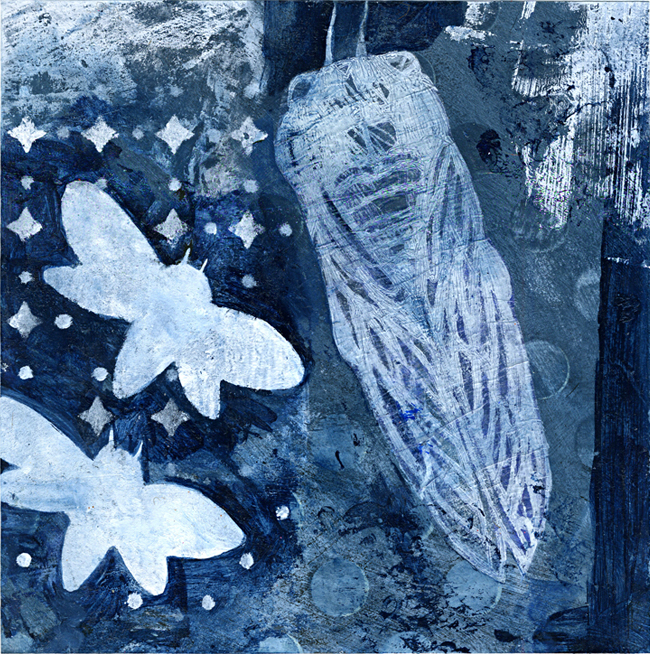
Image Credit:
Art images: Kim Laurel ©2018
Artist’s portrait: Fletcher Hayes ©2018
Getting in touch: VoyageChicago is built on recommendations from the community; it’s how we uncover hidden gems, so if you know someone who deserves recognition please let us know here.


