



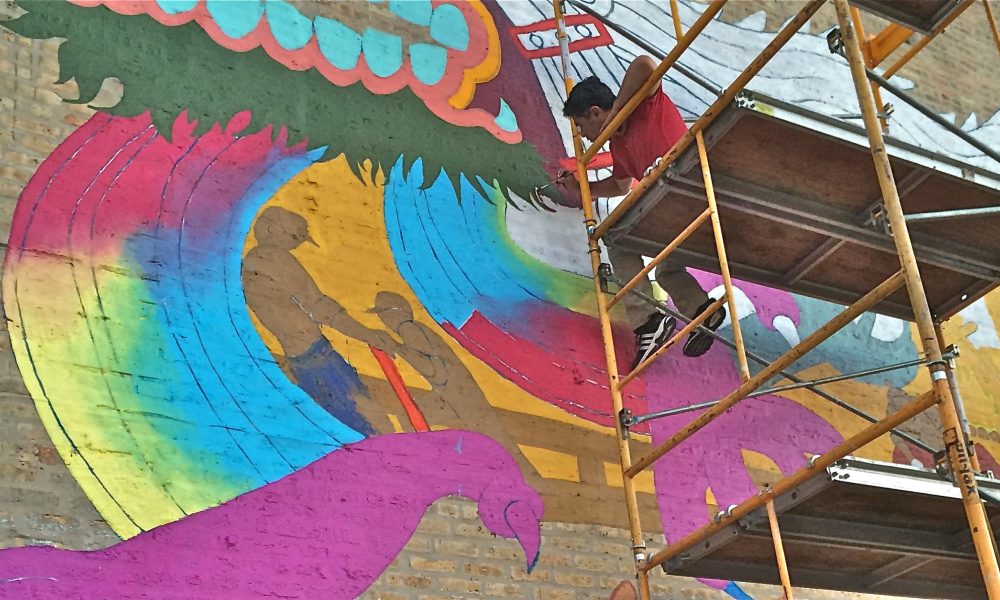
Today we’d like to introduce you to Juan-Carlos Perez.
Juan-Carlos, let’s start with your story. We’d love to hear how you got started and how the journey has been so far.
I was born in Juarez, Chihuahua, Mexico and immigrated to Los Angeles, California at the age of 4 with my mother and older sister. We stayed with and aunt in East Los Angeles for a couple of months then moved to Pasadena where I grew up. We rented a bedroom from a family. My mother was a seamstress at a garment factory. It was where big apparel companies would send their attire when they couldn’t produce it fast enough. It was Chinese owned and the majority of workers were immigrants from Mexico, South America, China, (etc). Sometimes my mother would take me to work and I would watch everyone working really hard, sweating, cutting, steaming and ironing clothing. They used these big, green, heavy industrial machines to sew. I still remember the sound of sewing machines filling the factory. These were the adults I grew up around: hard working immigrant laborers.
When we visited some of my mother’s friends, their elders would tell us old Mexican folk stories that they had experienced, or had been passed down from previous generations.
My mother’s parents had passed away by the time she was 5. She didn’t know much about her ancestry and rarely spoke of her experiences growing up in Mexico. So when other folks from the homeland talked about their way of living, their histories, it fascinated me. It gave me a connection to a place where I was from. A place I knew very little of but only through other people’s stories.
As a kid I was always sketching. I would draw on notebook paper because that was the only thing around. We didn’t have art in our school or after-school art programming. I drew everything around me: trees, buildings, houses. I would check out books from the library to teach myself how to draw: rabbits, horses, plants, trees, everything. But I did not have my own voice. I was quiet around my friends, never talked about how felt or how I viewed things, opinions, perspectives. .. You know? We were poor, immigrants (outsiders) and came from a single parent home. So I didn’t talk openly about how I felt. I just tried to fit in.
As I got older, I got really good at drawing and because I wasn’t a straight A student, I was told that I could not go to college so I had to think about a getting a factory or company job after high school. I was told that if I wanted to do art then I should be more practical about what I could do with drawing like illustration or cartooning., I figured I would try cartooning (animation) because I could make money that way and because someone had once said to me that I did not need a degree to go into it. That was what they called it, cartooning, back then because everything was hand drawn. So I began taking life-drawing class at a city college to brush up on the anatomy. But after a few courses I began to paint and create 3-dimensional artwork/installation realizing I was creating my own vocabulary through art. I thought it was pretty amazing to be able to physically interpret how you feel through your art. I had found my own words. I guess you can say that is when I really began to speak.
I found out that there was such a thing as “art school” and decided to try and give it a shot. So I took off to Chicago to attend the School of the Art Institute of Chicago (SAIC). It was during school that a group of us from the Latino Art Student Organization began to work in the Pilsen neighborhood. We collaborated with a woman named Neri, a Salvadorian refugee who had suffered horrific torture from the Salvadorian Govt. She was running ecology workshops from her tiny apartment to children in the neighborhood. That was my first taste as to how to use art as a tool to advance learning. It also gave me the privilege to bring art into communities or individuals who normally did not have access to it due to lack of funding/resources in the neighborhood. We were giving them access. We were also giving them the opportunity to investigate their own creative process and to use art as a language to respond to the world around them. We were giving them a voice. We were giving them the ability to feel out loud.
Soon after I got my degree, I began to find out that there were many groups of artists & art organizations that had been doing this type of work in Chicago. And it is the reason why these neighborhoods have continued to sustain their rich, vibrancy throughout all of these years .So for the past 17/18 years I have been make my bread and butter as an independent teaching artist. Along the way I have worked & collaborated with many artists, organizations and art education researchers, all having their own unique approach & methodology to arts education. But I have been consistently doing this type of arts integrated work with CAPE (Chicago Arts Partnerships in Education). Their support has been unwavering and they have given me a platform to continue to investigate and grow as an arts educator. Shout out Cape!
As an Artist I have been able to continue to grow in my own personal art practice. Currently my work investigate how perspectives today continue to be shaped by imbedded colonial ideals that manifests itself through acts of dominance, aggression and racism that target black & brown people of color, immigrant communities and the laborer. But this time it’s through the brown lens. I’m flipping it.
I’ve have become myself here in Chicago, an artist, an educator and a voice. Chicago is an amazing city. It is made up of such a beautiful, diverse group of people from so many parts of the world. There is culture everywhere. The neighborhoods surrounding the downtown area are the heart and soul of the city. It is the families in these communities that pump life into this city. It is their hard work that has kept this city in existence. Whether it’s through art, conversations in bars, poetry reading in open spaces, talking politics in alleys or organizing demonstrations in a family’s kitchen over cafe con leche– there is a heart and a collective voice ready to take on the challenges brought onto us from outside forces. Our culture will continue.
We’re always bombarded by how great it is to pursue your passion, etc – but we’ve spoken with enough people to know that it’s not always easy. Overall, would you say things have been easy for you?
I came into this country as an immigrant, poor, raised by a single mother and grew up in an African American neighborhood. I was automatically viewed differently and I could feel it. My family didn’t look or fit the ideal of what a family should be and there has always been discrimination. We lived on the north side of Pasadena in a low-income African American neighborhood. We lived right next to the projects. This was in the 70’s, there was a big rift between blacks and whites at that time. We took the brunt of this because we were very light skinned Mexicans and were one of three non-black families in that area. I mean, it hadn’t been long since Martin Luther King Jr. and Malcom X had been taken. But eventually as time passed we were left alone because I think everyone just figured we were all in the same situation: struggling and just trying to get by. I mean, we couldn’t fight while waiting in line for that government cheese. So I was very fortunate growing up with a diverse mix of friends.
But since then it’s been: Prop 187, Rodney King –L.A. Riots, Treyvon Martin, Laquan McDonald, Dreamers, ICE, immigrant children in detention centers or killed at the border just to name a few. So the challenges continue but the majority of Americans today are more united than ever in combatting these negative views (and that’s not hope, it’s a fact).
As an independent artists (and teaching artists), we put a lot of hours in. We are our OWN business so were are in a constant state of trying to make ends-meat. It’s not easy sometimes but it’s what keeps us doing a lot of important work in our communities and it contributes to the authenticity and honesty in our own art practice. It keeps our art from being filtered, contaminated or compromised for the purpose of selling. I call it hustling.
We’d love to hear more about your business.
I am a Visual Artist, Arts Education Integration Specialist, Consultant and Art Activist.
I was born in Juarez, Chihuahua, Mexico and immigrated to Los Angeles, California at an early age. I grew up in Pasadena. I later moved to Chicago Illinois to pursue a degree in Fine Arts at the School of the Art Institute of Chicago. I have been living in Chicago for approximately 20 years!
I am an interdisciplinary multi-media artist who creates intense landscape spaces where visual & complex relationships revolving around the themes of politics, immigration, violence, racism, and religion (etc) are interwoven with under current histories. These spaces create a context where different perspectives, ideals & concepts confront and challenge one another.
I am also a part of The Chicago ACT Collective, a group of socially & politically engaged friends, artists, educators, activists that create many forms of resistance through the use of art that promote collaboration and dialogue across multiple communities that reflect and respond to current and local needs identified those directly impacted.
Through a variety of art such as printmaking, drawing, zines (etc), our work has addressed issues on the crisis of: Lead in our water here in Chicago; Our city as sanctuary space: And currently we are unveiling a podcast series of interviews/narratives of residents specific to the neighborhood of Pilsen, a beautiful Mexican community which is now being directly impacted by gentrification and the displacement of families it is causing. Our intention is to archive these personal histories so that these narratives aren’t erased by the changing of the neighborhood, a document of a beautiful neighborhood, people and culture that has contributed to putting Chicago on the world map (currently listed as one of the best places to live in Forbes).
Teaching
As an independent teaching artist, I partner with arts organizations such as Chicago Arts Partnerships in Education (CAPE), Chicago Public Schools, park districts, community centers, etc. I am grateful to have the opportunity to teach a variety of visual arts which include: rigorous arts education integration, modern arts, cultural arts, public art and mural making (painted and mosaic). My role as an Arts Educator has given me the opportunity to work with many diverse communities within the city of Chicago, Detroit and West Africa.
My method of teaching allows students to pay attention to their art processes and their way of thinking so that they can create an honest, artistic interpretation of themselves or their community. Just like in my own art making practice, I see the importance of how personal histories affects the creative art making process. When it comes to working with individuals who have no experience with the visual arts student need to investigate with-in themselves in order to find their voice.
It is important to me that each community I work with produces artwork that has substance, meat, and a fury that will engage the viewer. That no matter the art medium, its authenticity comes across as intense, powerful, subtle honest and genuine.
We are each individuals who come from rich histories, struggles, achievements and failures. I want the student artists to have an unforgettable art making process, which allows them to take complete ownership of the work
Personal Statement
Currently in my personal studio work, I reflect how our perspectives still continue to be shaped by old traditional ideals: acts of dominance, aggression & oppression. These ideals manifest themselves through issues that revolve around the themes of: immigration, racism, violence, religion (etc) and target disenfranchised communities, specifically black & brown people of color.
Through my art practice and teaching, I have worked with many low-income and disenfranchised neighborhoods, schools & communities throughout the city of Chicago, Detroit & West Africa. I feel there are a lot of similarities and parallels between my life as child and many of the students I have taught, specifically immigrant children new to this country. They feel isolated. They do not understand the language. They feel different and are having a hard time trying to integrate. The history books don’t reflect their lifestyle and the people on television do not look like them. Now they have witnessed a majority of the voting population that has catapulted into the mainstream an aggressive ideal determined to work against them, strip them of their human dignity and shame them for being different, cultured and beautiful.
I challenge and confront these barriers or perspectives determined to own through aggression/dominance. The same social/racial issues that incoming immigrants and new generations of Mexican & Latinos still face today.
I am very process-oriented when it comes to my own practice of making art. Through the physicality of making art I draws parallels to my mother and her friends, laborers, immigrants. In my paintings, stitches and markings of color struggle to fit in with one another, wanting to harmonize into a larger composition. The stitches and colors work hard to challenge, investigate and dissect these indifferences in order to create and be a part of something bigger. A visual representation made up of small individual pieces.
I find similarities in my art making practice and how immigrants or disenfranchised individuals today struggle to fit into a larger equation of this country.
What were you like growing up?
I was a quiet kid. I felt things but did not know how to express it or talk about it. I just tried to fit in and go along with others. I just agreed with everyone. I did not have my own voice. I was quiet around my friends or never talked about how I felt or viewed things. I mean their life at home was different. I could not relate to their family structure or the things they had or did because we did not have that.
But we went through many amazing experiences together. While our parents were working, we would grab our bikes and ride through trails along the mountains, ride through holes in fences until we were near or on the property of JPL (Jet Propulsion laboratory–NASA). There were these hidden trails that lead us to these rock formations and beautiful bodies of water reservoirs until we were chased out by government helicopters.
We would ride our bike in the water reservoirs from Altadena all the way to East L.A. /El Sereno. We got into a lot of trouble.
I drew and I listened to music a lot. When I was around 9 or 10 we would go to a birthday party, there would be a conjunto (Mexican band) playing, everyone was dancing in the patio outside while I stayed in the living room breakdancing. I grew up listening to many different types of music but Rap, Mexican Rancheras & R&B has a special place in my heart. I was so in love with Anita Baker. And I loved old movies from the golden era of Mexican cinema. Pedro Infante had an amazing voice.
Contact Info:
- Website: www.juan-carlosperez.com
- Phone: 847.372.7459
- Email: juancarlosperez927@gmail.com
- Instagram: www.instagram.com/juancarlosperez927/
- Facebook: https://www.facebook.com/Juan-Carlos-Perez-296234963726244/
- Twitter: twitter.com/PerezCarlosJuan
- Yelp: http://nationalmuseumofmexicanart.org/exhibits/peeling-grey
- Other: https://3arts.org/artist/Juan-carlos-perez/
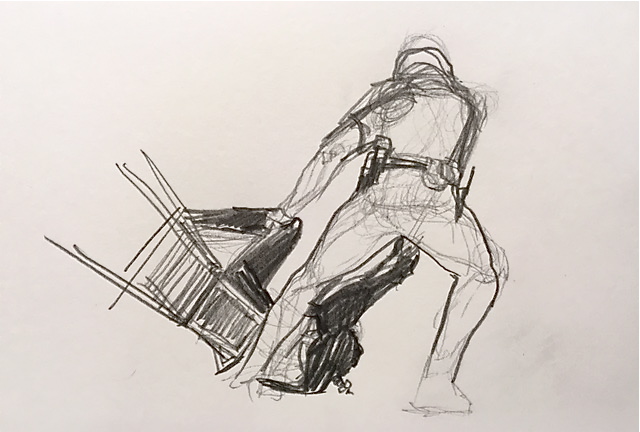
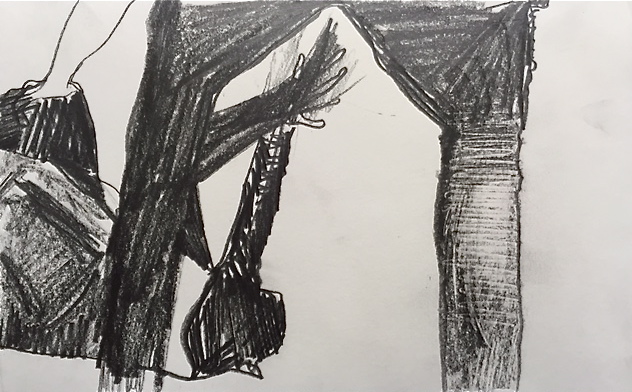
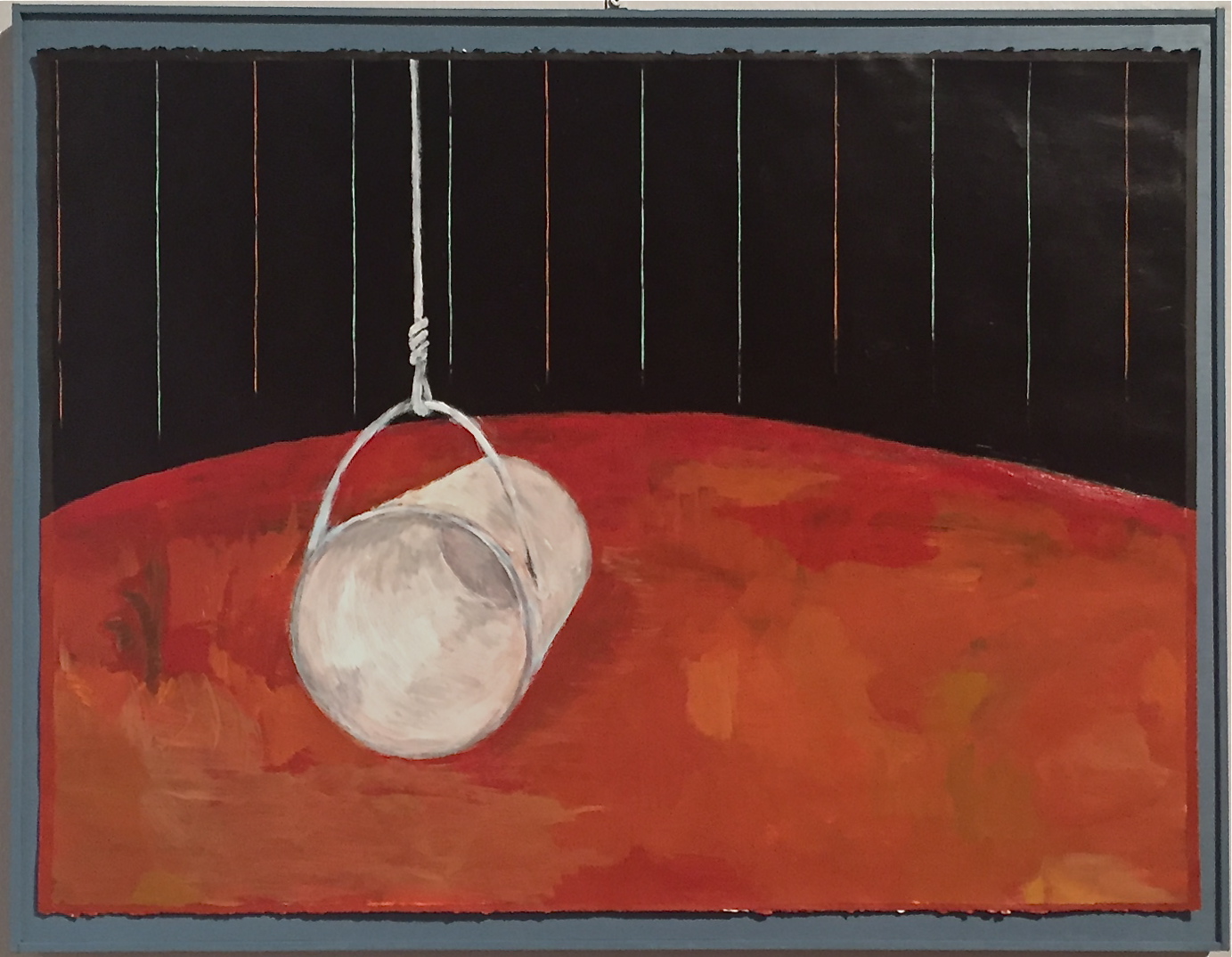
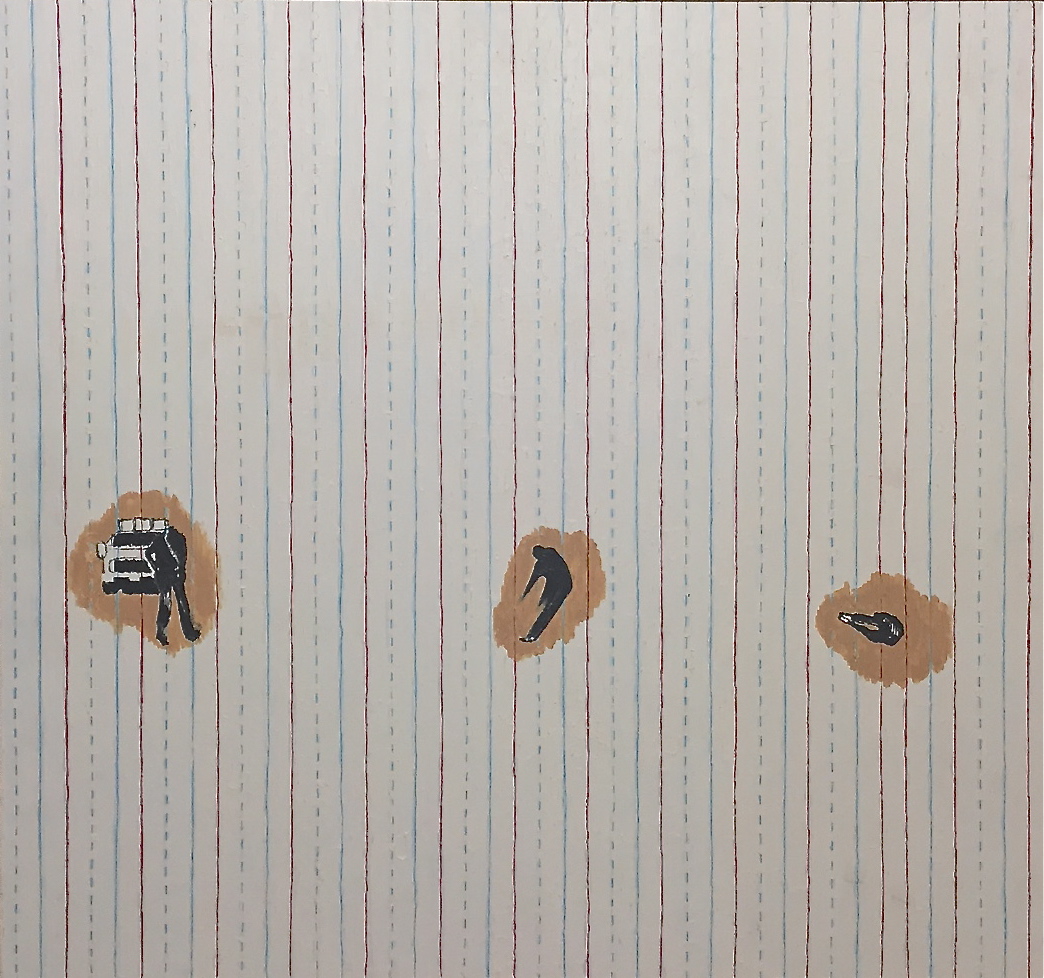
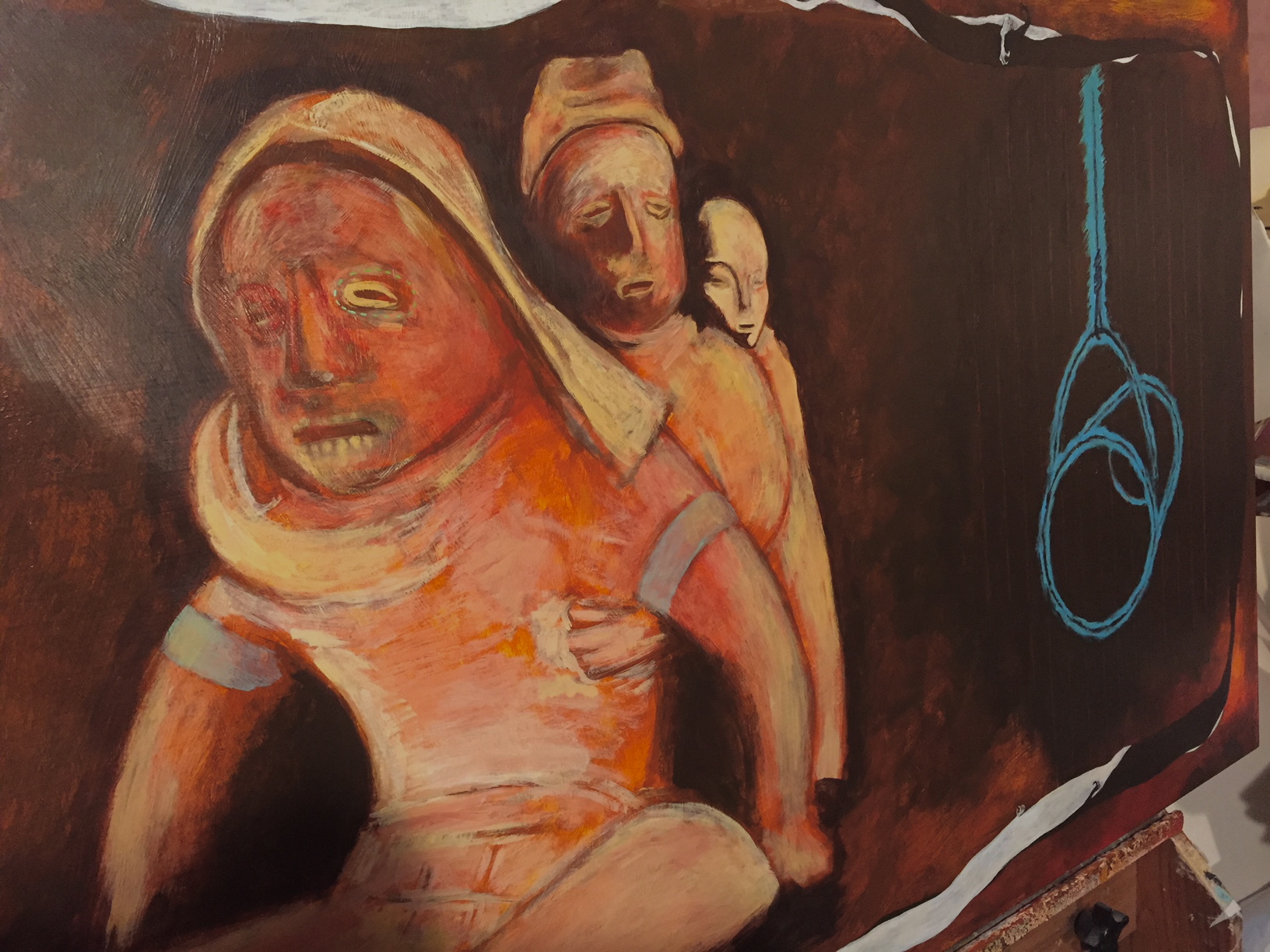
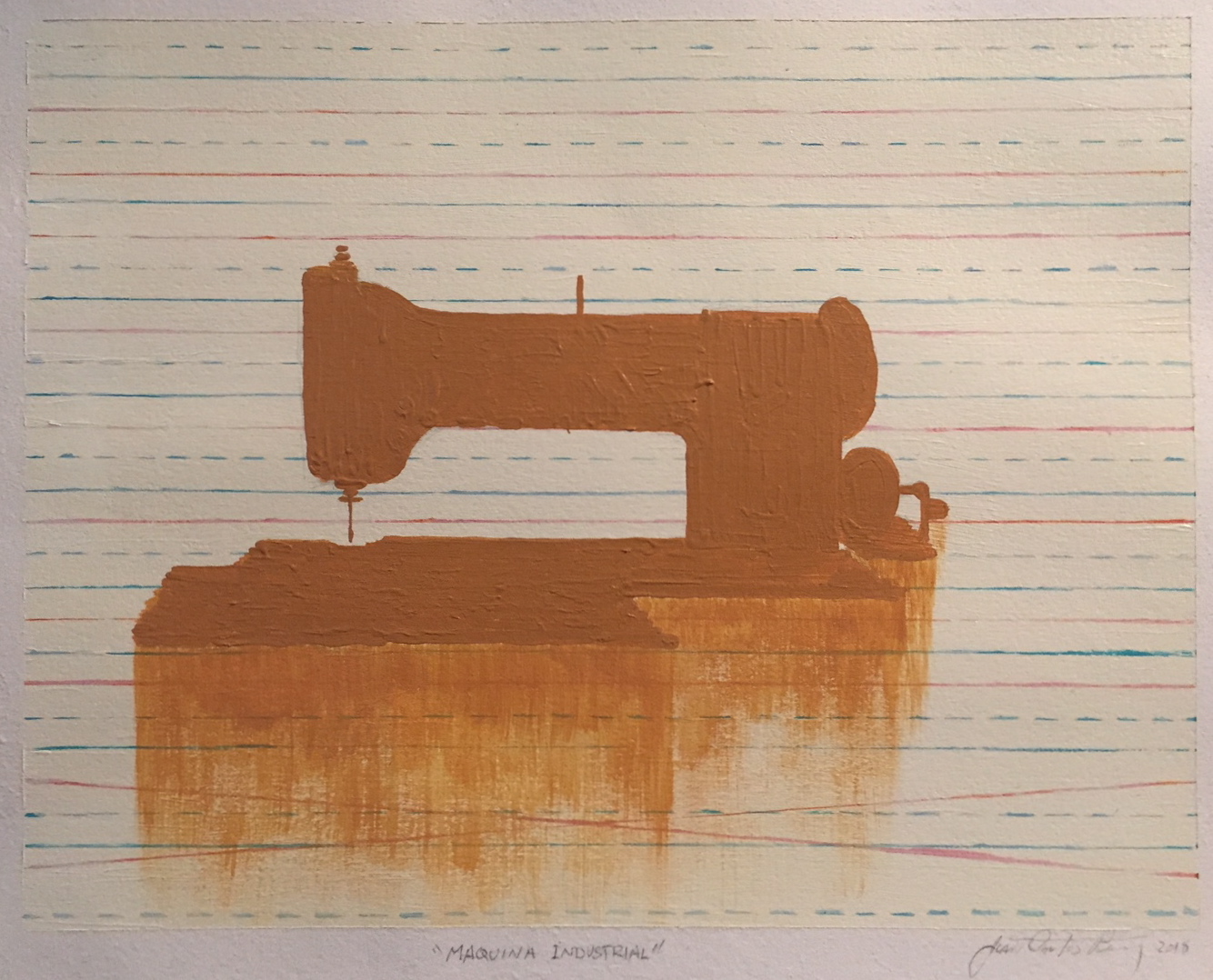
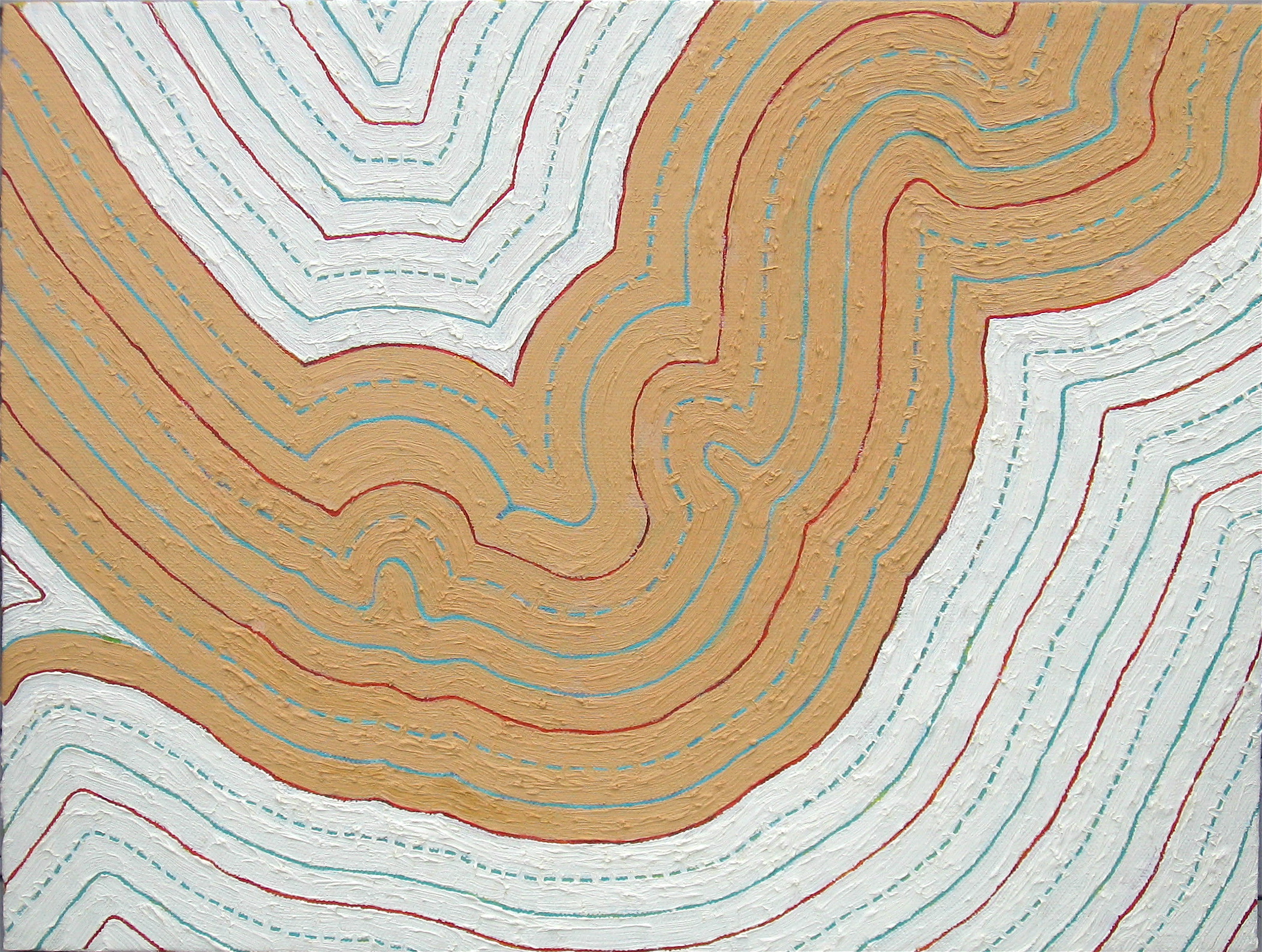
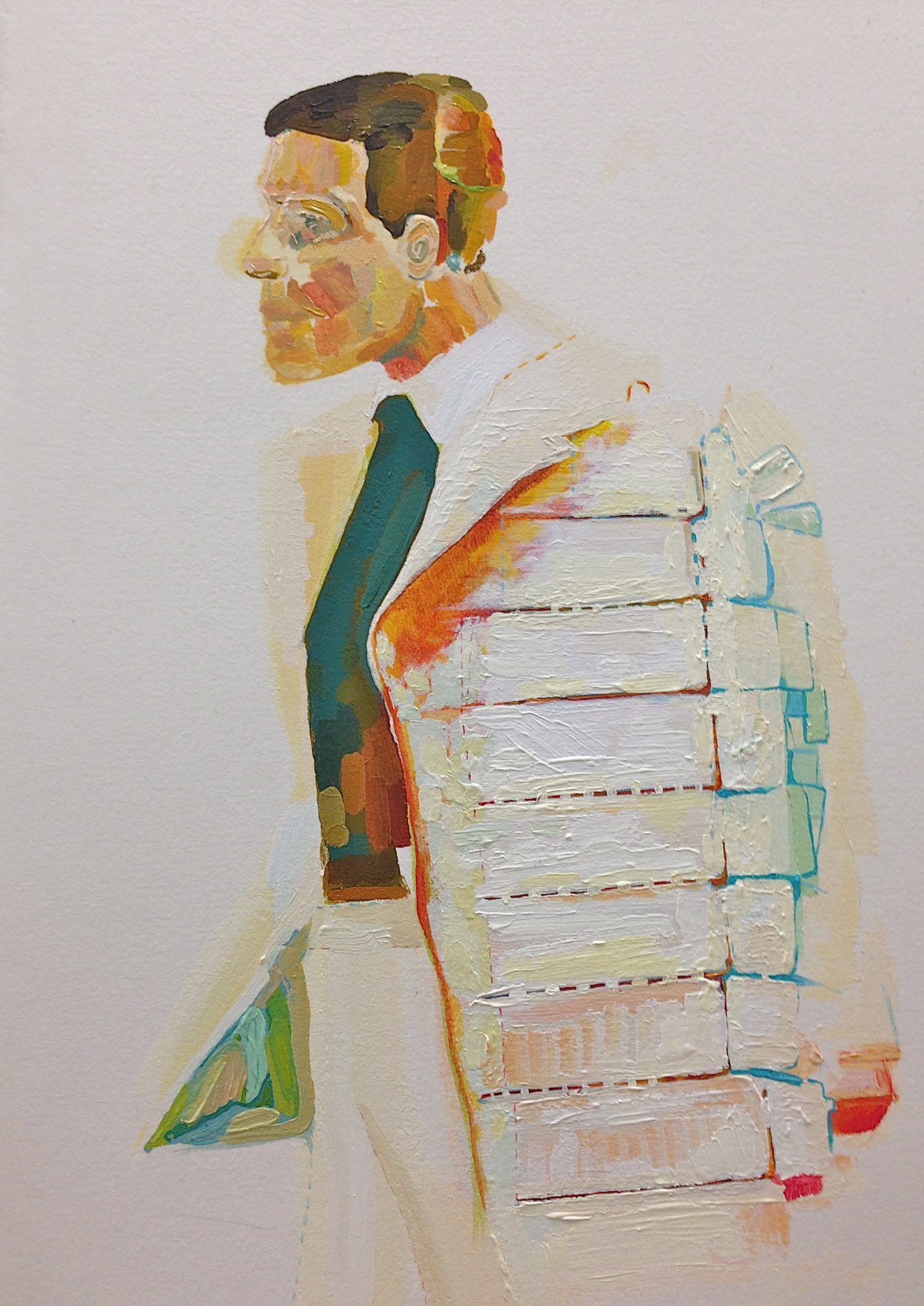
Image Credit:
1.- “Spring Valley High-Still 4″ , pencil on paper, 2015
2- ” El Agua Cura”, acrylic on paper, 2018.
Currently on view at National Museum of Mexican Art, Chicago–Now thru October 7th, 2018.
3-“Laquan McDonald”, acrylic on wood, 2015
4- “Spring Valley High, Still 1” pencil on paper, 2015
5 “El Agua Cura-Extension”, acrylic on wood, 2018
Currently part of the” Wont You Be My Neighbor?” summer exhibit, Chicago
6 “Hombre Moderno” acrylic on paper, 2014
7 “Maquina Industrial”, acrylic on paper, 2018
8 “Ockham’s Razor” oil on canvas, 2003
Getting in touch: VoyageChicago is built on recommendations from the community; it’s how we uncover hidden gems, so if you know someone who deserves recognition please let us know here.


