



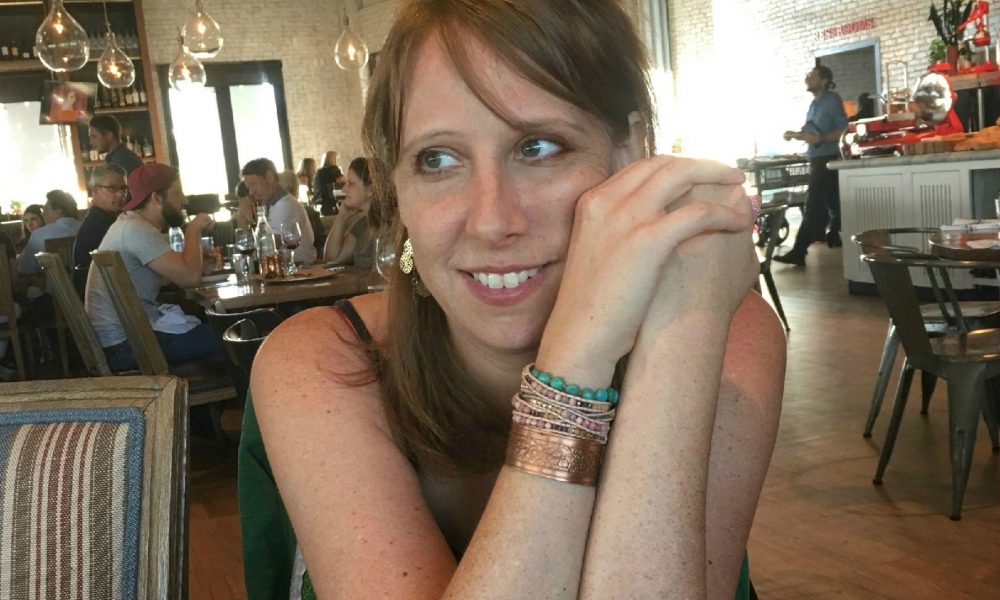
Today we’d like to introduce you to Janna Sobel.
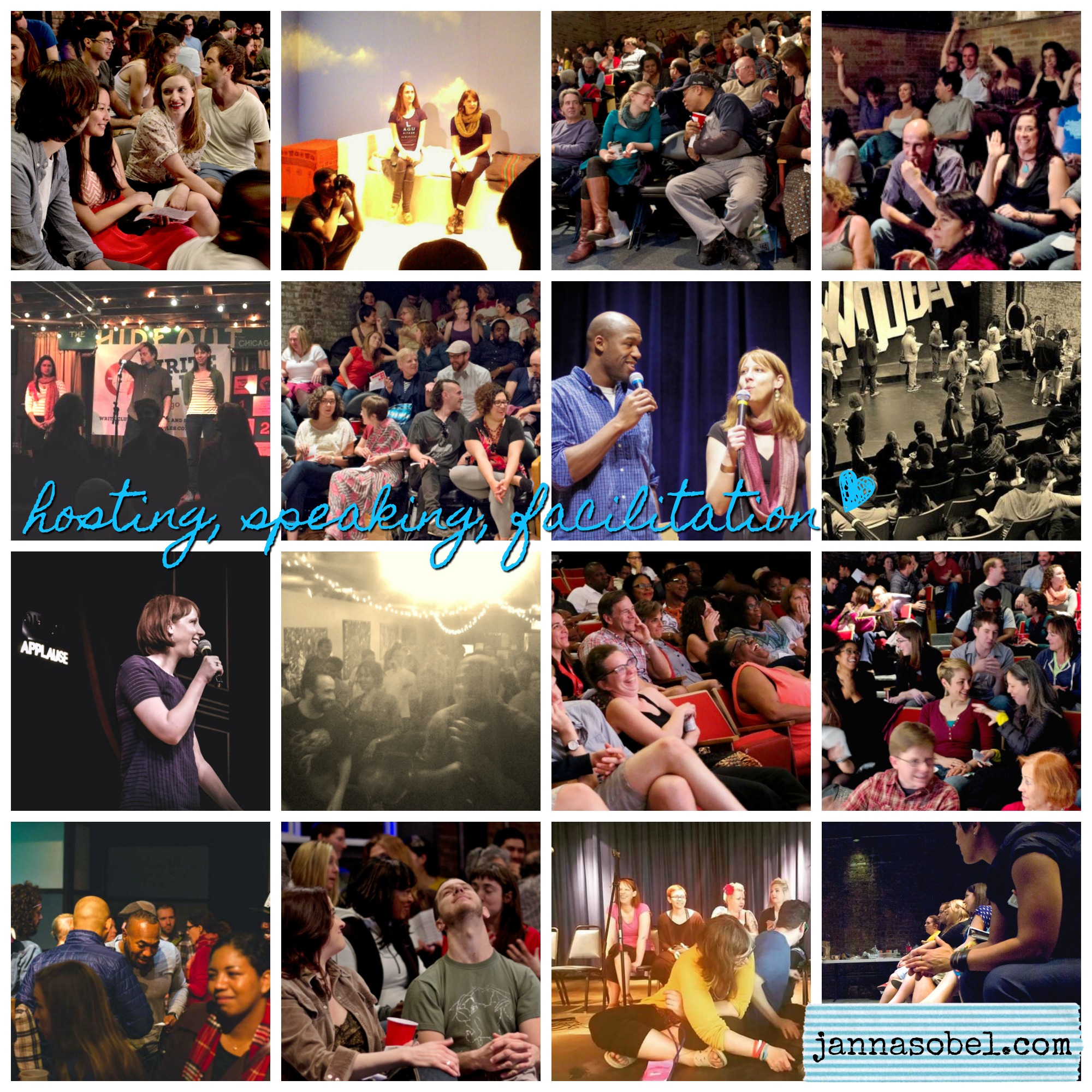
Thank you for asking. I’m a writer and performer, and I have been teaching these things to other people for the past 18 years. I also facilitate… experience-type, game things. Here Chicago and Intuitive Treasure Hunter are two beloved events I run that offer people opportunities to trust themselves and trust each other, and to notice the joy that comes from that. I also offer private workshops to organizations who want to work together more positively and productively, and I story-coach individuals preparing to speak to large groups (TED Talkers, Moth Grand Slam Winners, politicians, ministers, organizers, etc.). A lot of study and experience has built to this work, and all of it centers around the wish to strengthen communities, and increase individual creative freedom.
I grew up in a family of storytellers, and I saw how powerful story can be to entertain, connect, inspire, teach, heal, and even sometimes hurt. I consider storytelling to be something of a superpower, and part of my work is to help people use those powers for good. I also recognize that the struggle to assert the dominant narrative is consuming much of people’s energy lately in social, political, and professional spheres. But we don’t have to fight so hard for that. We can only tell effective stories when we’ve been able to stop narrating life for long enough to notice it first. And real life is better than any story we can make up about it, anyway. For those reasons, I’m also invested in offering experiences that help people stop narrating life until it’s time to tell a story about it.
My interest in a stage as a place for honesty deepened when I discovered solo performance. Studying theater at NYU and La Mamma in New York, I saw stages used as places for the communication of deep, radical, powerful truths. During college I was fortunate to work at a theatrical Managers’ office that not only managed Broadway shows, but also the careers of solo performers like Annie Sprinkle, Tim Miller, Lypsinka, Penny Arcade and others. There, I got to learn from performers who seemed to be serving as modern shamen; in a tradition of soothsayers and sacred clowns who use their platforms to shine light in the darkest parts of the social psyche, and lift it all up and laugh at it. I was very lucky to study with Wooster Group founding member and Performance Artist Leeny Sack, and to later collaborate with and direct productions curated by Annie Sprinkle and Beth Stephens, which included collaborators Lynda Montano and Guillermo Gomez Pena among others. Working with these heroes grounded my understanding of a stage—any size, anywhere—as an opportunity for healing and revolution.
After college in New York, I moved to San Francisco and continued studying performance with amazing teachers while working as an actor, director (mostly in the tradition of Theater of Testimony– true story for the stage), and performance teacher at the oldest progressive school on the West Coast, Presidio Hill School. I also discovered Improvisation there. Recognizing its roots as a rehabilitative theatrical art form, and was thrilled to learn more about those roots (Viola Spolin, Neva Boyd, Hull House and the WPA!) when I moved to Chicago ten years ago. I continue to teach Improvisation today at The Second City, and I design and lead Applied Improvisation workshops for many companies and organizations. When used intelligently, I am continuously dazzled by Improvisation’s ability to empower, unite, and transformed people.
Has it been a smooth road?
Not always smooth. I recovered from major pancreas surgery a couple of years ago, which was made possible by a community of wildly supportive, generous-hearted friends and family members. When I was in New York just beginning studies, I had regular seizures that led me to be diagnosed with a brain tumor. That was a long time ago, and it is gone, and I am fully healed. It’s something I don’t talk about a lot, but not because it is a secret. Mostly because of the stories other people would project on me when they heard about the illness and recovery. Like I’ve mentioned, I recognize the power of story, and whether this is true or not, I feel like one of the ways I escaped with my life from that time, was by dodging possible stories– statistics, expectations, fears– about was probably going to happen to me.
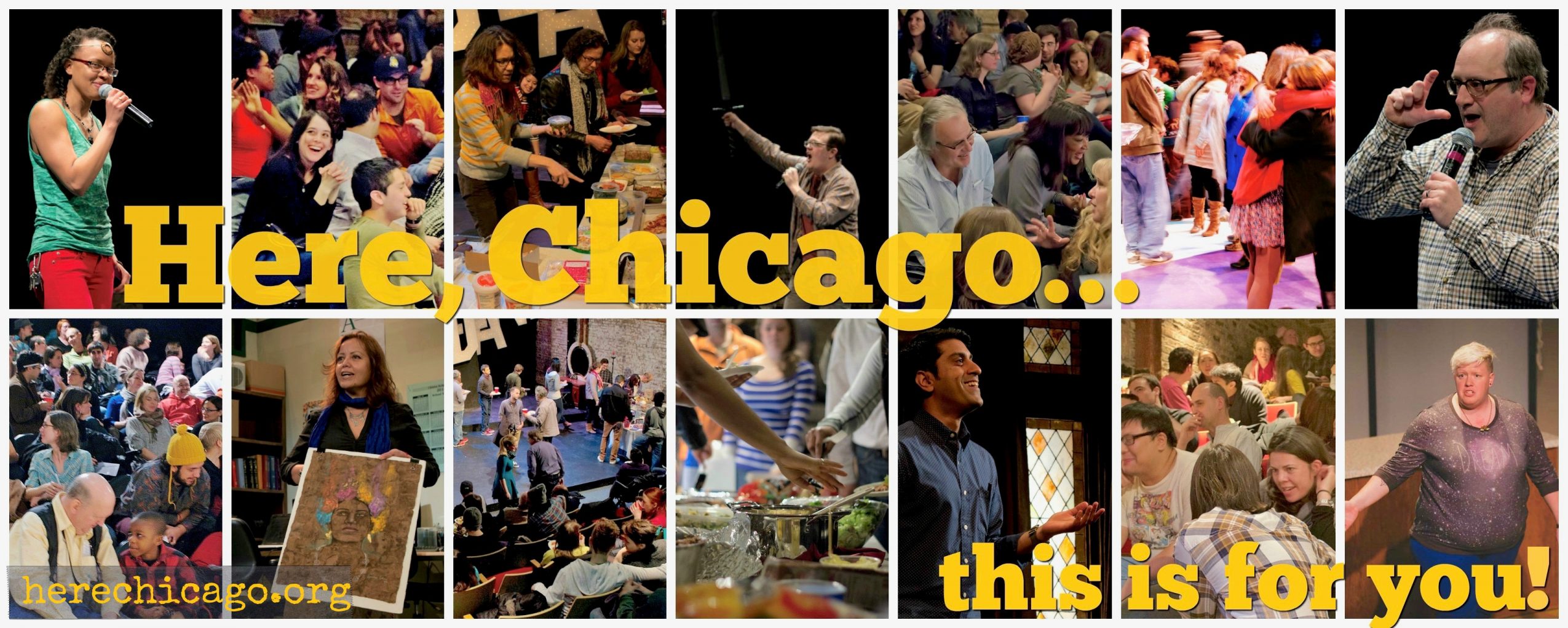
One way I do this is through the live storytelling show I run, Here Chicago, which is a big night of live storytelling with a giant potluck dinner. This show has been running for over 7 years in 150 seat theaters, and regularly sells out. The situation gives everyone the dignified frame of a stage to tell an important true story. It also fosters community across the lines that typically split Chicago up. It brings people together from different professions, creative practices, and cultural, religious and economic backgrounds to build alliances and hear new voices. It’s always a joyful, moving night, and lots of people call it magic.
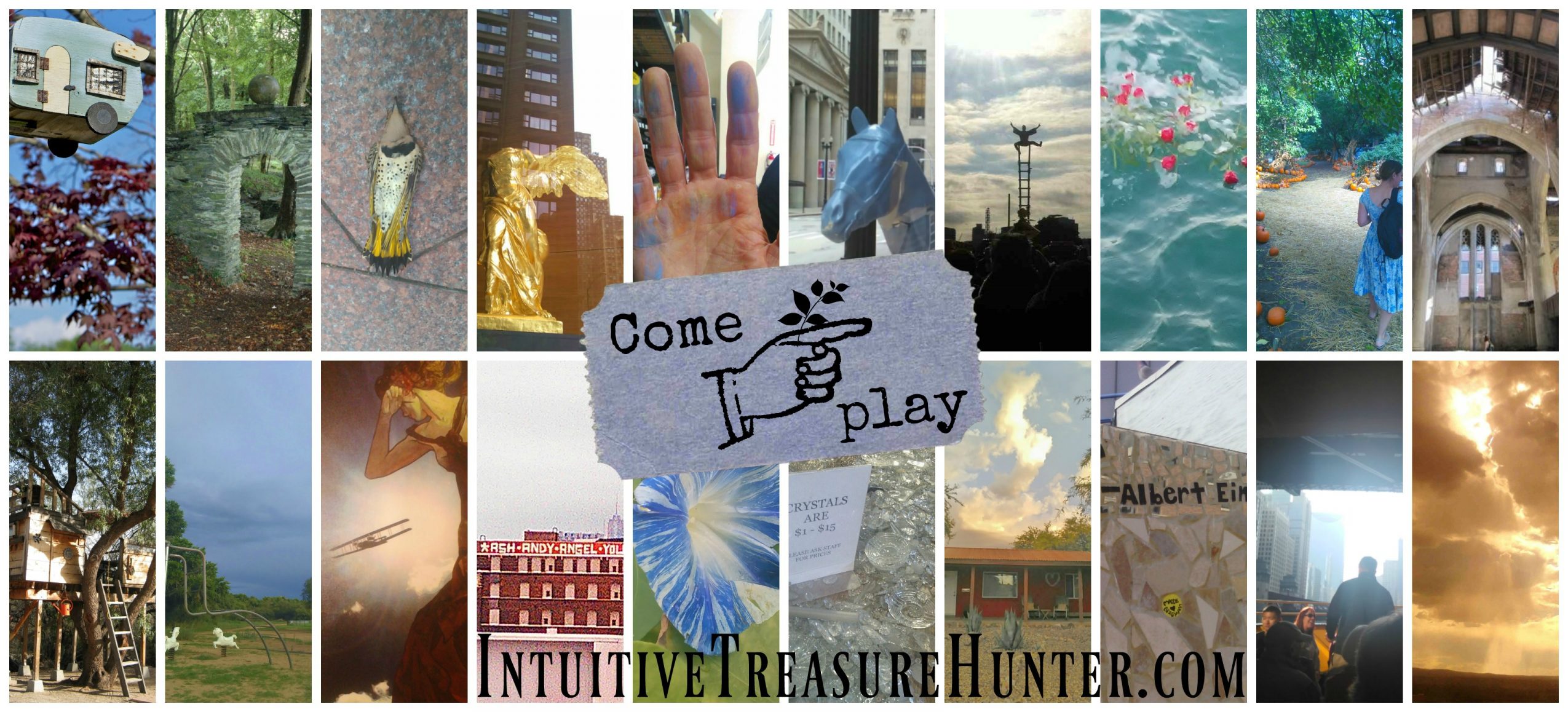
Intuitive Treasure Hunter is a unique thing—part urban adventure, part team game, part whimsical remedy that’s been played by over 600 people now from many different countries. In addition to being offered monthly in Chicago, it is being used now to cap off the Summer Intensives at iO Chicago each year, and has been a special part of The Improv Retreat for the past 5. I created the game over 10 years ago to help young people keep open access to their creative intuition during the years when it normally gets shut down. But the results of the game were more wonderful than expected, and word spread fast until it was being played and enjoyed by people of all ages.
Let’s touch on your thoughts about our city – what do you like the most and least?
Most, I like the people. Least, I like the systematic segregation of the people. When they upgraded the Redline stations on the north side a few years ago, they closed one stop at a time so that it was easy for northsiders to walk just 4 or 5 bocks to use the next station. When they upgraded the Redline stations on the south side in 2013, they closed down THE ENTIRE southern branch of the Redline at one time, and kept those stations closed for five months. And with the stations south of downtown already situated miles instead of blocks apart, people who live south for miles and miles could not take public transportation to work that year. That is a recent example of this city’s systemic racism, and it is insane that we allowed it to happen that way.
Our city government also recently closed 50 public schools, mostly on Chicago’s South and West sides, forcing young people to travel through neighborhoods that were unfriendly to them. Many of the public school classrooms where I taught performance and creative writing at that time, already had upwards of 50 students to 1 teacher. This, too, is exemplifies the systemic oppression that operates here.
Contact Info:
- Website: jannasobel.com, herec
hicago.org, intuitivetreasureh unter.com - Email: janna@herechicago.org
Getting in touch: VoyageChicago is built on recommendations from the community; it’s how we uncover hidden gems, so if you know someone who deserves recognition please let us know here.


