



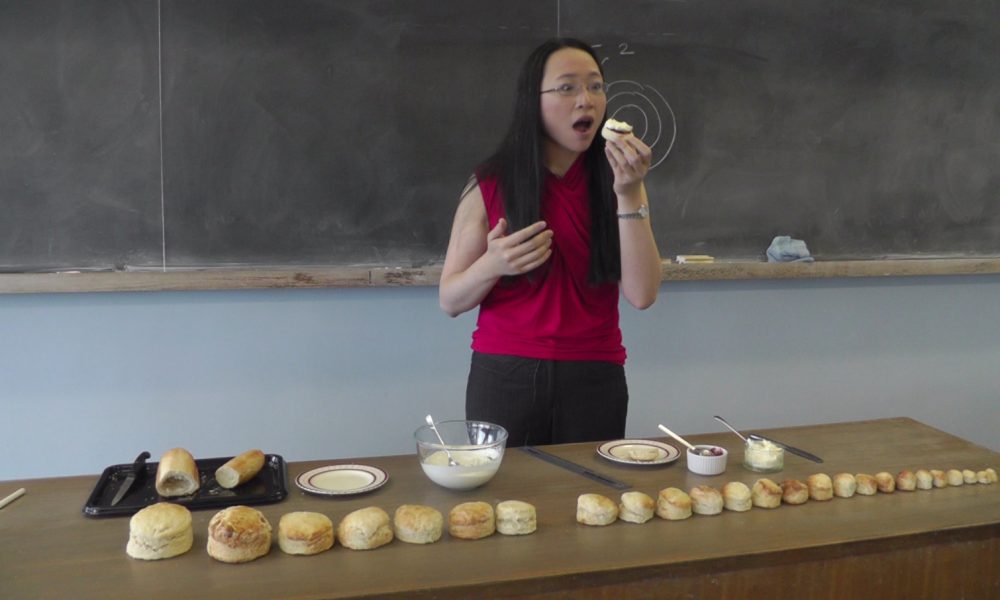
Today we’d like to introduce you to Eugenia Cheng.
Thanks for sharing your story with us Eugenia. So, let’s start at the beginning and we can move on from there.
I am a mathematician, author, expositor, public speaker, columnist, musician, and artist.
I began my career as a “normal” career academic, although my friends and family will tell you I’ve never been particularly normal. I did the things academics do, get several degrees, do post-doctoral positions around the world, spend long nights doing research in between preparing and delivering undergraduate lectures, travel on a shoestring to attend conferences, publish papers in peer-reviewed journals, sit on committees to help run the university.
Eventually I decided I needed to do more. I believe in using one’s talents to help the world in the way that makes best use of those talents. I decided that mine were more urgently needed in the realm of mathematics education and popularisation. I had already been making mathematics videos on YouTube since 2007, but they were initially aimed at graduate students and then undergraduates. I shifted to making videos for a general audience. I started doing more media work to reach more people outside the world of universities. I wrote my first book, “How to Bake Pi” aimed at a very wide audience.
After a few years of transition I resigned from my tenured academic job in order to pursue a portfolio career with a big emphasis on bringing mathematics to a wider audience. I am now based in Chicago although I still work in Europe frequently, and my work encompasses a range of activities including research in category theory, undergraduate teaching, writing books for a general audience, public speaking, outreach projects, school visits, professional development for teachers, mathematical art and also music, performing classical music as a solo and collaborative pianist, running the Liederstube.
A non-for-profit I founded to bring classical music to a wider audience, giving piano lessons and voice coaching. I also received my first art commission, from Hotel EMC2 in downtown Chicago. Amazingly, this hotel is themed “at the intersection of art and science” and my eight large mathematical chalkboard installations were installed in May 2017.
I am now Scientist in Residence at the School of the Art Institute of Chicago, where I teach abstract mathematics to art students. I write the “Everyday Math” column for the Wall Street Journal and tour the world giving public talks and workshops and visiting schools, to bring math to a wider audience. My second book, “Beyond Infinity” was published in 2017 and was shortlisted for the Royal Society Insight Investment Science Book Prize. My next book is called “Thinking Better: The Art of Logic in an Illogical World” and is due out in 2018.
I am also a concert pianist and give concerts regularly in Chicago and elsewhere. I founded the Liederstube, a Not For Profit aimed at bringing classical music to a wider audience. We run salon evenings where we play classical music in an intimate, relaxed and spontaneous environment, with food and drink.
We’re always bombarded by how great it is to pursue your passion, etc – but we’ve spoken with enough people to know that it’s not always easy. Overall, would you say things have been easy for you?
It has definitely not been a smooth road but it has definitely been worth it. The first part was fairly smooth but not easy, I have worked extremely hard all my life, ever since kindergarten. As a career academic, especially in a subject like mathematics, you are expected to take jobs all over the world when you are starting out, so I moved country several times. I moved from the UK to the US, then to France, and then back to the UK.
The hardest part was when I finally landed a permanent academic job at a university in the UK and struggled to realize my ambitions there. I didn’t feel that my strengths and individuality were valued, but rather, I felt under pressure to fit into the university “machine”. I tried very hard but eventually realized I should find a way to make better use of what I consider to be my best abilities: communication, innovation, creative and independent thinking.
Unfortunately, I had to go through several years of being very unhappy and frustrated before I could dare to step off the career conveyor belt I was on. Looking back I can hardly believe how much my life has changed since then. I now feel valued and appreciated in all the work I do, and I also feel that I am making a much bigger contribution to society than before.
So, as you know, we’re impressed with self – tell our readers more, for example what you’re most proud of as a company and what sets you apart from others.
I am primarily a mathematician and communicator. My aim is to rid the world of “math phobia” by showing that it is fun, approachable and relevant for everyone as a way of thinking, not just a way of solving problems involving numbers. My main public activities are writing and speaking.
I write books aimed at a general audience, I write the “Everyday Math” column in the Wall Street Journal, and I am regularly commissioned to write one-off articles on math, education, women or a combination of all three. In terms of speaking, I travel all over the country and world to give public talks about mathematics, hosted by universities, schools, science museums, bookstores, town halls, conferences or other organizations.
I also do hands-on workshops and professional development for teachers. Women are still very under-represented in math so I also give talks, seminars, and workshops on gender issues as well.
I am proud to be a woman in a male-dominated field, although when I was younger I wanted to hide it. I know it is important for men and women, and boys and girls, to see intelligent women in positions of authority and respect, and I am proud to be a role model in that way for whoever needs it. I am proud to be in great demand as a speaker, with my schedule completely filling up very far in advance. But mostly I’m proud of being able to help people understand and love something that seemed inaccessible to them
So, what’s next? Any big plans?
My main plan involves my future books. The next one is called “Thinking Better: The Art of Logic in an Illogical World” and is about how good mathematical and logical thinking can help us make sense of the social and political climate we’re in, and help us build better bridges to other people rather than perpetuating the destructive, divisive arguments we see too often.
My book after that is going to be about gender issues in science and beyond, but my argument will be that we should separate gender issues (including prejudice and harassment) from character questions. I am excited about the potential reach of these books beyond the math-interested audience. I have an ongoing collaboration with Hotel EMC2 where my art is installed, with many possibilities for unexpected science communication projects in the pipeline.
And I never know what email will next land in my inbox – one of the things I love about my life now is that something can pop up that I was not expecting at all, like the art project at Hotel EMC2, or my appearance on the Late Show with Stephen Colbert, or being shortlisted for the Royal Society science book prize. I love seizing new opportunities.
Contact Info:
- Website: https://www.eugeniacheng.com
- Twitter: https://twitter.com/DrEugeniaCheng
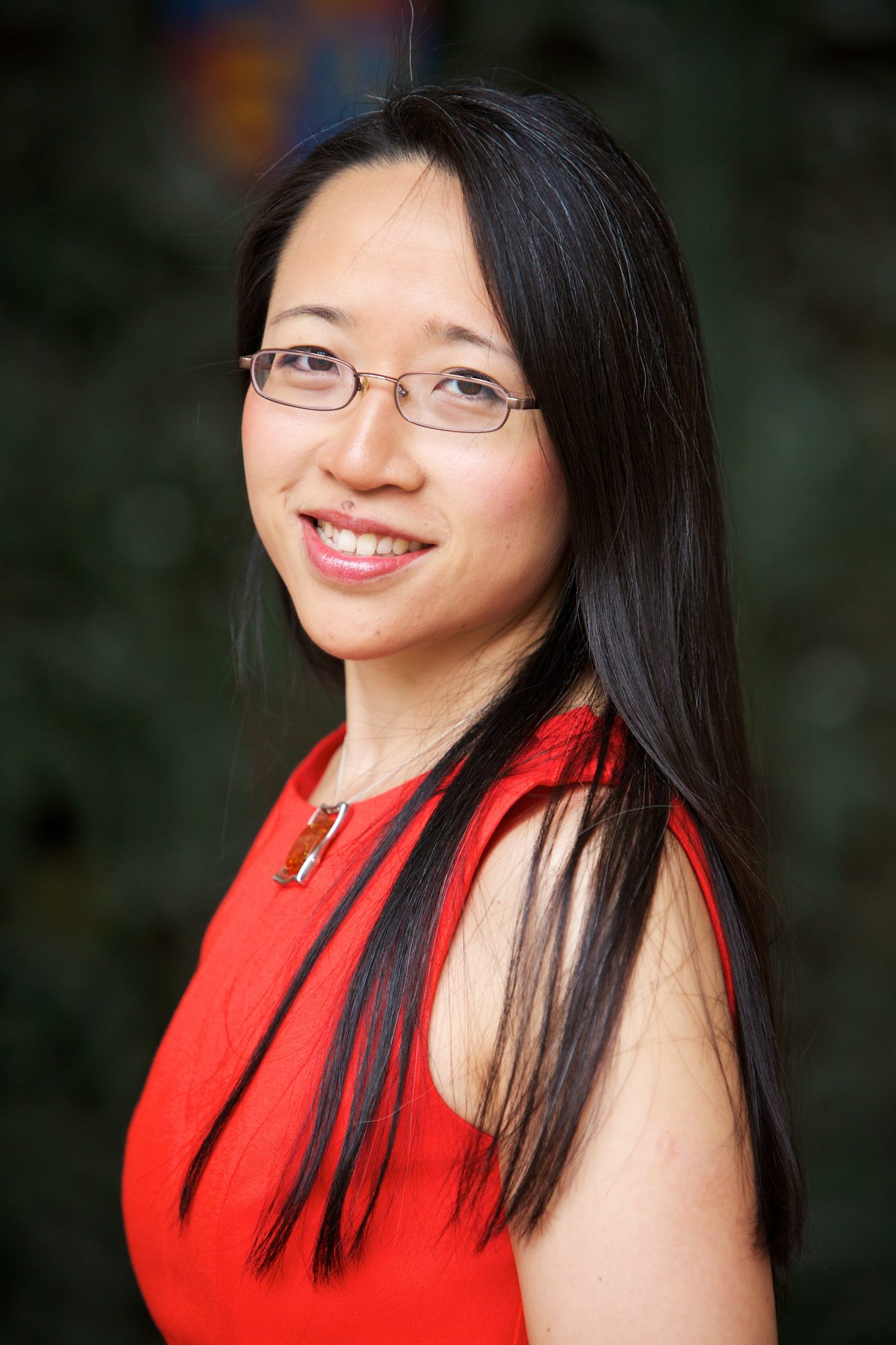
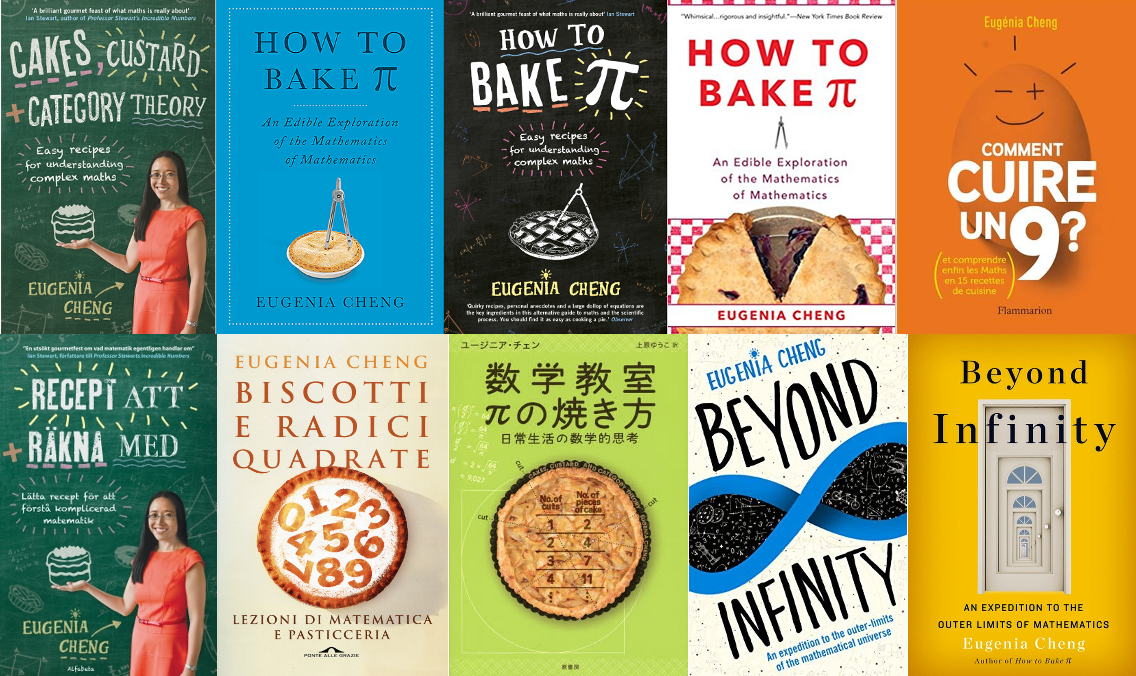
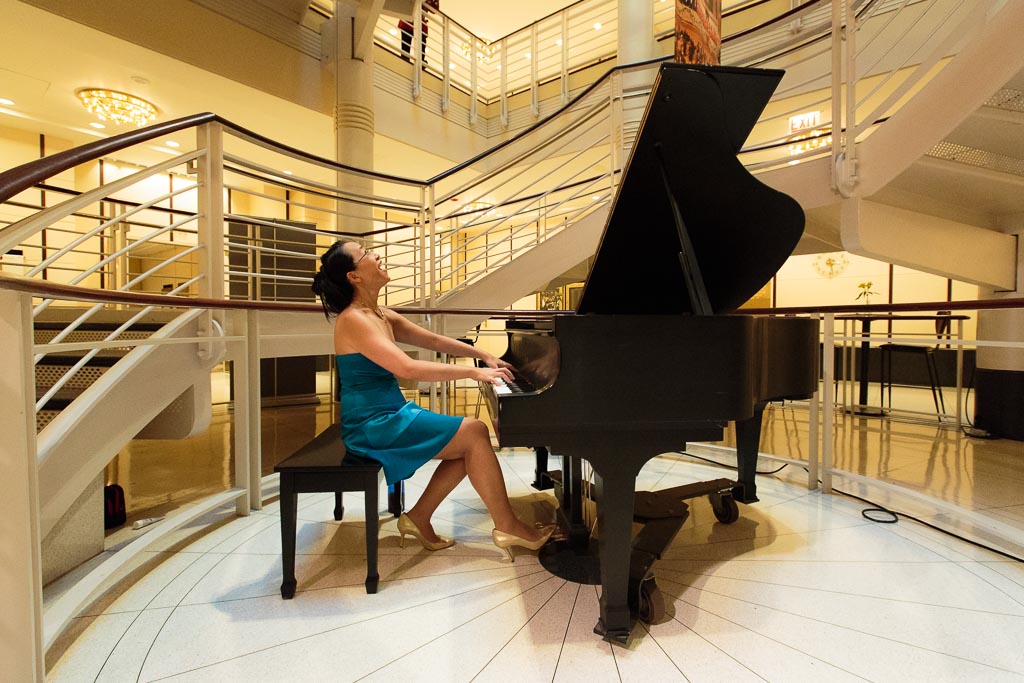
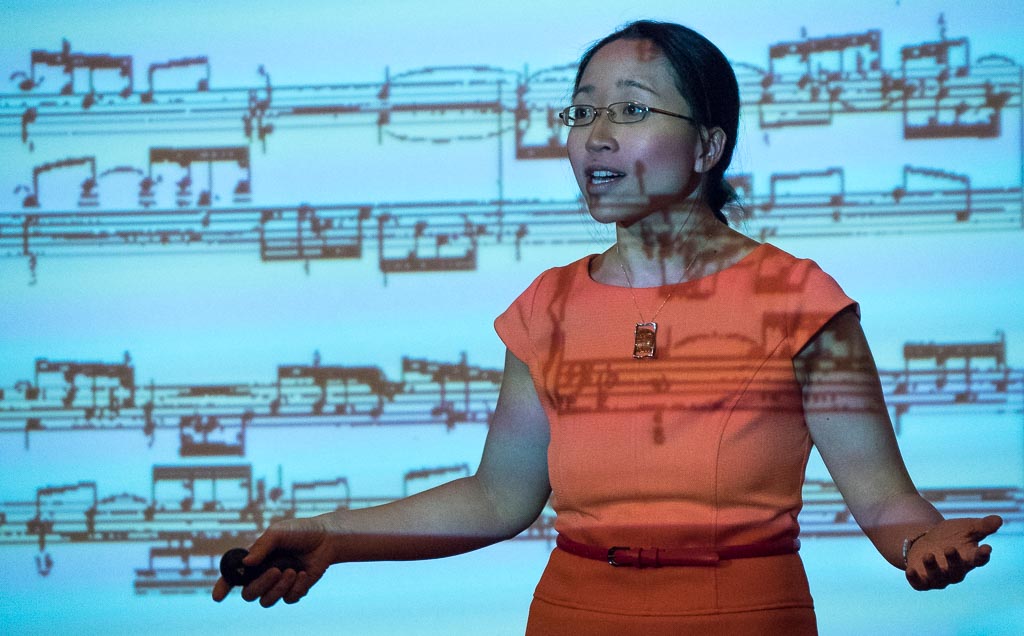
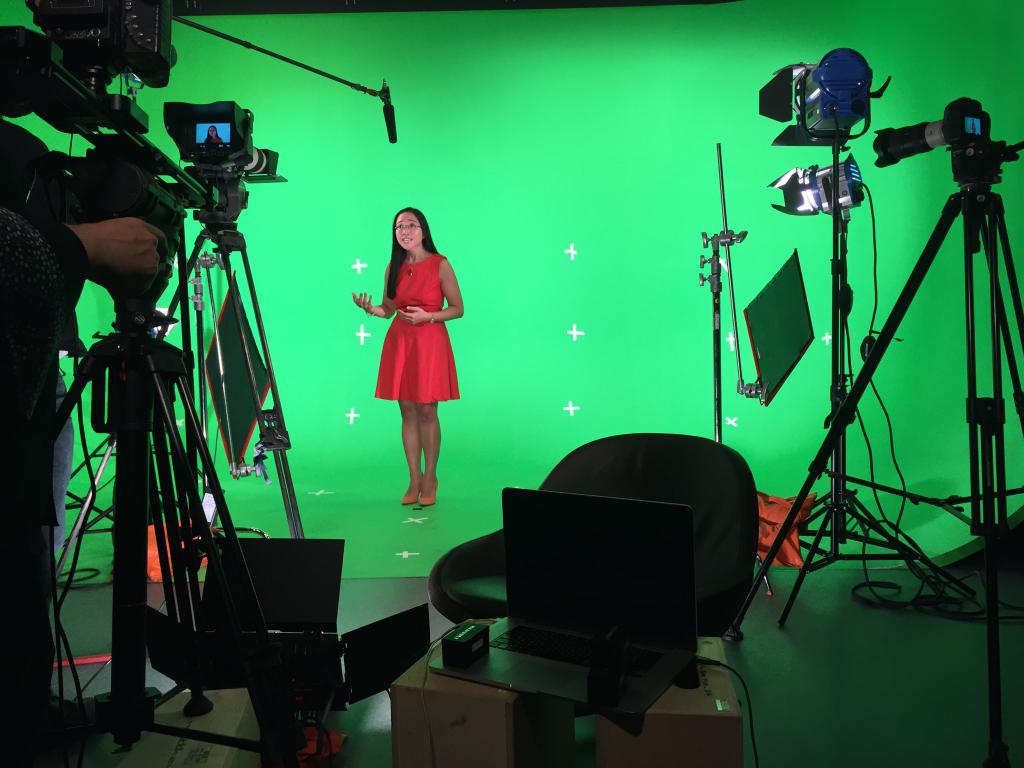
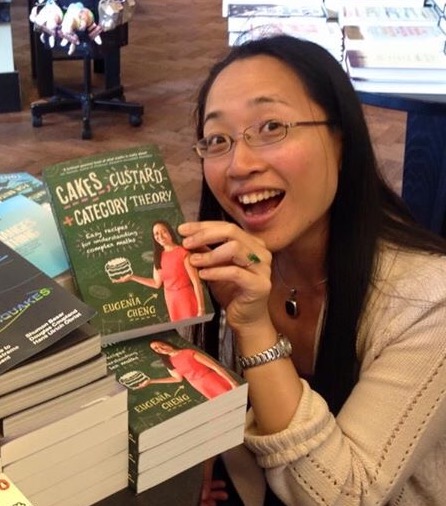
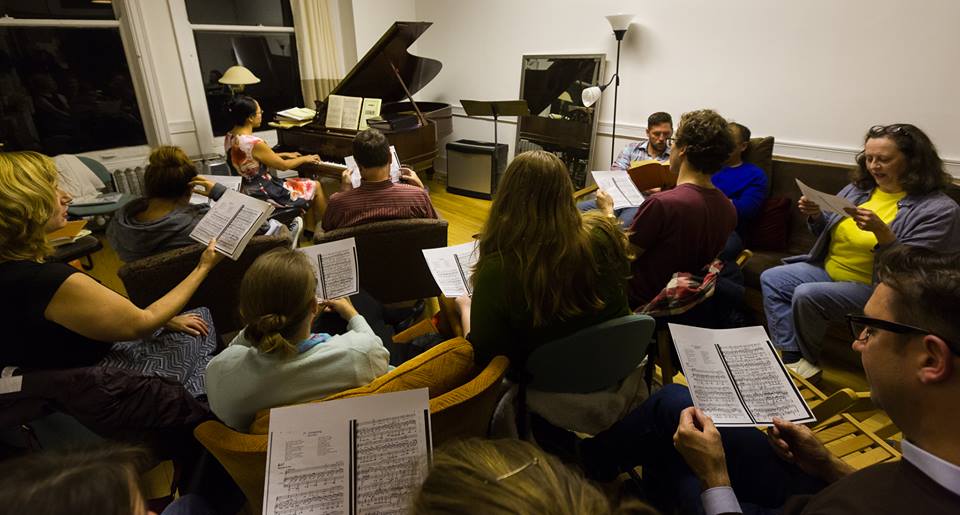 Image Credit:
Paul Crisanti of PhotoGetGo, RoundTurnerPhotography.com
Getting in touch: VoyageChicago is built on recommendations from the community; it’s how we uncover hidden gems, so if you know someone who deserves recognition please let us know here.


