



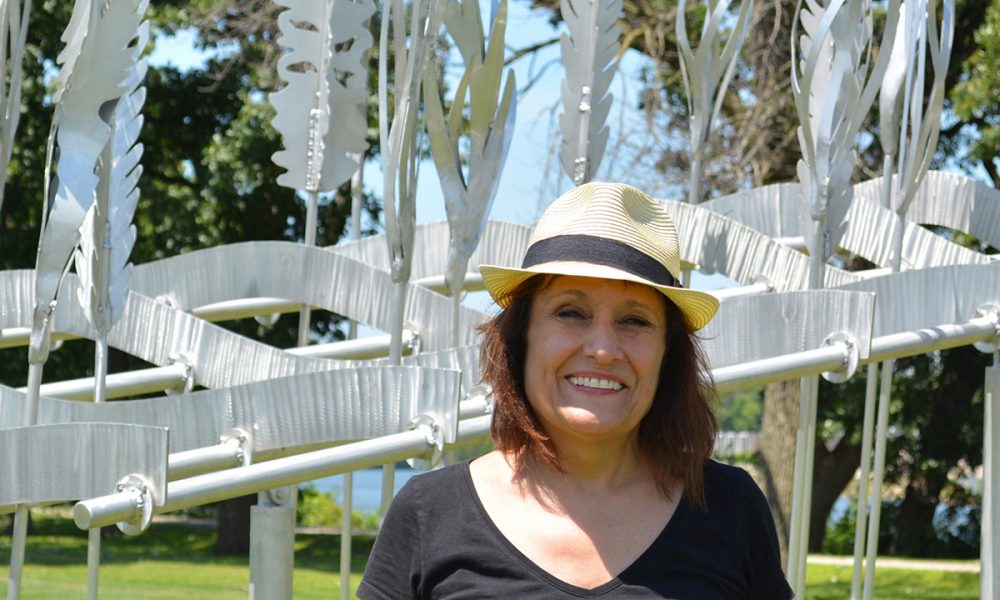
Today we’d like to introduce you to Christine Rojek.
Every artist has a unique story. Can you briefly walk us through yours?
I was very lucky to have been raised by parents who encouraged creative expression and tenacity. My father was a professional singer who vocalized daily as my mother designed and sewed our clothes, curtains, Halloween costumes; anything and everything. Later in life she painted obsessively. Though our family couldn’t afford to buy original artwork, I learned to appreciate fine design and contemporary music. My father, a seasoned performer on TV, radio and in nightclubs, hung out with other musicians and comedians. I was smitten with their unconventional lives and their mission to entertain the public. As a child I felt passionate about dance and I invented my own naive brand of choreography. When I graduated from high school, I wanted to go to college and major in dance.
Unfortunately, my father wasn’t familiar with the work of Merce Cunningham or Twyla Tharp and he did everything he could to discourage me from becoming a “Show Girl”. As a result, I enrolled in the Fine Arts department at the University of Illinois, where I earned a BFA in painting. Though I started exhibiting and selling my work as soon as I graduated, I grew frustrated with the solitude of a studio practice. Fortunately, I was invited to become one of the founding members of Artemisia Gallery, Chicago’s first feminist cooperative, where I met accomplished women artists who inspire me to this day. The cooperative galleries of the mid-70’s were alive with experimental art, but it wasn’t until I studied with Jean and Annick Desmier at the Ecoles d’Art Americaines, in Fontainebleau, France that I focused on interdisciplinary and collaborative art. We created large architectural installations that integrated costumes, music, dance and film. The Desmier’s uninhibited, spontaneous method of art making opened boundless avenues for my own inventions. When I returned to Chicago I stopped doing commissioned paintings and began a series titled “Instruments for Movement”, dance-through environments that encouraged the viewer to move through and manipulate my sculptures to produce sound. This interactive/sonic series grew organically for the next 20 years, and lead me to experiment with performance art, kinetics, and commissions for large-scale, interactive public environments. During this busy time, I balanced my studio practice while raising two daughters with my architect husband, Tom Pociask.
Please tell us about your art.
In 1991, I was awarded a State of Illinois Art-In-Architecture commission to create a large-scale exterior sculpture for the Physical Education Building at Northeastern Illinois University. This was my first opportunity to create sculpture at a monumental scale. Since then I’ve created and installed over 20 interactive/kinetic sculptures nationally for developers, universities, and municipalities. My work is site-responsive and I enjoy the challenge of commissioned projects that are sensitive to the natural surroundings, existing architecture and the history of individual communities. More importantly, it’s my goal to create theatrical, uplifting environments for the public to enjoy. I’m fascinated with public reaction to the arts, specifically, how to spark curiosity, encourage active viewer participation, and to question the “exclusivity” of art. Many of my designs meld machine-age mechanical movements with human anatomy or elements found in nature. This often results in whimsical, hybrids that illustrate the effects of movement on forms. Creating public sculpture is, by nature, a collaborative art. Artists often need to hire a variety of technical consultants to produce complicated installations. Over the years I’ve had the opportunity to work with some of the most inventive and accomplished architects, engineers, machine designers, and specialty fabricators in the country. I feel that this collaborative process is often as exciting as the final work of art.
Given everything that is going on in the world today, do you think the role of artists has changed?
Throughout history, reaction to world events has been charged with emotion and conflicting opinions. But in recent years, social media and 24/7 news broadcasts have resulted in media fatigue and a general feeling of hopelessness. Most distressing is this administration’s effort to distort the truth and disrespect the free press. The role of the artist as observer, documentarian, interpreter, and activist is more necessary than ever. I feel that it remains the purest form of communication.
How do local, national or international events and issues affect your art?
My frustration with the current political climate has made me more introspective. How is it possible that our society can appear so horrible as a whole yet we can be so beautiful as individuals? This is a question that resonates with me and has inspired me to connect with people on a personal level through my artwork. I’m currently working on a series of interviews with people of varying backgrounds and ages followed by drawings and sculptural interpretations that I call “Life Symbols”. Each life journey is epic. Each story reads like a screenplay. This process, though painfully slow, has revealed the goodness in people, their shared aspirations, their communal needs. It helps me to understand how important it is to take the time to listen to one another.
How or where can people see your work? How can people support your work?
My sculptures can be seen at the following locations:
• Physical Education Building at Northeastern Illinois University, Chicago, IL, “The View from Olympus” a 20’ x 20’ x 20’ exaggerated trophy with seating.
• The Woodlands Center Houston, TX – Two 30’ sculptures, “Expanding Catfish” & “Pecking Heron” located in the center court.
• Stonebriar Center, Frisco, TX – 30’ diameter “Celestial Chart of Texas”
• Mote Marine Aquarium, Sarasota, FL, “Tempt the Net”, an aquatic installation along the pathway to the Research Center
• Nemours Children’s Hospital, patio area, Orlando, FL, “Sonic/Interactive Nest”
• Dupage Children’s Museum, Naperville, IL – “Parting the Prairie” Interactive Kinetic exterior installation.
• Peterson Park, Chicago, IL – “Fruition” a commemorative arbor next to the gymnasium.
• Julian and Moulton Halls, Illinois State University, Normal, IL. “Flora & Fauna”
• EdVenture Children’s Museum, Columbia, SC – “Eco Chambers”, an interactive entry gate with kinetic features.
• Town Square, Schaumburg, IL – “Rubber Tipped Crane”, a wind-driven sculpture near the pond.
• Prairie Center for the Arts, Schaumburg, IL – “Ecce Hora”, an adjustable sundial.
• Tulsa Parking Authority 520W. 3rd St, Tulsa, OK – “Earthbound Spiral”, exterior sculpture with solar collectors.
• Equity Financial and Management Chicago, IL – “Conductor’s Apprentice”, interior, kinetic installation.
• US Equities, Chicago, IL – Interior sculpture at the corporate headquarters.
• Park Place, Tuscan, AZ – Two kinetic entry fountains and a soft play area in the center court.
• Northridge Fashion Center, Hollywood, CA – Soft play area.
• El Paseo Sculpture Exhibit 2029-2020, Palm Desert, CA – Two-year sculpture exhibit along El Paseo Drive.
Contact Info:
- Website: http://www.christinerojek.com
- Email: christine@christinerojek.com
- Other: http://www.youtube.com/profile?user=rojeksculpture; https://youtu.be/8PpWxMdpOdw ; https://youtu.be/XZ5mX2n3nXk
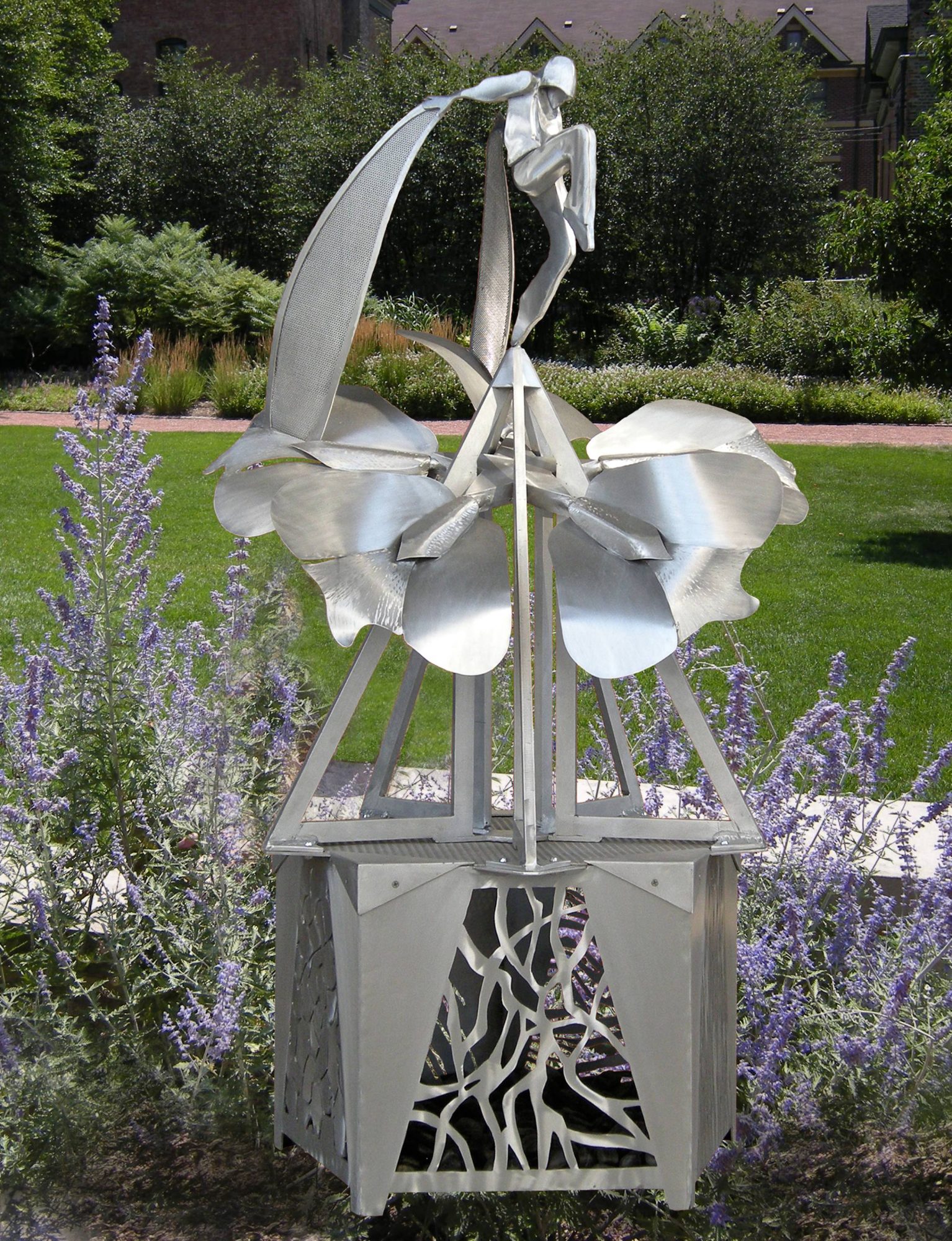
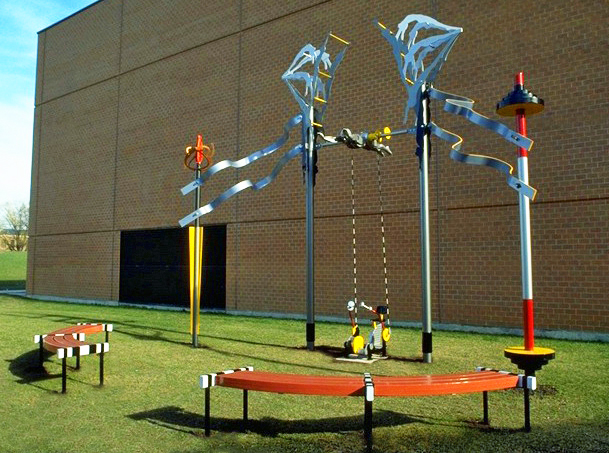
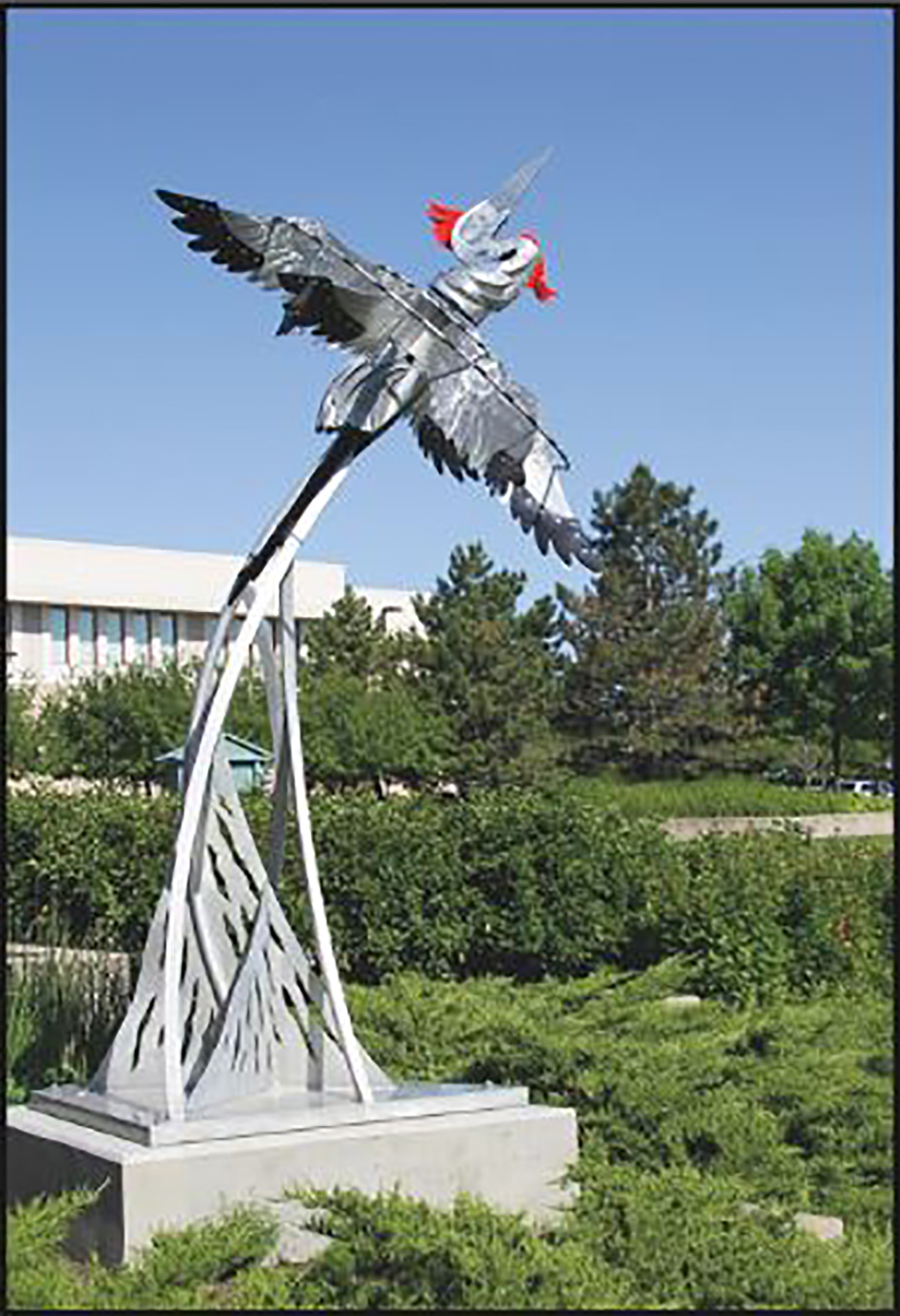
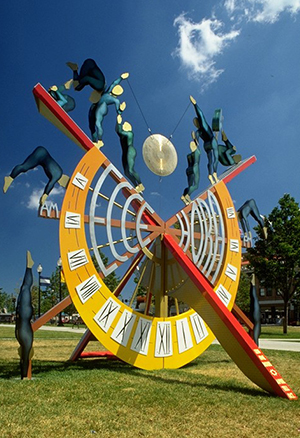
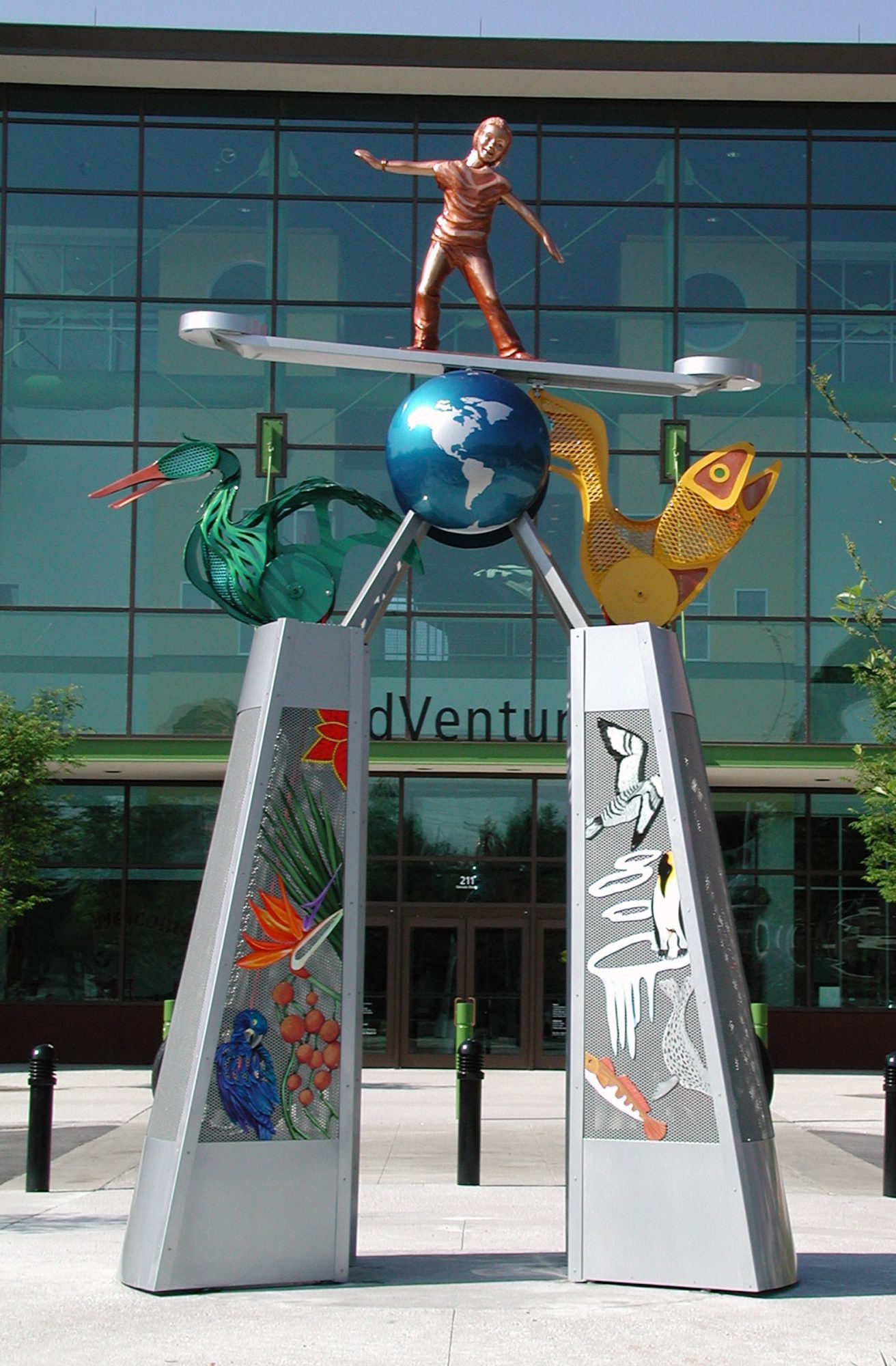
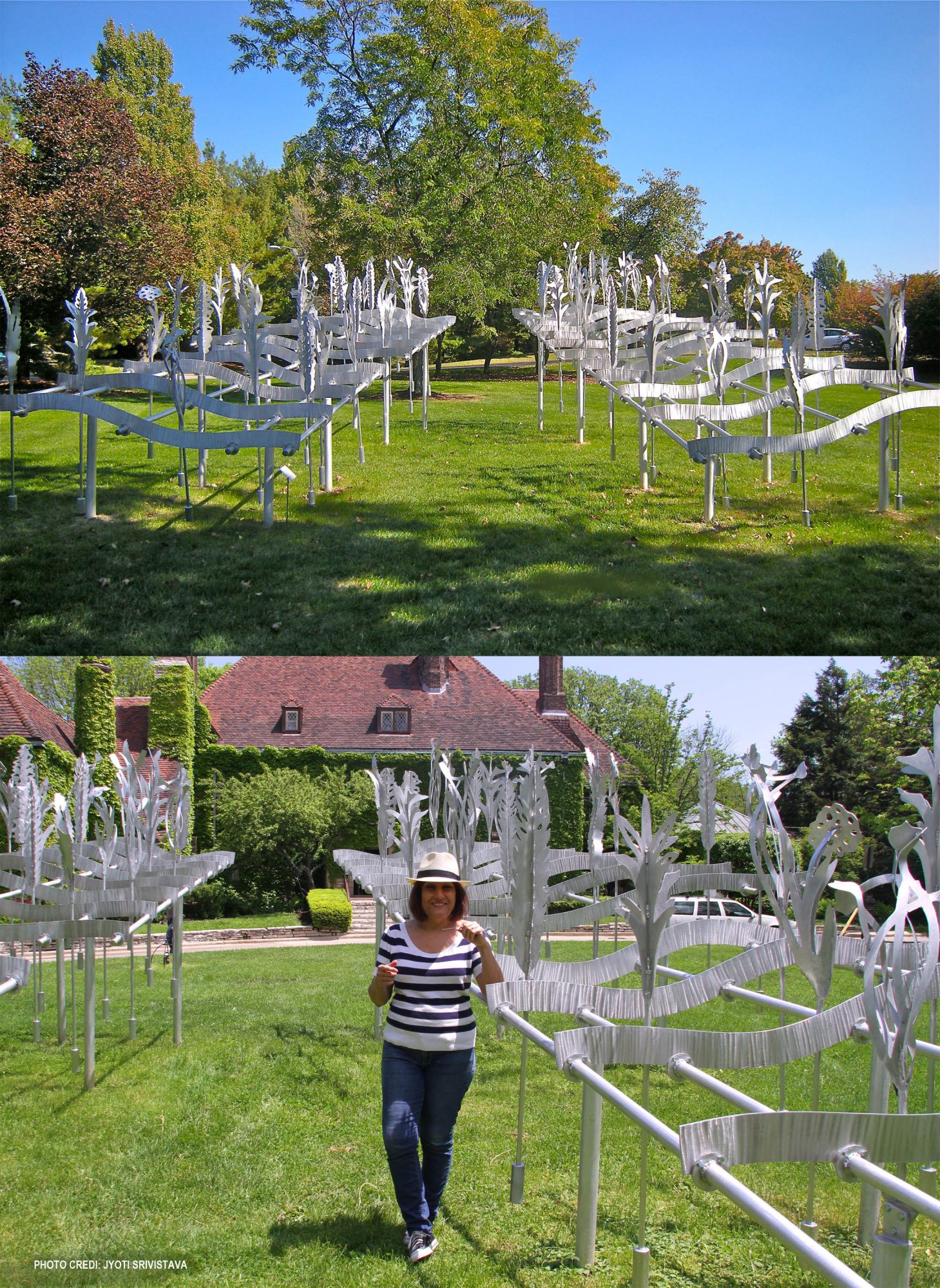
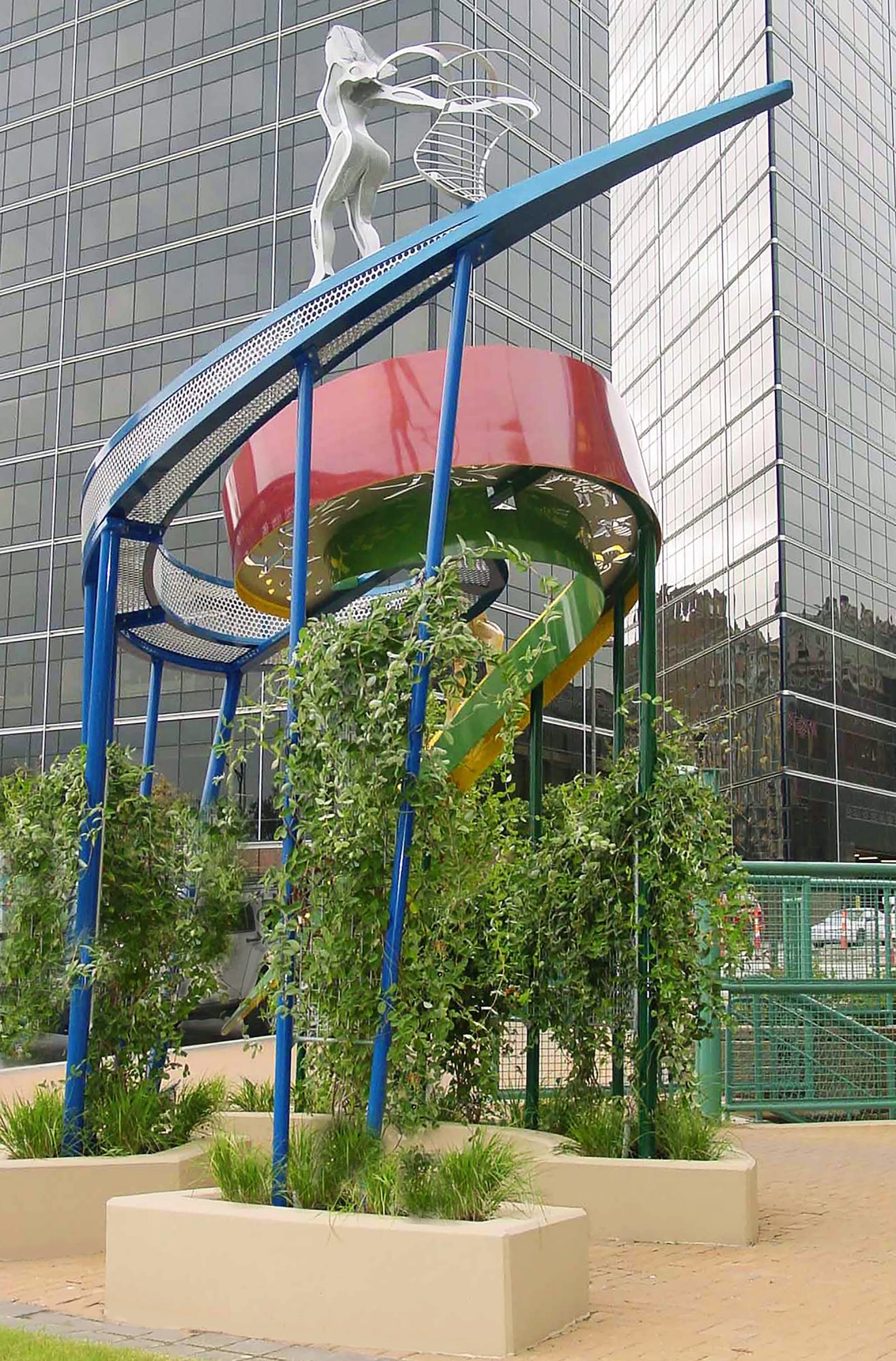
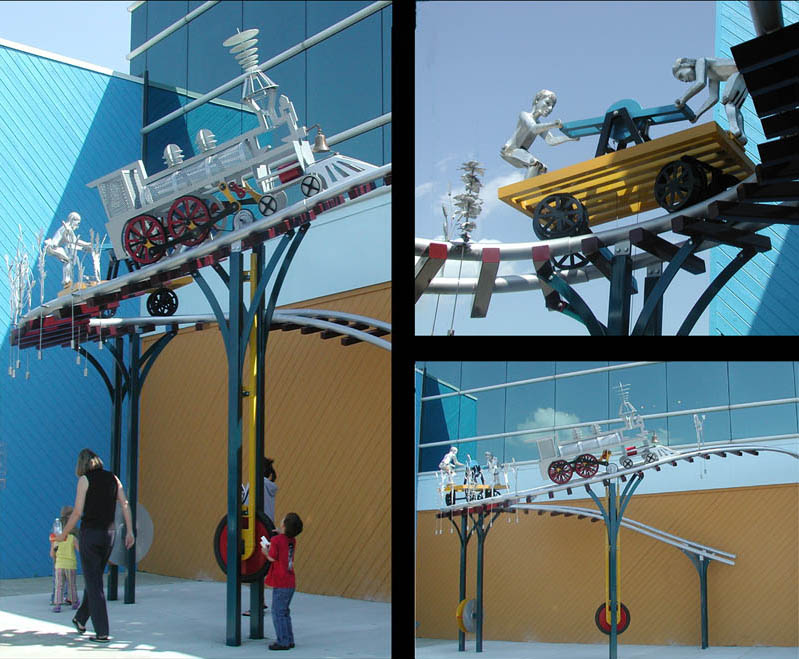 Image Credit:
Jyoti Srivastava
David Clifton
Getting in touch: VoyageChicago is built on recommendations from the community; it’s how we uncover hidden gems, so if you know someone who deserves recognition please let us know here.


mikehelbing
September 6, 2018 at 3:23 pm
I miss you Christine. Very interesting. See you sometime.
Mike