



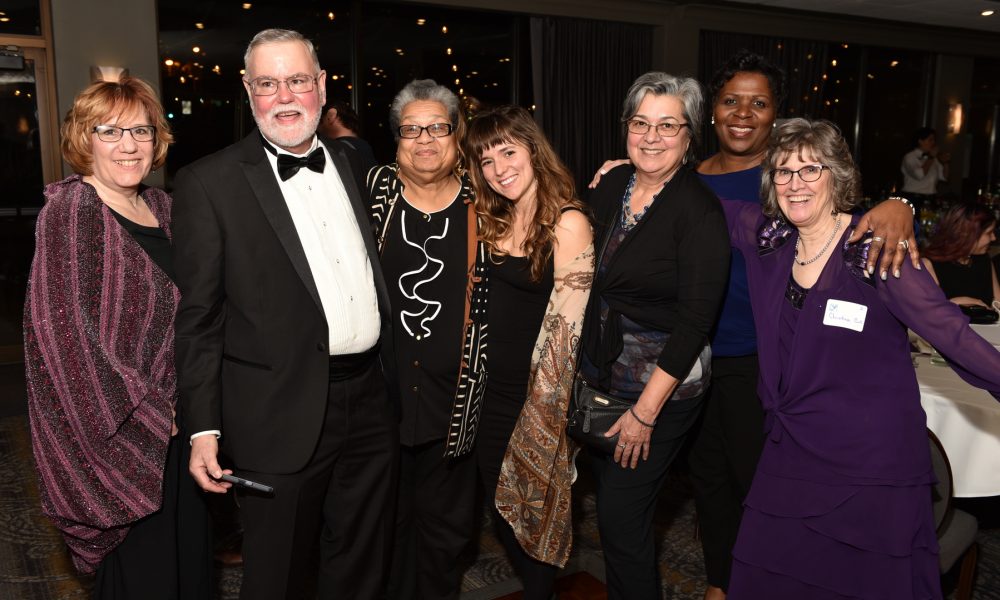
Today we’d like to introduce you to Christine Call.
Christine, can you briefly walk us through your story – how you started and how you got to where you are today.
Being in college in the late 60’s had a profound impact on me and I wanted to find a way to make a difference. After graduating with a BA in psychology, I went to work for the Illinois Department of Children & Family Services where I became part of their new child abuse assessment division. During my ten years with the agency, they also paid for me to return to school and receive my masters in social work. I left DCFS to become the director of the girls’ unit at a residential treatment center where I started questioning whether I could make a greater impact in the legal field. However, after working briefly for an attorney and contemplating law school, I took a job as a social worker at Palos Community Hospital where I was promoted to Assistant Director. The position offered opportunities for community networking which ultimately resulted in a major turning point in my career.
I thought the hospital emergency room staff could benefit from learning how to help patients affected by domestic violence, so I reached out to the Crisis Center for South Suburbia to provide this training. When the Executive Director decided to move on, she invited me to apply and I was hired. Along with a shelter for survivors and their children, the Crisis Center had a group for men who had battered their wives and girlfriends and I learned how important it was to their partners that they have an opportunity to change. I became involved in the Illinois Coalition Against Domestic Violence and with several other agency directors began to raise awareness about the importance of working with perpetrators as well as victims. I also served on the committee that helped to develop the Illinois protocol for partner abuse intervention (PAI) programs.
I went on to become Executive Director of Sarah’s Inn where I started the PAI program still in operation today. Recognizing that some of my colleagues questioned the value of these interventions, I wanted to better understand their effectiveness. So, after six years, I left Sarah’s Inn to pursue my Ph.D. at the Jane Addams College of Social Work at the University of Illinois Chicago. While in the doctoral program, I formed what was probably the largest private PAI practice in the city and co-facilitated groups at UIC. A fellow doctoral student Charlie Stoops and I also consulted for Haymarket Center where many of the substance abuse clients had been victims or perpetrators of intimate partner violence. And, at the same time, I worked closely with two respected victim services professionals – Beatris Burgos and Frances Brown – to launch PAI programs in underserved communities, including one for Spanish-speaking men in Pilsen and another at a church on the south side of Chicago.
Eventually, we brought all the pieces together under the umbrella of the Westside Domestic Abuse Project – a collaboration between Connections for Abused Women and their Children, Haymarket Center, UIC Department of Psychiatry and Jane Addams College of Social Work – and I was hired as part-time project coordinator during which time I completed my doctorate in social work. In 2003, Charlie and I co-founded what is known today as the Center for Advancing Domestic Peace, incorporating as an independent nonprofit organization. In 2007 I also joined the faculty of the Department of Social Work at the University of St. Francis and continue to integrate all that I do at the Center in my teaching of future social workers.
Has it been a smooth road?
I’ve seen the powerful impact partner abuse intervention can have on our program participants as well as their partners and families, but it hasn’t always been easy convincing others that this work is important. Part of the problem is that people don’t have much sympathy for those who have perpetrated domestic violence or believe that they can change their behavior even though research shows that completing a PAI program reduces recidivism. Change also takes time and is not always a linear journey, especially for those we serve. Many have themselves been victims or witnesses of abuse and some are survivors of neighborhood crime. If left untreated, this history of trauma can lead to poor coping skills which can negatively impact their relationships and put them at greater risk for domestic violence in the future. Helping men and women examine their beliefs and choice to use abuse can be daunting work but it makes it that much more rewarding when they begin to integrate what they’ve learned and take the transformative steps necessary to turn their lives around.
Funding, of course, has been another challenge for agencies like ours as historically the amount available for partner abuse intervention has been much less compared to what is provided to victim services and other social service programs. Because of these funding limitations, it has been difficult to pay our professional staff the salaries I know they deserve. We’ve also struggled in recruiting more men to facilitate our PAI groups which would be very beneficial for our clients. But, I am very passionate about the importance of this work, which is why I continue to actively seek solutions to these and a myriad of other daily challenges we may face.
So let’s switch gears a bit and go into the Center for Advancing Domestic Peace story. Tell us more about the business.
The Center for Advancing Domestic Peace is a nonprofit organization whose mission is to “stop domestic violence where it starts” by helping those who abuse take responsibility for their behavior and learn the skills for building healthier relationships. The centerpiece of this work is Beliefs & Skills for Domestic Peace, a 24-week partner abuse intervention program that is protocol approved by the Illinois Department of Human Services. Most of those we serve are mandated to participate by the court or child welfare agencies. And, while we have seen an increase in the number of women referred in recent years, the majority of participants are men who live in the south and west-side Chicago communities where our programs are located and others with higher than average rates of poverty and violence.
One of the things that makes the Center unique is that we are the only agency in Chicago solely dedicated to rehabilitating perpetrators of domestic violence. Our strengths-based, trauma-informed approach also sets us apart in addition to the case management and ongoing support we provide through our Real Men Advancing Peace (RealMAP) and Sisters Peace Circle (SPC) aftercare programs. Along with these direct services, we work to educate the community about intimate partner violence and recently launched a public awareness campaign that we are especially proud of. We also help to strengthen the coordinated community response to domestic violence as a leading provider of professional training as well as through close collaboration with our victim services agency partners including the Chicago Metropolitan Battered Women’s Network of which we are a long-time member.
Since over 80% of those we serve have children, we know the role we’ve played in helping thousands take the transformative steps necessary to end their abuse is preventing future domestic violence, making homes and communities safer. And, none of this would be possible without our dedicated staff and board members who go the extra mile every day to ensure we can continue to keep our doors open and provide high quality services to all who need them, regardless of their ability to pay.
How do you think the industry will change over the next decade?
While we’ve made notable progress, the need for a truly coordinated community response to intimate partner violence is great and the potential for positive outcomes for individuals, families and our communities is enormous. The good news is that the Illinois Domestic Violence Act wasn’t even passed until 1982, so this is still a relatively new field with lots of room for growth. One of the changes I hope will come about is that we will start funding both victim services and partner abuse intervention programs at a level that recognizes domestic violence is one of the most significant public health challenges facing our communities. I would like to see us make a longer-term investment, such as the requirement in California that PAI programs be a minimum of 52 weeks, and dedicate a percentage of Victims of Crime Act (VOCA) federal grant funds to services for perpetrators with histories of trauma and victimization. I also look forward to more program evaluation partnerships between practitioners and researchers in the field so we can increase understanding about the problem of domestic violence, including its relationship to community violence, and continue to learn what facets of our work are most effective in facilitating change. And, I believe that those of us working in this field need to collaborate more effectively with other social service providers as the issues for all are complex and are often intertwined.
Pricing:
Your donation can help provide…
-
$75 – 1 week of group intervention
-
$190 – Individual assessment
-
$300 – 4 weeks of group intervention
-
$1,800 – 24 weeks of group intervention
Contact Info:
- Address: 813 S. Western Avenue, Chicago, IL 60612-4155
- Website: https://www.advancingdomesticpeace.org
- Phone: 312-265-0206
- Email: info@advancingdomesticpeace.org


 Image Credit:
Kat Fitzgerald Mystic Images Photography all photos except the logo and the South Asian Delegation photo.
Getting in touch: VoyageChicago is built on recommendations from the community; it’s how we uncover hidden gems, so if you know someone who deserves recognition please let us know here.


