



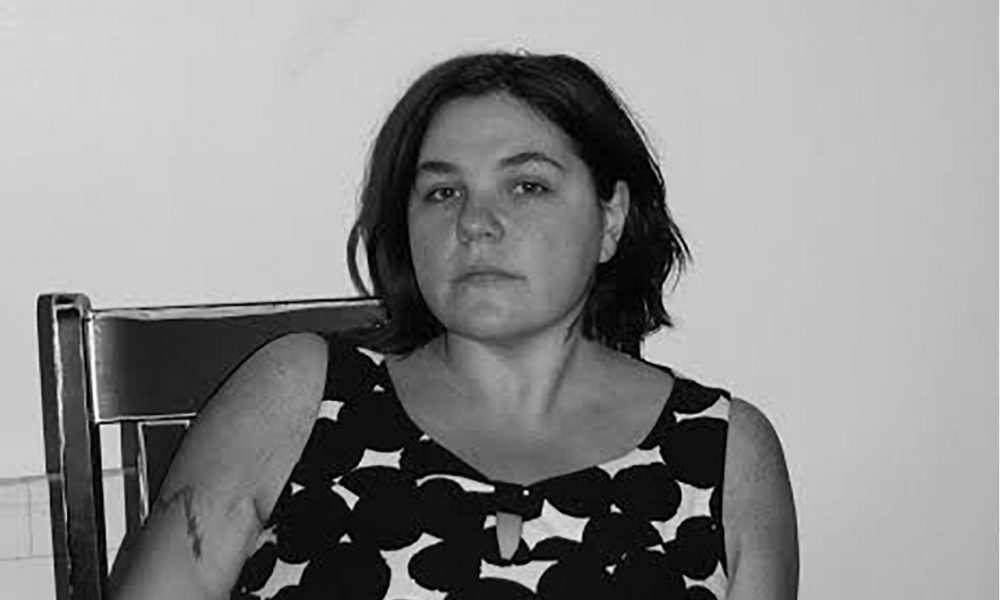
Today we’d like to introduce you to Meg Duguid.
Thanks for sharing your story with us Meg. So, let’s start at the beginning and we can move on from there.
I am a performance artist with a studio practice. I came to Chicago in 1995 to study at the School of the Art Institute of Chicago, where I focused on ceramics and papermaking.
Within a year of graduating with my BFA, I started throwing public fights (Fight 2000 series), and that’s what really started my personal investigation of performative practice (although it took me a year or two to conclude that I was a performance artist).
Those works led me to start exploring laughter, smiling, and eventually comedy, and later opened my practice up into a larger exploration of relationships.
After the Fights 2000 series, I did a series of works called The Great Guffaw, where I staged group laughing events at various locations throughout the city. My favorite one was on the CTA blue line, where I had about 15-20 people in a rush hour train car; when the doors would open, we would all laugh, and when they shut, we would stop. The effect became eerie to some rush hour travelers, annoying to others, and still, others loved it—this was done a few years before flashmob started.
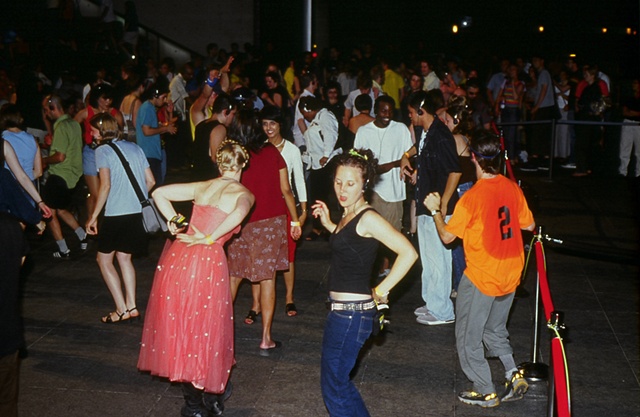
In 2002 I had the opportunity to create my first work at the MCA for the summer solstice event, where I threw Dance with Me… The first silent dance party, which took place on the front plaza of the MCA; a DJ spun a transmission to 50 wireless headsets that participants danced to. I also attempted to dig a hole to China in Dogmatic’s dirt room, and I later toilet-papered the Suburban and left town.
I left Chicago in 2003 to get my MFA at Bard College when I moved to New York City. In 2009 I came back to Chicago. I currently participate in the arts community in here in a few ways, I am a practicing artist, I am a member of Tiger Strikes Asteroid Chicago (an artist collective), http://www.tigerstrikesasteroid.com/. I am the founder of Clutch gallery, and I am the Director of Exhibitions for the Department of Exhibitions, Performance, and Student Spaces.
Great, so let’s dig a little deeper into the story – has it been an easy path overall and if not, what were the challenges you’ve had to overcome?
Nothing is ever straightforward. I am a fan of working in alternative and community spaces. I have smiled, laughed, joked, thrown things, shot movies, and danced with people as a part of my practice. I have also pied myself in the face, stuck myself to the sidewalk with copious amounts of chewing gum, eaten my purse, cut holes in walls, thrown ladders in lakes, and packed walls up into suitcases during my career. I ran Clutch Gallery, a 25-square-inch white cube located in the heart of my purse, which I curated and carried from 2009 to 2011.
Since then, I have been lending Clutch Gallery to other curators to curate and carry. My professional practice includes writing unsolicited letters when I know I want to do something specific and there is no application process, applying to calls for exhibitions and grants, getting public permits, and sometimes just making a work happen when and where I can. I have exhibited and performed at the Museum of Contemporary Art, the Hyde Park Art Center, Defibrillator, Slow Gallery, and 6018 North in Chicago; at the DUMBO Arts Festival in Brooklyn; 667 Shotwell in San Francisco; and the Zona Maco Art Fair in Mexico City.
I have also created public performances in Battery Park in New York City, Golden Gate Park in San Francisco, Chicago’s public transit system, and the Polish Triangle in Chicago, as well as many different city streets. Seven years ago I wrote an unsolicited letter to the James Agee Trust requesting the rights create a performance for film work based on the Tramp’s New World, a screenplay written by James Agee for Charlie Chaplin, that was never produced. Three years ago the Agee Foundation reached back out to me and offered me the options for the script. It is this project that I have been working on for years.
Artist – what should we know? What do you guys do best? What sets you apart from the competition?
In my practice, I have been creating work that is performative, generating pieces and parts that are meant to be reused, repurposed, or rejiggered in my studio for another performance or as an exhibition piece or both. Throughout the Tramp Project, I am generating a set that is a platform for a series of performances. The result of those performances will be a fully edited feature and cinema experience, a series of objects and sets, and a series of production stills, all of which can be interchanged in various exhibitions and screenings that continue to loop from performance to documentation and back to performance again.
In essence, the performance is the shooting of the film, the film is the documentation of the performance that is screened to an audience while an experimental band plays a live score, the live score is then edited into the film, which is then rescreened to a new audience . . .
The narrative:
When I found this screenplay, I was taken with the narrative: a super-atomic bomb is dropped, leaving seemingly just one survivor, the Tramp. As the picture unfolds, it is clear that others have survived and are coalescing around two separate and completely different communities. The first is the Tramp’s community, which has embraced the parameters that the new world has created by rebuilding a community by hand. The second community is made up of the scientists who actually created the bomb and were safe from the blast in their underground bunker.
The scientists attempt to restore their technology and mechanized existence. For a majority of the film, the two communities are unaware of the other. Upon learning of the existence of each other, the Tramp’s community (but not the Tramp) is lured to the scientists’ way of life by the ease of technology. In the end, the Tramp, alone, walks from this new world into the sunset. This screenplay provides the opportunity to reenvision Chaplin’s classic character as female.
What has occurred so far on the project?
This project officially started at the end of 2012 when I signed the film options contract for the screenplay. In early 2013 I went to Ragdale to start sketching out how I wanted the project to function and to begin creating stop-animation storyboards for the work. I spent much of 2013 doing research and development, sketching out the work, and starting to design props. Also in 2013, I signed the actress Meredith Miller to perform the Tramp.
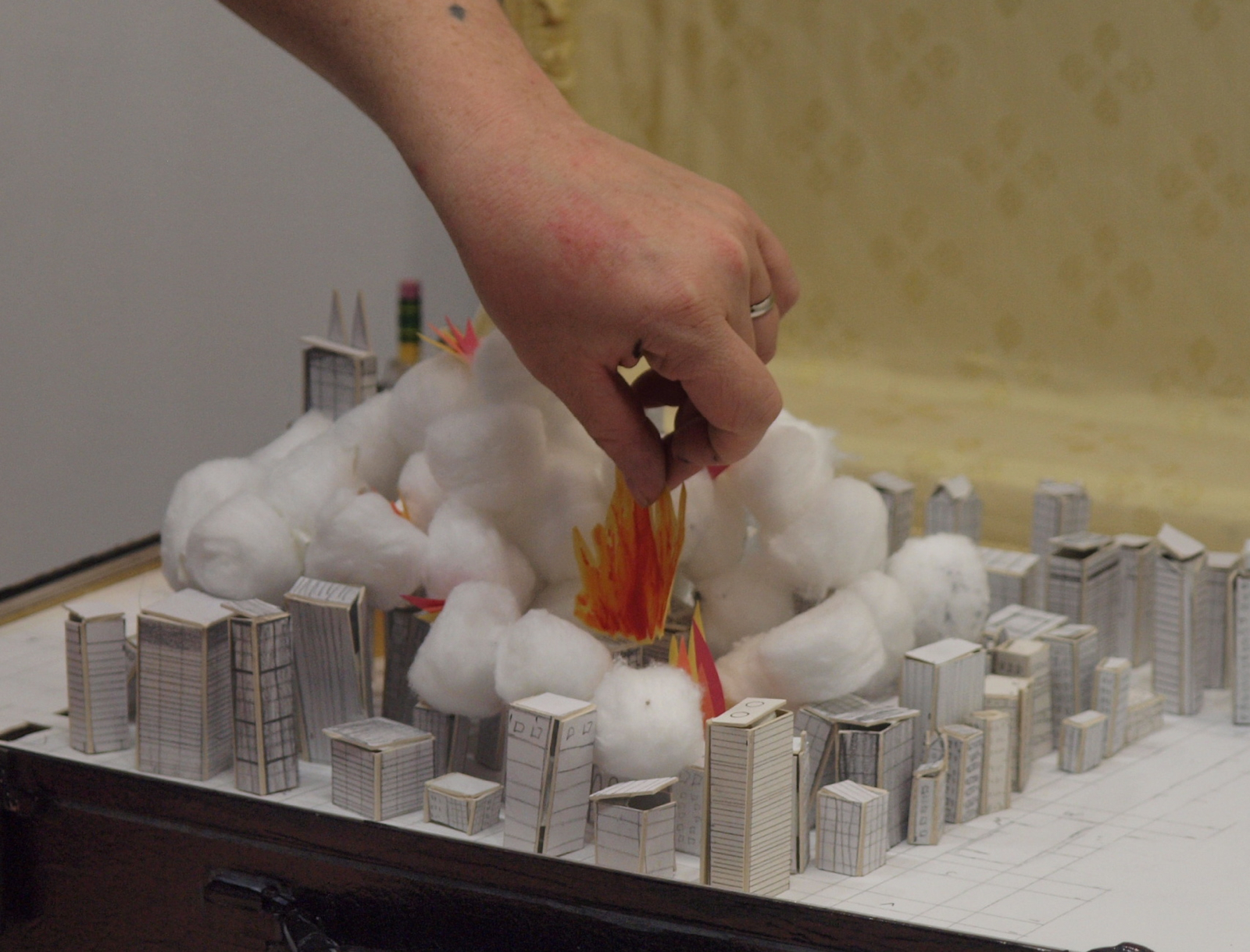
In 2014, I had solo exhibitions at Terrain, where I created prototypes for the Tramp’s community, and at Submission, where I created a mushroom cloud out of a paper city during the run of the exhibition. The documentation of the mushroom cloud creation is going to be used as part of the opening credits for the film. In February 2015, in a solo exhibition at Slow Gallery, I displayed the Supercomputer, a multi-monitor piece that is a part of the set for the scientists’ secret lab and that utilizes the stop-animation storyboards that were produced as pre-work for the film. This was again presented in Miami in 2017.
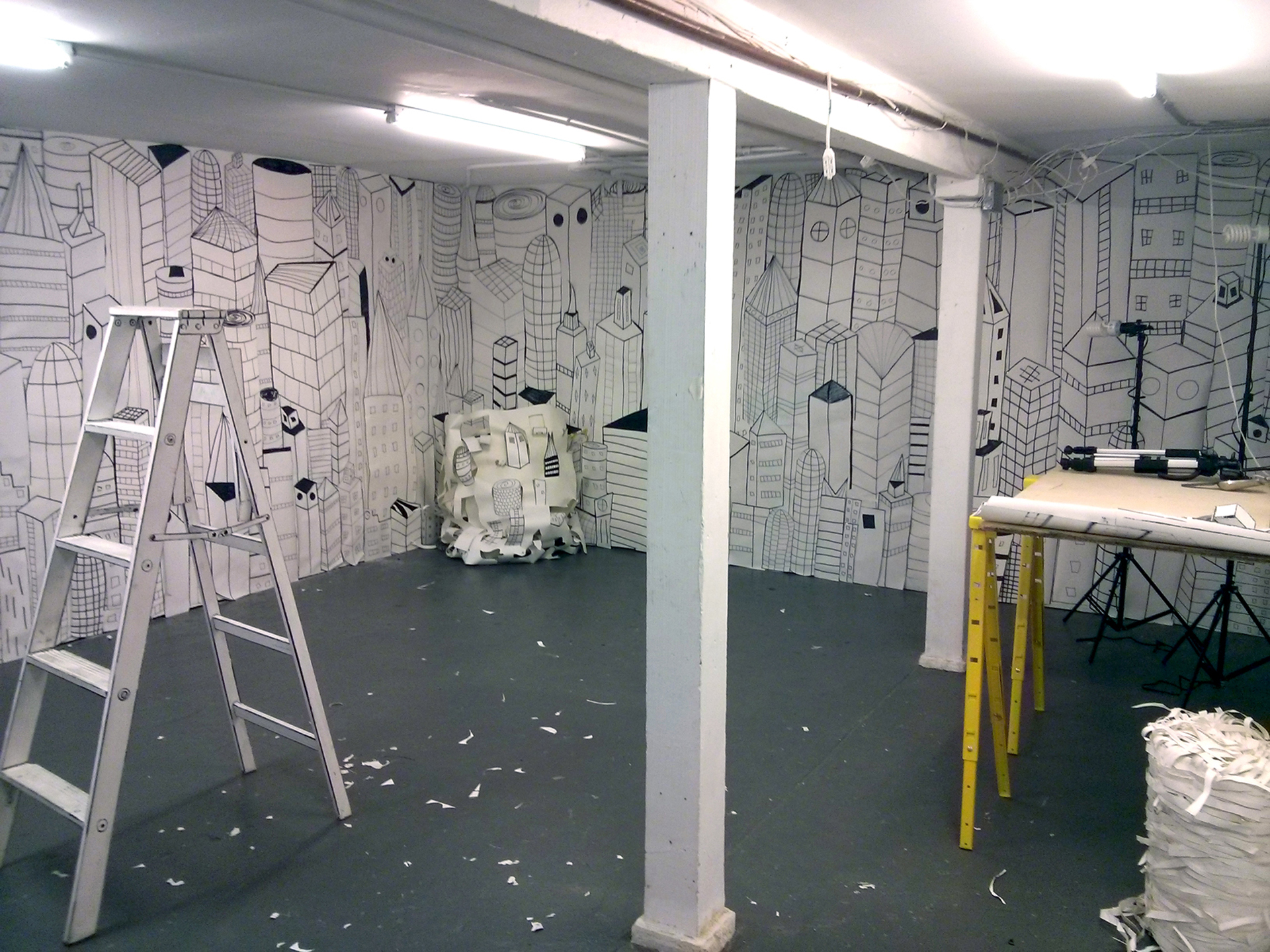
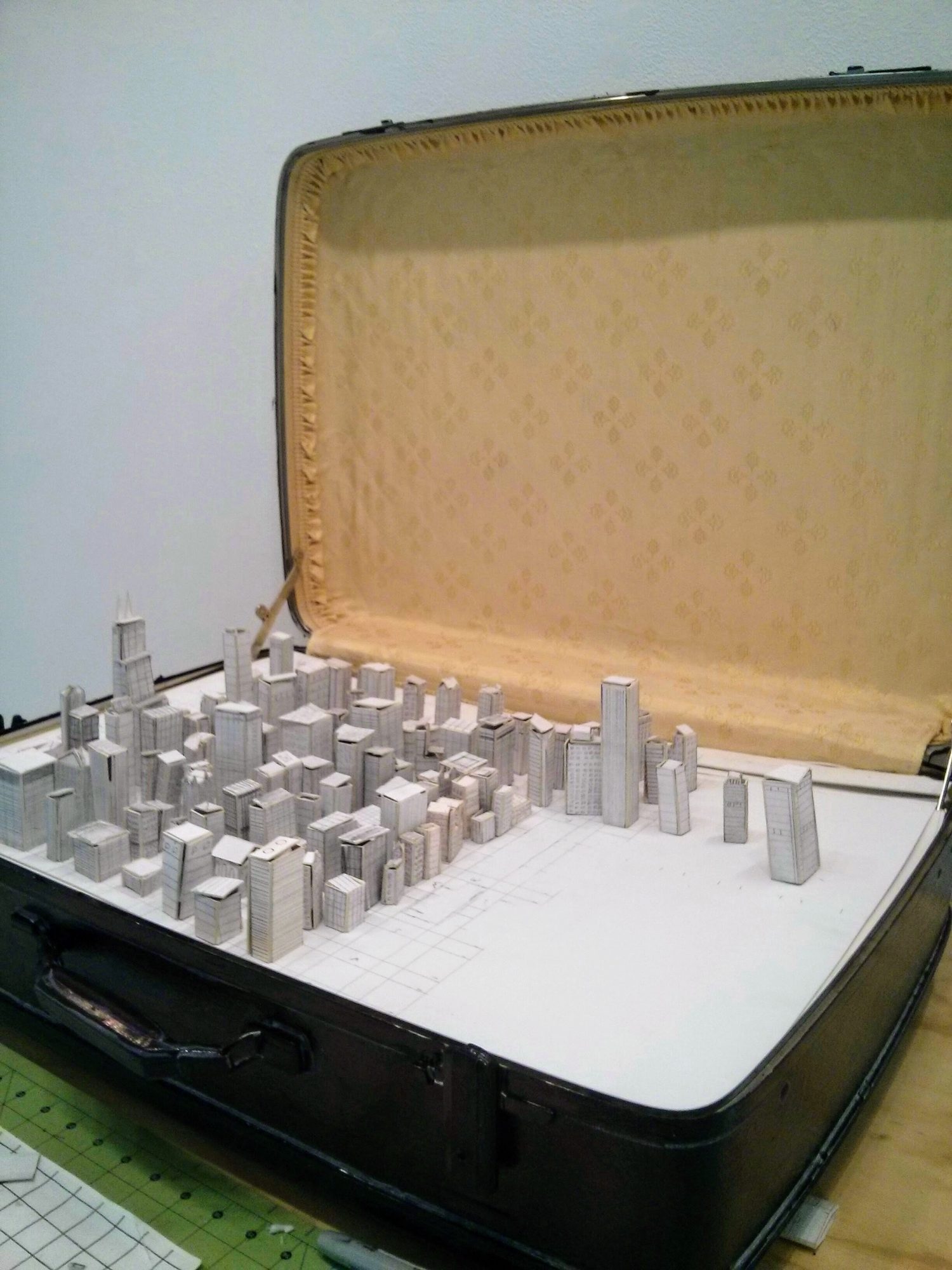
In 2016, I officially destroyed the city of Chicago in Production with Models at the Haripin Art Center, where I built the city of Chicago, a scenic farm, and a suburb. These objects were (fictitiously) blown up at the closing to create a video of a super-atomic bomb being detonated. The public was invited to participate in creating this scene by helping to shoot a stop-animation of the city on fire. The footage will be used as a part of the Tramp Project.
Also in 2016, I set up a recording booth at Roman Susan to record, one person at a time, making a series of cheers and other vocal reactions as if responding at a political rally. Eventually, the sound recording will be edited, layering each participant’s voice on top of the others, to create a robust-sounding audience for a political speech in the final film of the Tramp Project.
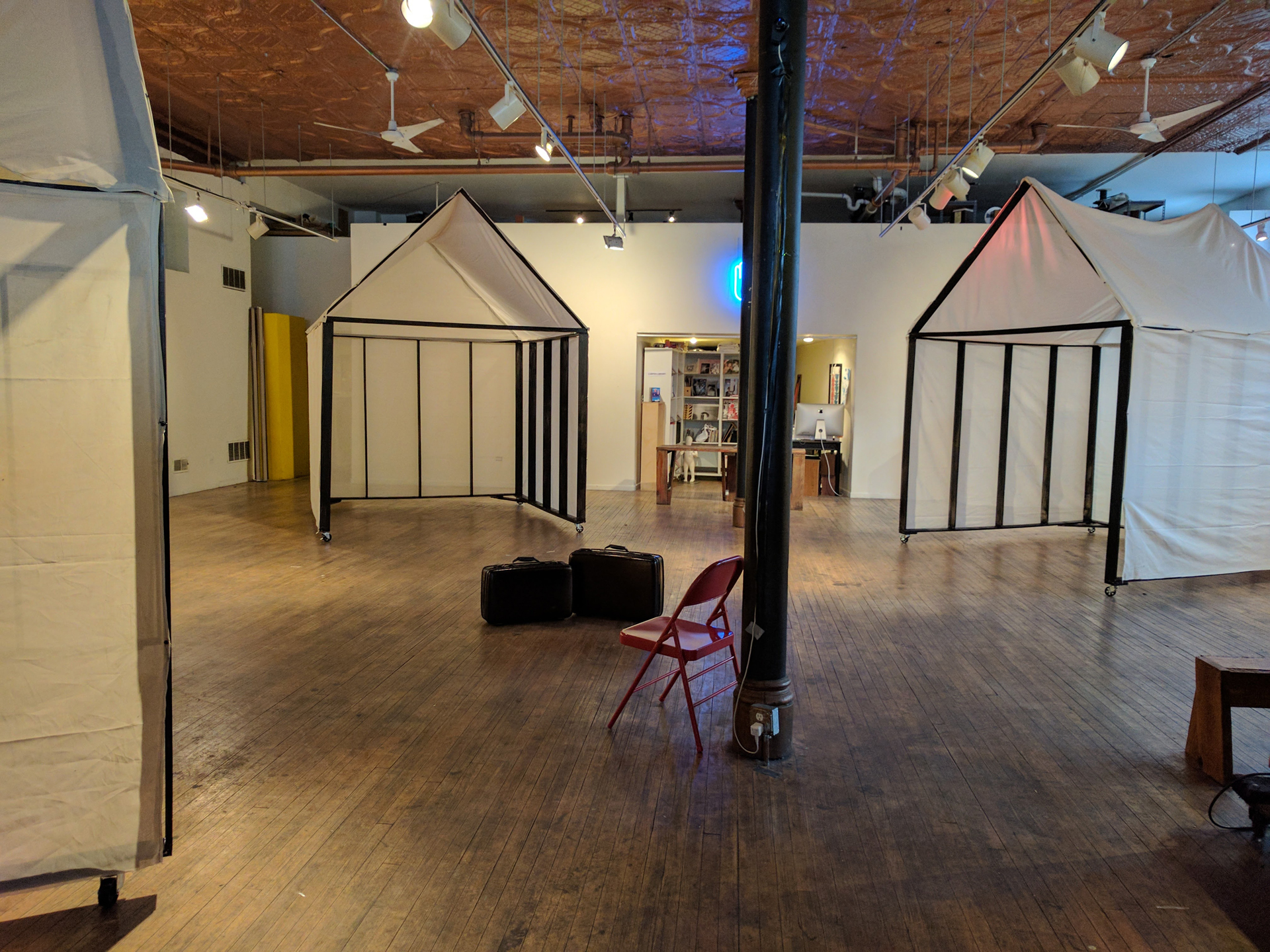
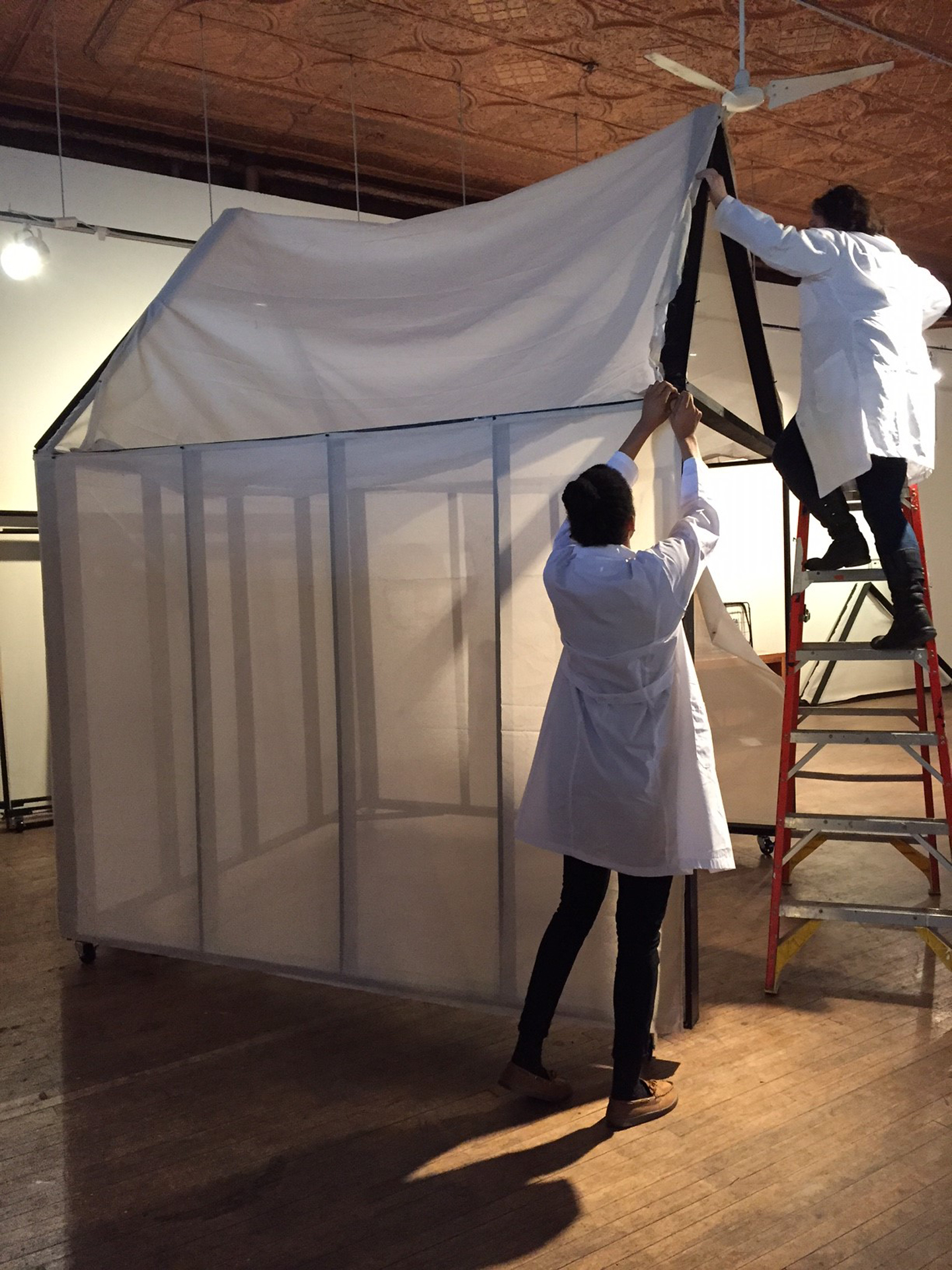
In 2017, I created Production of the Tramp’s community, where three structures that are the set for the Tramp’s Community were raised during the run of the show at Co-Prosperity Sphere. At the end of the show, the work was taken down to music played by Dan Sullivan. The structures will be used in future performances. Also in 2017, I constructed a newsroom at Roman Susan to create scenes in which an escalating crisis is talked about. This newscast included newscasters in a newsroom, a presidential speech, and scientist explaining explosives.
Additionally, in 2017, I created a boat to withstand a flood for an exhibition at the Ralph Arnold Annex at Loyola University and a nuclear winter at Kim’s Corner Food.
Contact Info:
- Website: megduguid.com
- Email: meg@megduguid.com
Getting in touch: VoyageChicago is built on recommendations from the community; it’s how we uncover hidden gems, so if you know someone who deserves recognition please let us know here.


