



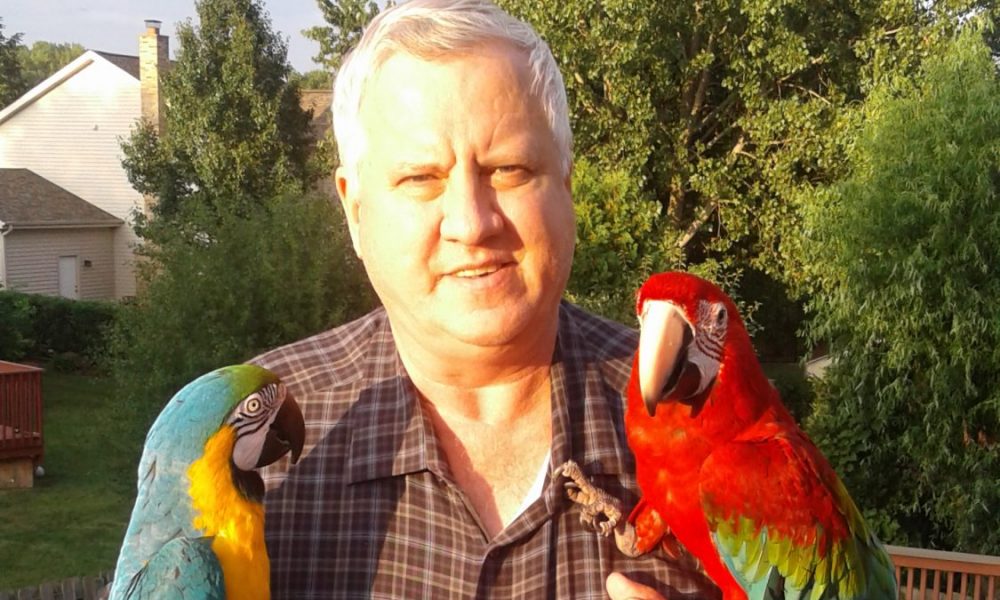
Today we’d like to introduce you to Al Stone.
Thanks for sharing your story with us Al. So, let’s start at the beginning and we can move on from there.
I started carving decoys when I was eighteen. I always had an interest in flying and enjoyed bird watching. I had painted since I was about seven and after seeing some of the early master’s work I was hooked. I was educated by the late Richard Lemaster and taught how to sharpen tools by a German Master sculptor.
My first duck was pretty primitive. I started with a chunk of 2 x 4 and since have graduated to more exotic woods like Jelutong and Tupelo. It took a long time of studying birds to really understand their anatomy and subtle details required to make accurate woodcarvings. I traveled many places including zoos and private aviaries to take pictures. I also befriended a film maker named Neil Rettig who was a Falconer. This gained me access to a beautiful Red-Tailed hawk.
Making a realistic carving is time consuming and can be tedious. The blocks are rough shaped with a band-saw and then muscle structure is added typically working on one area at a time. I use flexible shaft sanders and tools similar to what a dentist uses to then put texture and all the mid-level detail in. Usually each feather has its own unique pattern of lumps and texture on a bird. I try to duplicate those.
Feather splits are carved in with knives and each feather is wood burned in with a pyrotechnic tool. I can burn up to 100 lines per inch each requiring an individual stroke of the pen.
Prior to painting the work, I assemble color photographs from my collection and any data I can find on the species I have chosen. For competition work I sometimes borrow taxidermy mounts so I can copy the real animal. You can see this can be a time consuming process. Some birds can take months to complete.
When I make the habitat and base that will be part of the composition I actually carve the wood to look like a tree limb, or make metal shapes to look like flowers or stems. For competition you must make everything in the habitat.
I have been carving for 42-years now and mainly produce commission only work. In the past I used to participate in many shows in the Midwest and competed the World Championships in Maryland that the Ward Foundation sponsors every year. I have donated many woodcarvings to Ducks Unlimited and many private charities.
I have several exotic birds I own and have never lost interest in my art or nature.
Great, so let’s dig a little deeper into the story – has it been an easy path overall and if not, what were the challenges you’ve had to overcome?
Going to shows was tough business. I would carve all winter and found at most shows people bought cheaper stuff and not high-end work. When the resin cast replicas came out that were painted in China it really hurt us carvers and especially decoy carvers. That is why I went to specializing in everything but ducks.
Alright – so let’s talk business. Tell us about Al Stone Wildlife Art – what should we know?
I am proud to have unique talents I can share with people. I have specialized in birds of prey for many years. These are not something most amateurs can tackle. I also teach how to carve so I enjoy giving back to the community. My prices are very reasonable for what goes in to the work.
Is there a characteristic or quality that you feel is essential to success?
I feel Honesty, Integrity and providing a good quality product is paramount to success. You must do what you promise and keep your word. It is important to know how to work with others as well.
Pricing:
- All my work is commission based and can range from roughly $150 to thousands of dollars.
Contact Info:
- Website: astonewildlifeart.com
- Phone: 630-744-9647


 Image Credit:
Al Stone
Getting in touch: VoyageChicago is built on recommendations from the community; it’s how we uncover hidden gems, so if you know someone who deserves recognition please let us know here.


