



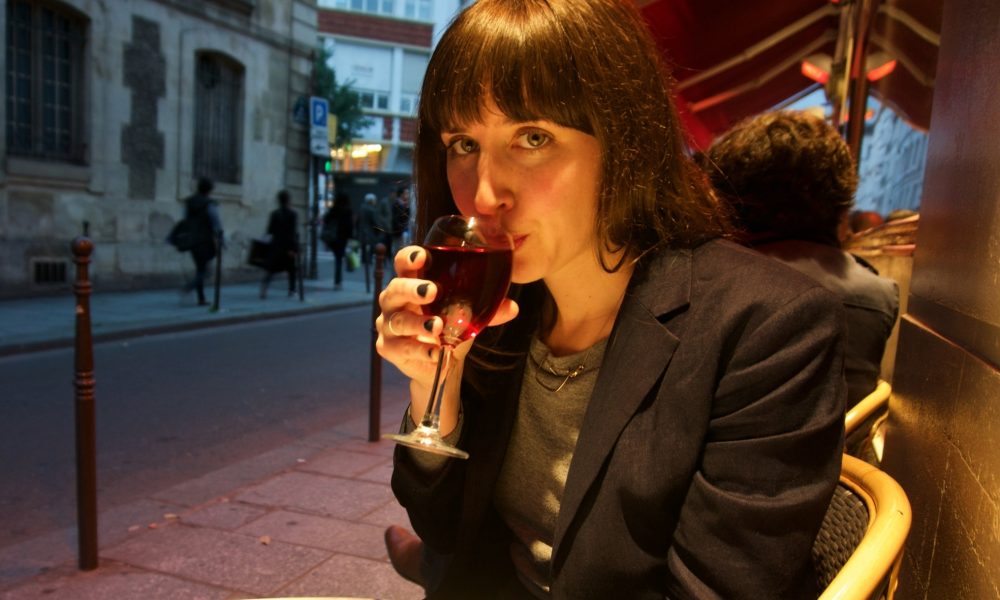
Today we’d like to introduce you to Maggie Hennessy.
Maggie, let’s start with your story. We’d love to hear how you got started and how the journey has been so far.
I studied journalism at the University of Wisconsin-Madison and moved back to Chicago after graduating in 2006. I must have applied for 30 newspaper jobs before getting an editorial assistant job at a little hedge fund magazine owned by Reuters. I hated my job, but loved my team of talented writers and editors. I started researching culinary schools on my lunch break in between desperate calls to our team economist, asking her to explain what in the world a convertible arbitrage hedge fund was (I still don’t know).
Then the recession hit in 2008, and our whole staff was laid off. I took this—quite stupidly—as a sign that I should take my meager life savings and go culinary school. During that year, I learned such wondrous things as the magic of making consommé, the secret to Roman marinara (anchovies!), and the sound a perfectly baked baguette makes. There wasn’t a curriculum for food writing, and truthfully my chef-instructors weren’t quite sure what to do with a student who insisted that she was there to be a writer rather than a chef. But they accommodated me as best they could—letting me observe student dinner service with a notepad, linger over their shoulders attempting to get the right shot of the crepes or veal butchery demo with my old camera.
After cooking school, I headed straight for the decent-paying, objective cocoon of business-to-business food journalism, where I gestated for almost a decade—reporting on every aspect of fine-dining and fast-casual restaurants, bakeries, supermarkets, and packaged food and beverage. Then just after I turned 30, I took my second big career plunge, into full-time freelance writing. The first year was hard. I made almost no money, and leaned on the mister for emotional and financial support.
I slowly started building up my contacts and got a few regular gigs writing for food trade magazines. I had a chance encounter while on assignment in Seattle with the cousin of Chicago magazine’s then-dining editor Penny Pollack, which led to a teensy monthly column in the magazine and a lifelong friendship with a longtime food-writing hero.
As time wore on, I started freelancing for more consumer publications like Time Out, Thrillist, InsideHook and Eating Well. I got better and liked more of what I wrote. Then one day I got a text from a dear friend who owns a restaurant PR company. “I have a job I think you’d be perfect for,” she said.
And just like that I found myself in a coffee shop interviewing for the role of Time Out’s restaurant and bar critic. The editor and I were maybe two minutes into exchanging pleasantries when I inadvertently blurted out, “You know what’s bullshit? There are almost no female critics in this city.”
“I know,” she said. “We should change that.”
The truth is, I was afraid to take it. Who’d want to read my opinions? What did I know anyway? But hang on, I’d been at this for 10 years! I was trained! I had a culinary degree! Sure, I faced a learning curve, but with that an opportunity to leverage my unique voice and expertise for the first time in my writing life.
If not this moment, when?
I’ve now been Time Out’s critic for just over a year, and I’ve never felt more validated in my work. I’m continuing to build my portfolio, and explore new areas of food and drink—from uncovering the bizarre history of caviar to sharing recipes from beloved Chicago chefs to exploring the role of beer in food halls, and even writing on wine for dummies (by a serious wine dummy, I might add).
The best things about food and writing is they’re both lifelong pursuits. There’s always something to learn, and you can always set the bar just a bit higher. I can’t wait to see where this path leads next.
Overall, has it been relatively smooth? If not, what were some of the struggles along the way?
Writing is hard. It requires a lot of self-motivation, and unless you’re a crazy sought-after columnist or best-selling author, you can’t fall in love with your own words too much because you’re typically at the mercy of an editor. It’s also really hard to make steady money as a freelancer.
At the same time, working for myself has taught me the importance of knowing my worth and being my own advocate. No one is going to fight for you; it’s up to you to do that. I would encourage young women in all industries to speak up from the very beginning. Know your value and what you bring to the table, and don’t be afraid to ask for more money. If you’re hardworking, talented, curious, passionate, honest, etc., it won’t take long for those qualities to show. And it’s much harder to catch up if you set a low bar to begin with. (Writers in particular, I’d urge you to read Carrie Gracie’s story, the Scottish BBC journalist who fought for equal pay to her male counterparts. It’s incredibly inspiring and enraging all at once, and it reinforces the responsibility those women with a platform have to support those who don’t.)
I have also struggled extensively with imposter syndrome, starting out as a young financial journalist often in rooms full of older men who had no problem reminding me on a regular basis of how young and inexperienced I was. It followed me to culinary school, where old French chefs told me I had terrible instincts, and hotshot young chefs-in-training told me I wouldn’t survive professional kitchens because I was “too fucking nice.”
“I’m not here to be a chef; I’m here to be a writer,” I’d reply. Then I’d sneak into the walk-in cooler and scream, or wait till I got home and sob loudly at the kitchen counter. I let their arrogance intimidate me back then. But the truth was, I was just as motivated and insatiably curious and passionate as they were. It wasn’t until my 30s that I started to give myself permission to have a voice. Sometimes I’m annoyed by this, but then I am also proud that I earned the role I have now through dedication and almost disturbing single-mindedness. (Honestly, if I’m not writing about food, I’m cooking or eating it/force-feeding my husband. It is my work and all of my hobbies, and I’m at peace with that.)
My advice would be to trust in what you’re good at. Own your truth, and learn from it. Don’t let ever the loudest person in the room make you question whether you deserve to be there or share your opinions. And if you’re fortunate enough to benefit from connections or money or power in whatever position you’re in, think about the voices that aren’t able to be heard when all those things become barriers.
Alright – so let’s talk business. Tell us about Restaurant critic and freelance writer – what should we know?
I am a restaurant critic and freelance food and drink journalist. I specialize in documentary-style food storytelling—in other words, long-form deep dives into ingredients and dishes, the business of food, and profiles of the places and people behind this crazy industry.
Unless I’m financially desperate, I hope you will never read a listicle with my byline on it. There are enough people who do that. I’d rather contribute something deeper to this increasingly crowded world of food and drink coverage. Whether I’m reviewing a new restaurant, profiling a corner dive bar or covering the movement to ban plastic straws in cafes, I like to take readers with me to the places I’m writing about and the food I’m sampling, and I want them to learn along with me.
I am something of a history nerd, and I love old, forgotten places like dusty dive bars and untrendy Italian-American restaurants. Some of my proudest work includes writing a pair of stories for Chicago magazine’s 2017 award-winning series “The Last Holdouts” (http://www.chicagomag.com/city-life/The-Last-Holdouts/), my restaurant and bar reviews for Time Out Chicago, my extended coverage of the plant-based food movement in quick-service restaurants for QSR magazine, and my work for Taste magazine. You can find links my recent writings here: http://www.maggiehennessy.com/portfolio/
Do you recommend any apps, books or podcasts that have been helpful to you?
I read the New Yorker pretty religiously, for political stories and deep-dive feature and profile stories, which are like food for my lil soul. I’m a regrettable news junkie, but I’m proud to support good journalism financially. We also subscribe to Block Club Chicago (welcome back!!) and the New York Times at the moment. I always read reviews by my fellow Chicago critics along with Pete Wells’ restaurant reviews in the New York Times. Whenever I’m feeling uninspired as a critic and writer, I revisit old reviews by Will Self, the unorthodox former review from the Observer, whose reviews read like biting, richly visual fiction. They’re wonderful and a little surreal.
I love fiction, but don’t read it as often as I should. I’m currently reading “The Hummingbird’s Daughter” and “The Nightingale.”
I love Malcolm Gladwell’s “Outliers” podcast, because it urges us to all think about the under-represented voices in history. I also love Shankar Vedantam’s podcast “Hidden Brain.”
Contact Info:
- Website: www.maggiehennessy.com
- Phone: 7085280113
- Email: mnshea@gmail.com
- Instagram: https://www.instagram.com/edible_words/
- Twitter: https://twitter.com/edible_words
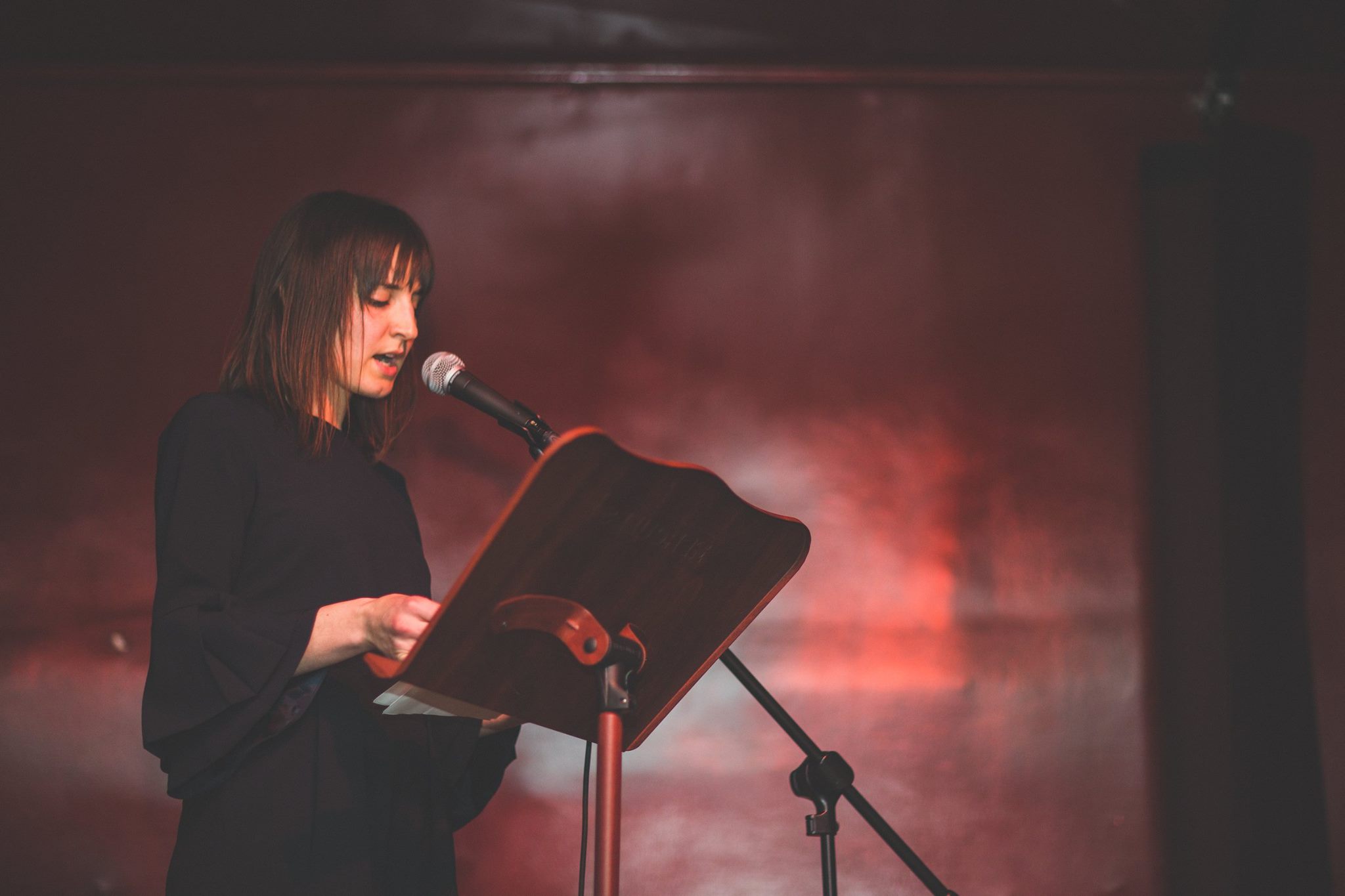
Image Credit:
For the photo of me at the microphone, please credit Rebecca Peplinski Photography
Getting in touch: VoyageChicago is built on recommendations from the community; it’s how we uncover hidden gems, so if you know someone who deserves recognition please let us know here.


