



Today we’d like to introduce you to Melissa Potter.
Melissa, please share your story with us. How did you get to where you are today?
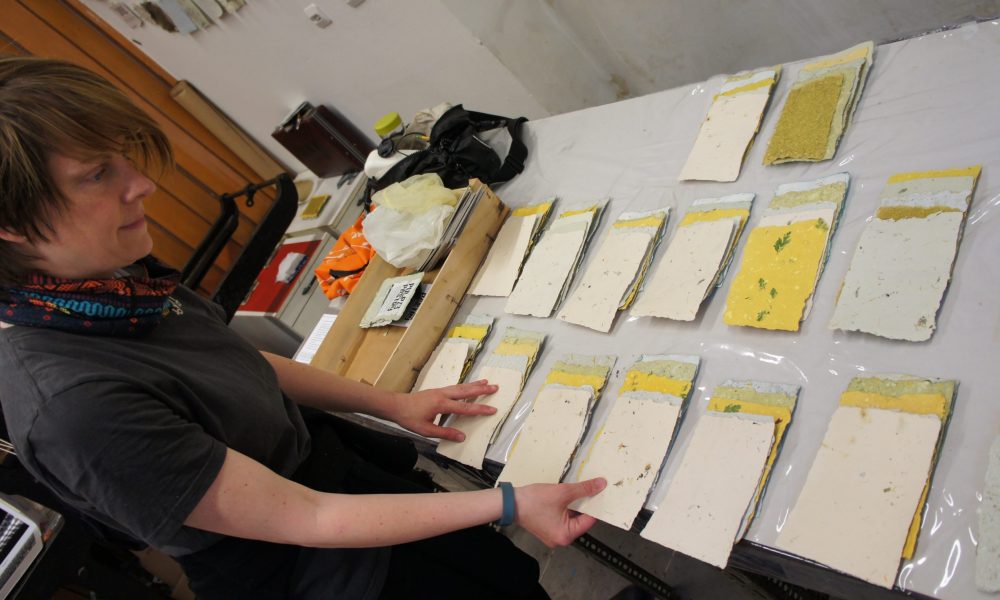
My career trajectory has led me to both works and teach in a number of countries and cultures including the Balkans, Republic of Georgia, and Venezuela. Throughout, I have always focused on the conceptual basis of my work on recording a history of women through their art, their crafts, their rituals, and their stories. My recording practices vary from hand papermaking, digital printing, and letterpress, to print-on-demand books, published essays, a blog, and even film.
Feminism’s formative influence came from the women in my family, including my grandmother who was a Woolf scholar, and a painter, printmaker, and writer. She also led me to the Balkans through a Muslim woman we sponsored and corresponded with during the Bosnian War. Her name was Zejna Spreco, and she escaped ethnic cleansing in her village called Grapska. I was able to find Zejna, while I was living in Bosnia in 2015, and it has inspired a lot of artwork since.
Has it been a smooth road?
I spent 12 years in New York after I left graduate school, and by the time I had gotten there, it was prohibitively expensive and very difficult to break into. I don’t regret those years: they offered me a lot intellectually and professionally. But it wasn’t until I got to Chicago that I was able to find an art community that could support what I do. It’s no accident that I’ve been making my best work in the 11 years I’ve lived here. It’s rarely, if ever, a smooth road being an artist. It comes with financial, personal, and professional challenges, and it takes a long time to find the right audience for the work. They pay off, however, is that I love to do what I do. I found teaching, or rather, teaching found me. It offers me creativity in what I do for a living, a stable situation so I am not in a financial crisis, and has provided me so many amazing collaborative and interdisciplinary opportunities. Before I taught, I was always working too many jobs to make up for the fact that I never made enough at my primary job working in the not-for-profit sector. At one point, I had seven jobs at the same time.
So let’s switch gears a bit and go into the Melissa Potter story. Tell us more about the business.
I am a multi-media artist, hand papermaker, writer, curator, and professor of art. I’ve been fortunate to exhibit at venues including White Columns, Bronx Museum of the Arts, Museum of Contemporary Art Chicago, as well as international film festivals worldwide. I also have been the recipient of three Fulbright awards, and a variety of other grants to support my work in the Former Yugoslavia and the Soviet States. Through these programs, I built two papermaking studios at university art departments in Serbia and Bosnia & Hercegovina. I also collaborated with Georgian women felt artisans and activists through my project, Craft Power with Miriam Schaer and developed research, documentary and advocacy projects with ethnographers and intangible heritage experts to protect, interpret and archive endangered women’s handicrafts and social customs.
My film, Like Other Girls Do, considers the life of Stana Cerovic, the self-appointed “last sworn virgin of Montenegro” who lived her life as a man in order to inherit her father’s legacy, not as a spectacle of a dying tradition, but of a complex, self-determining human who was devoted to her legacy and memorialization of herself and her family. Taking an artistic rather than anthropological approach, it is the only film to consider the lives of sworn virgins in a contemporary feminist context alongside diverse young women navigating identity in a traditional, gender-normative society.
I also curate exhibitions including Social Paper with Jessica Cochran, the first exhibition considering hand papermaking in a socially engaged art context, and Revolution at Point Zero: Feminist Social Practice with Neysa Page Lieberman, the first exhibition to consider the feminist art movement as the progenitor of contemporary socially-engaged art. And my writing has been printed in BOMB, Art Papers, Flash Art, Metropolis M, Hand Papermaking, and AfterImage among others.
How do you think the industry will change over the next decade?
There are so many changes, and the biggest change is the pace at which things turn over due to technology and globalization. Artists are more and more becoming their own business managers. On the one hand, it’s great, and on the other, there are only so many hours in the day. Artists have to balance their jobs on social media and grant writing to advance their work, and the actual art making. It’s hard to entirely disengage: I had the opportunity to be offline for two weeks teaching at Haystack Mountain School of Craft this year. I am the last generation that remembers life before online, and I was reminded how amazing it is to focus on making with no interruptions. The “dig out” from email when I returned was discouraging, I had to work triple-time! I think one of the trends will be to simplify and create smaller, more focused communities.
Contact Info:
- Website: www.melpotter.com
- Email: potter.melissa@gmail.com
- Instagram: @SeedsInService
- Other: www.seedsinservice.com
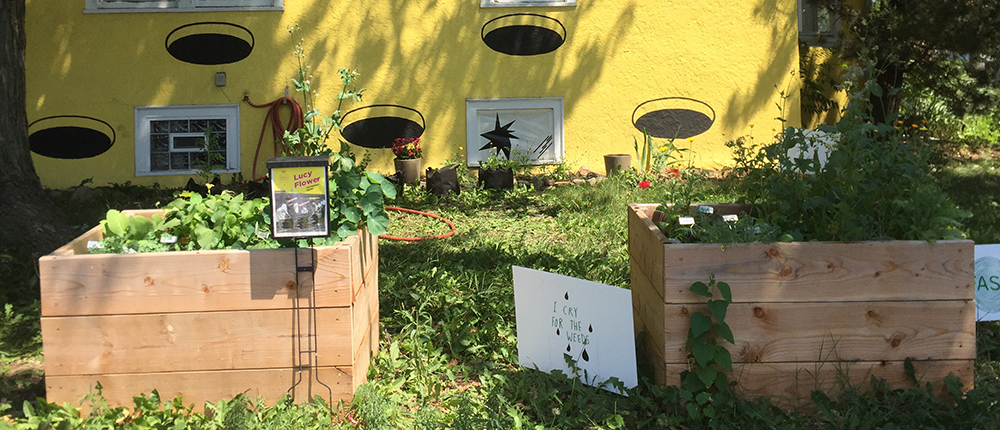
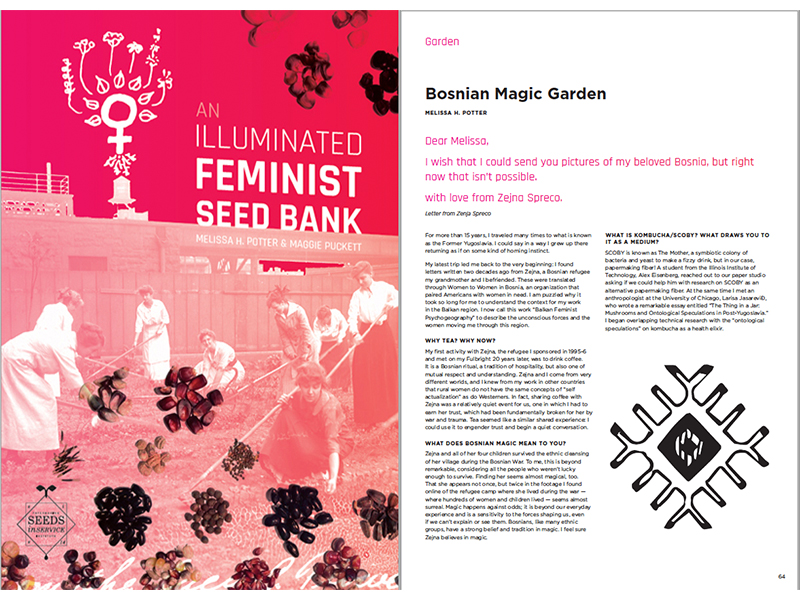
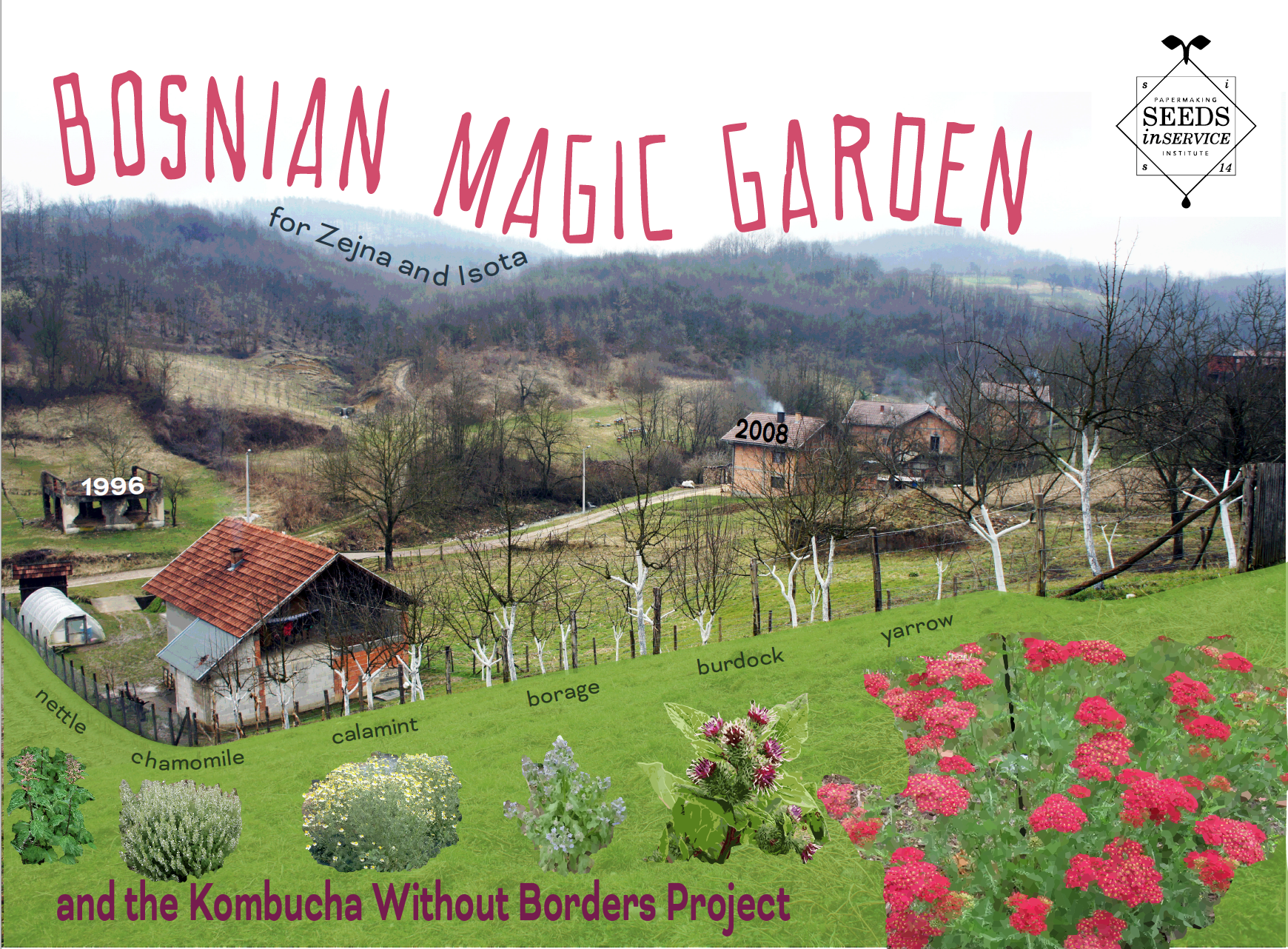
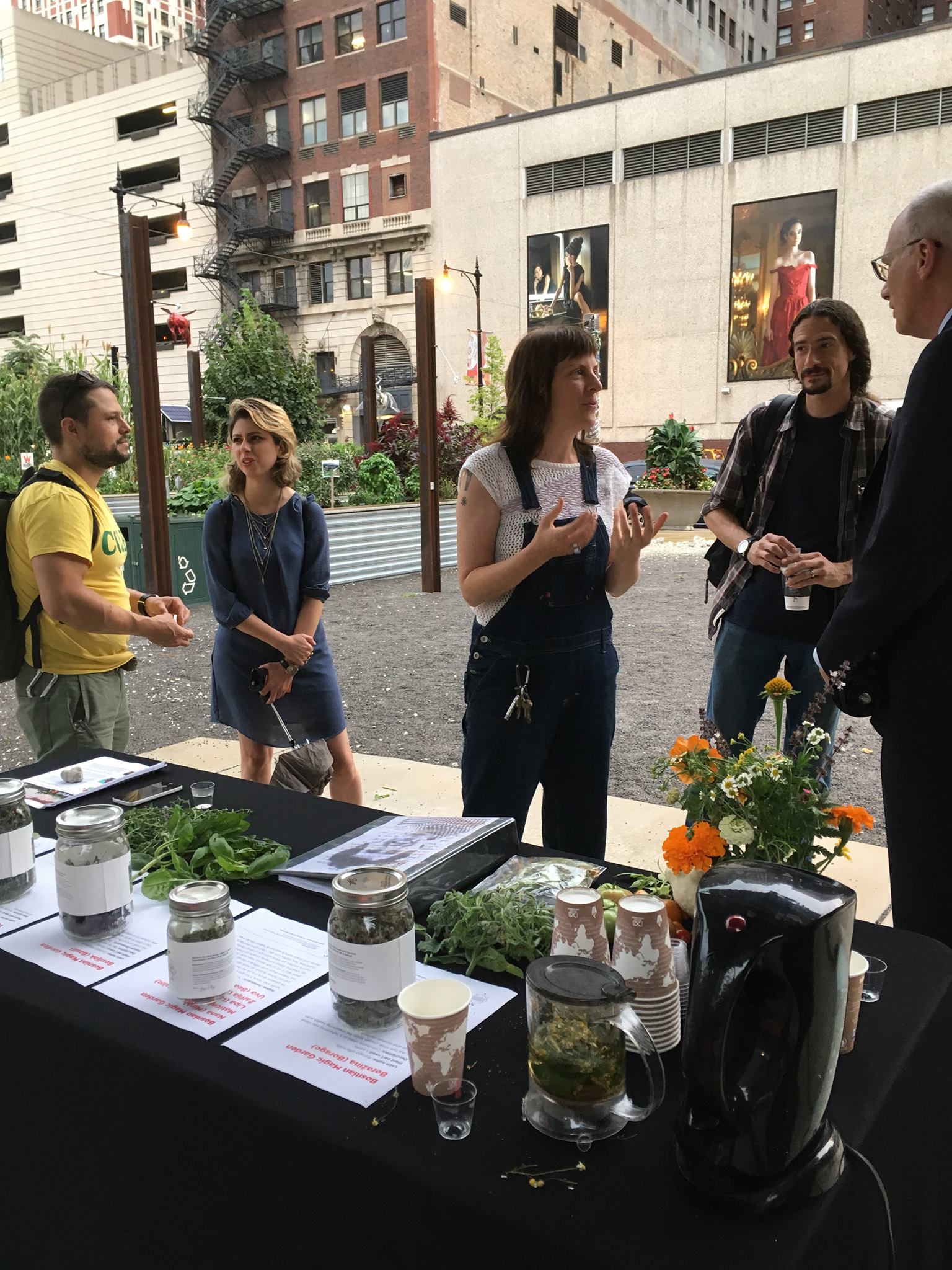
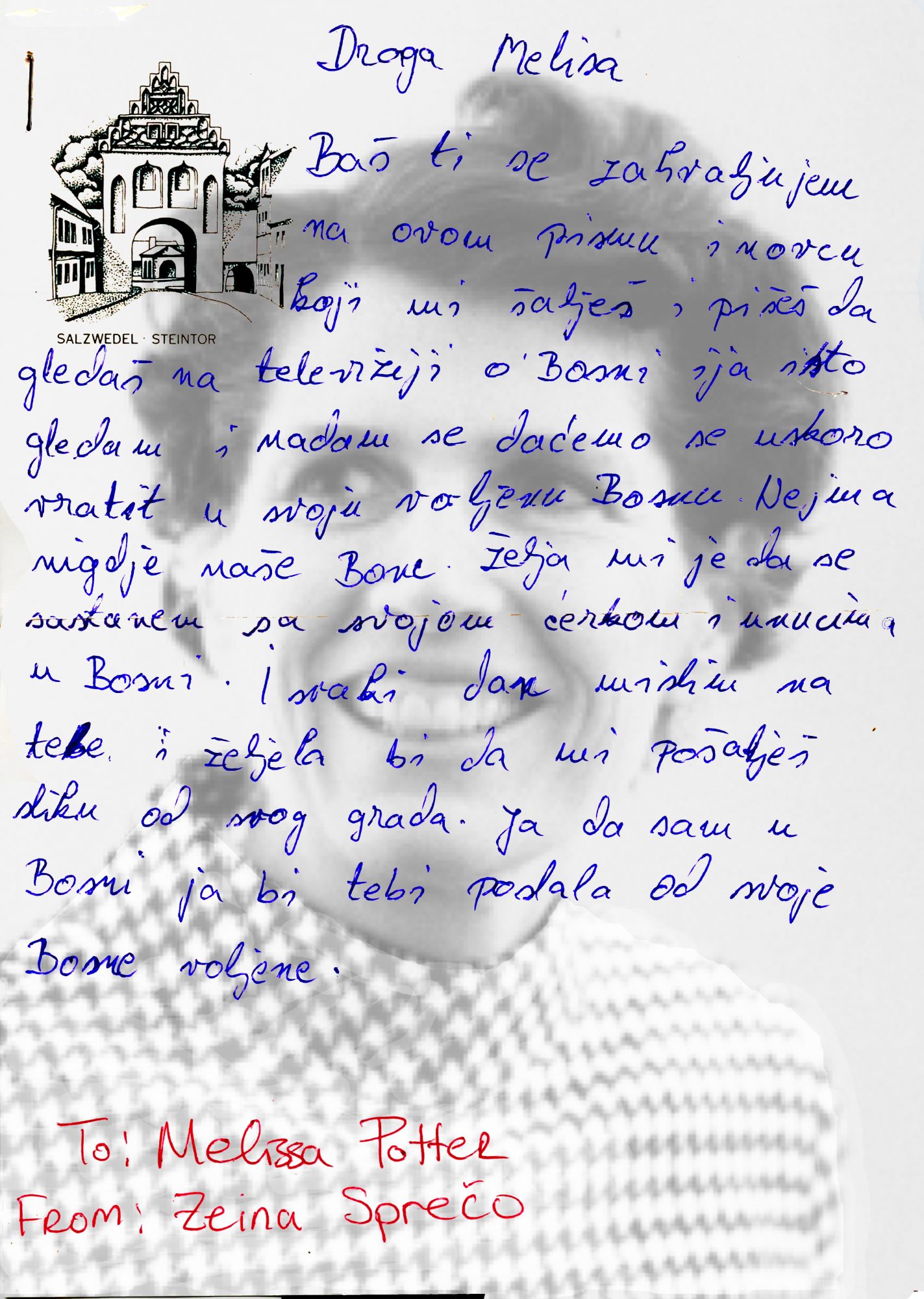 Image Credit:
These images represent original artworks, except Bosnian Magic Garden event, which is by Tatjana Jovancevic
Getting in touch: VoyageChicago is built on recommendations from the community; it’s how we uncover hidden gems, so if you know someone who deserves recognition please let us know here.


