



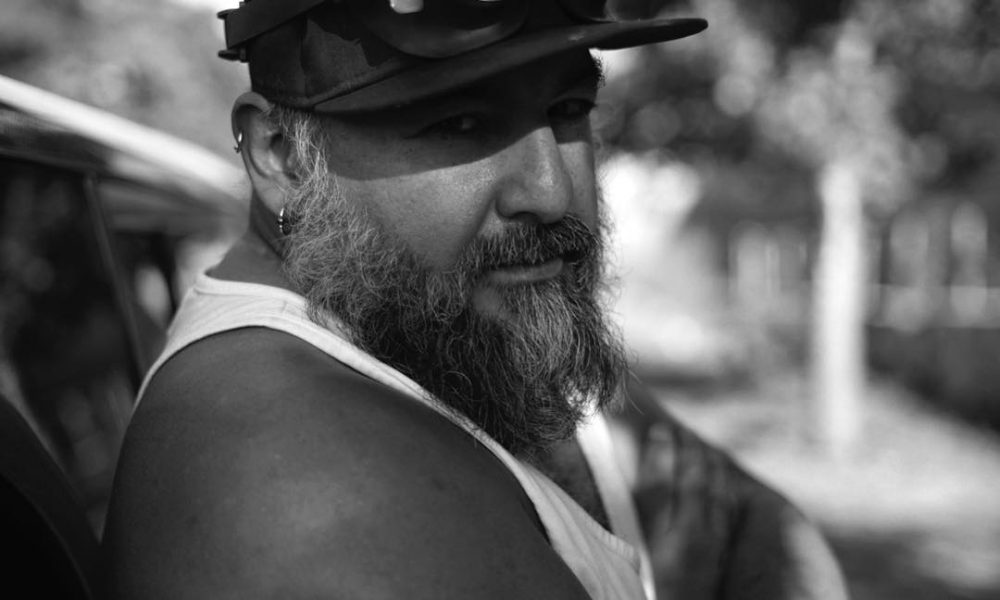
Today we’d like to introduce you to BboyB.
BboyB grew up in the Logan Square neighborhood of Chicago but saw his first graffiti during a family vacation to New York City in 1981. By 1982, he had his tag all over Logan Square and had formed one of Chicago’s first iconic Graffiti crews, ABC, the Angel Berto Crew, along with fellow graffiti writer Angel/Seen. As the crew expanded to include such graffiti greats as Trixter, Seen, Flash, Take2, Non-Stop, Hate, and Risk, the name changed to the more all-encompassing Artistic Bombing Crew, but retained the acronym ABC. ABC later went on to join one of the first graffiti super crews, The Federation (FEDS), which was the unification of ABC + MPC (Master Piece Crew) + TCP (The Crowd Pleasers).
Also in 1982, BboyB established Chicago’s first and longest-running Writers Bench, located at the Logan Square Eagle (Centennial Monument). On Super-Transfer Sundays, Writers such as Slang, Defski, Upski, Scarce, Flee, and many others would come from all corners of Chicago to this central location to craft styles, share photos, have Black Book Sessions, and have breaking ciphers. It was also during this time that BboyB studied and developed his b-boy dance form, learning street styles of competitive dance and going on to become an avid breakdancer.
The name BboyB comes from B-boy (the East Coast term used to identify a breaker, plus “Be” a shortened version of BErto. BBoyB was the first person to use the title/designation “B-boy” + “name” to create his Hip Hop alter ego. It is now a common identifier for breakdancers all over the world that has a history rooted in Chicago. It also works side by side with the other Hip Hop element identifiers such as DJ “name” and MC “name”. The only element that did not carry on this tradition is the Graffiti Writer.
In 1985, BboyB was the first writer to work with the City of Chicago in establishing a legal graffiti wall. Collaborating with the LSNA (Logan Square Neighborhood Association), he helped create the very first paid permission wall at the Logan Square Bus Terminal. After this turning point, BboyB moved away from the illegal bombing of rooftop, trains, busses, and walls, and began to practice the art form in other mediums and legal murals.
While getting his BFA at Columbia College, BboyB started a Hip Hop newspaper, The Rap Sheet, later known as the FlyPaper, with the help of Raymond O’Neal and Mic Shane. The Flypaper was passed out at Hip Hop events like DJ Jesse DeLa Peña’s nights at Lower Links, where the likes of many rappers came up. “We Got Big Lips Productions”, Triple XXX, and Lit X also played a huge role in helping push the FlyPaper during the resurgence of Hip Hop in the 1990s. After it’s launch in 1991, the FlyPaper was printed almost monthly for four years, until it was shut down in 1995 after BboyB’s partners moved out of Chicago. BboyB started it back up in 2001 as the sole editor and continued a monthly run until 2011. The FlyPaper still remains the longest running Chicago Hip Hop newspaper in existence. Now, it resides online, and in Hip-hoppers private collections.
BboyB has also collaborated with many other writers and breakers to form action groups including the first community chapter of Hip Hop Congress, KRS ONE’s Temple of HipHop, a Universal Zulu Charter through Pop Master Fabel from Rock Steady Crew/Zulu in NYC, and the RedBull advisory committee that successfully brought the BC One to Chicago.
He’s also established many community events/spaces around the City of Chicago, including the now infamous annual Writers Bench Battle, Battle for the Eagle, with Breaker Ray, as well as Project Logan, a permission wall and safe space for writers in Logan Square with Flash and AnySquared. Renegades of Funk is a non-profit founded by BboyB and Breaker Ray in 2015. Renegades of Funk’s mission is to teach urban youth the elements of Hip Hop by engaging them, giving them space to practice and hone in on their arts and by planning Hip Hop cultural events throughout the city year-round.
Flash, Telly, and BboyB are also in the process of writing a Chicago History of Graffiti Book with over 400 interviews, and thousands of Graffiti photographs. This effort to retain history led to the creation of Permanent Record, an archive art show, with talks, performances, and workshops that include all elements of Hip Hop. Permanent Record had its first showing in 2013, a pop-up show in Logan Square. An expanded version of the show opened at the Hairpin Arts Center during Chicago Artist Month in 2015 and returned again in 2017 during the Silver Room’s Winter Block Party in Hyde Park.
While BboyB’s true passion is the Hip Hop community, he’s held down 9-5s as a designer, photographer and Art Director at various large advertising agencies such as Y&R, Leo Burnett, Jack Morton Worldwide. His later career took him into journalism to giant news media outlets like the Chicago Tribune, The RedEye, Hoy, and Cafe Magazine. He has also picked up a few design and photography awards while working at several of those places. BboyB continues to paint Graffiti Art and has never stopped being an artist, dancer, organizer, and of course the Hip Hop Preservationist.
We’re always bombarded by how great it is to pursue your passion, etc. – but we’ve spoken with enough people to know that it’s not always easy. Overall, would you say things have been easy for you?
It has not been a smooth road. There have been many challenges. Some challenges have been economic, environmental, others have been social, and the biggest obstacle has been racism.
Economic: So, to take it back from the beginning, obtaining spray paint as an 11-year-old kid was not easy. I had no money to go out and buy paint, so I had to resort to “racking”. Racking is the art of stealing only what you need, and racking is the element of Hip Hop excluded from the books. The better at racking you were, the more paint you had, therefore the more you “got up”. So in order to get known in Graffiti Writing, you have to “Get Up” or get your name or icon out there. You could only do that if you had paint, markers or scrawling utensils.
Environmental: I grew up in Logan Square in the 1980s back when the neighborhood was predominantly Latino with a sprinkle of blacks and whites. Logan Square in the 70s and 80s was a cultural haven for street gangs. In fact, I grew up with gang culture thinking all of Chicago was the same way. I had a culture clash once I entered college and found out that 99% of my new peers were not brought up with gang culture. So, my challenge was to walk a thin line between gang activity and non-gang activity. People looking from the outside in would not be able to see the difference. As I honed in my Graffiti Writing and my Breaking (Breakdancing or B-boying) skills during this era and there was some gang culture crossover into my pioneering of Hip Hop culture. I can say pioneering simply because there was no other generation before mine at the time that was doing Graffiti Writing and Breaking. One of the actions that crossed over into the Graffiti Writing movement was “Flipping.” Flipping, used in street gang graffiti, is the act of taking the opposing gangs name, acronym, or symbol and painting it upside-down, therefore flipping it. Well in Chicago Graffiti we, without thinking, took someone’s name we were battling with and painted it upside-down. This flipping phenomenon is only practiced by Chicago Graffiti Writers. No one else in the world flips names. This is the environmental effect of growing up in a gang infested Logan Square of the 1980s.
Racism: By far, my biggest obstacle was racism. I won’t go into detail on this subject because we all know what racism is. But for those who think there is no racism in Chicago because we are a strong democratic city either has a blind eye, doesn’t care, or is part of the problem. When I was a pre-teen, I was sitting on the steps of a church in Logan Square with several of my friends, minding our own business on a warm summer day, laughing, messing with each other, and having a good time, until a police squad car rolls to a stop right in front of us. The officer on the driver’s side, and closest to us tells us “If I catch you guys sitting there when I come back I’m going to take you in and pin a murder on you.” The thing is, this was not an empty threat, this threat was real, and these cops, who were white, had every intention of actually framing one of us. I know because I’ve seen an innocent friend go to prison for 15 years for something he did not do. So, racism assumes that I’m a gang-banger, murderer, and up to no good by the tender age of 10 years old, and it was a difficult struggle for me not to be labeled as such. As an adult, I’ve relied on skills as an artist, photographer, or art director to be judged by instead of what I look like.
Social: The last challenge I’ll talk about is the social challenge. The perception of Graffiti Art as vandalism. I’m not going to sugar coat it, but I am going to quickly take you through the step of becoming a good Graffiti Artist. Like everything else, for instance, the first time you strum a guitar or the first time you get behind the wheel of a car, you are going to suck. Graffiti in no different. The moment you decide to take the doodle you’ve been practicing in your math notebook onto a public space such as a bus, wall or train, it is going to not look great. In fact, it will look awful because you’ve never used spray paint and never tried a surface outside a blue lined paper before. So, here is the short version of the steps of Graffiti:
1. TAGS(tagger): To perfect your handwriting, hand style, typography skill by, well, vandalizing shit. This is the part the public hates and confuses with street gang tags.
2. THROWIES(tagger): Throw-ups is the next step to taking your tags and making them fatter, usually one or two colors, stylized bubble or block letters. Most of the public still hates this.
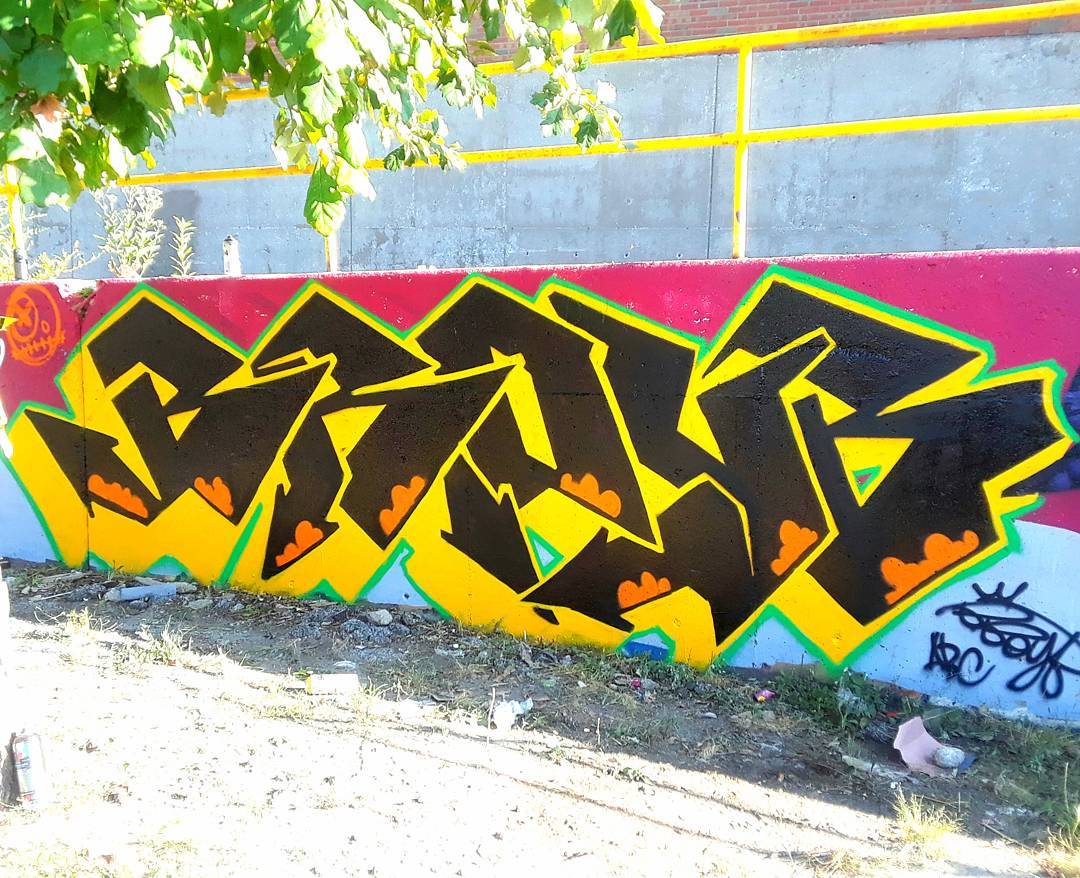
3. PIECES(Graffiti Writer): Short for Masterpieces, is a full-scale rendering of your extremely stylized and fully colored letterforms fit with 3D effects, shadows, and some kind of background to make it pop. This is where most of the public changes their minds about graffiti and they start to love it.
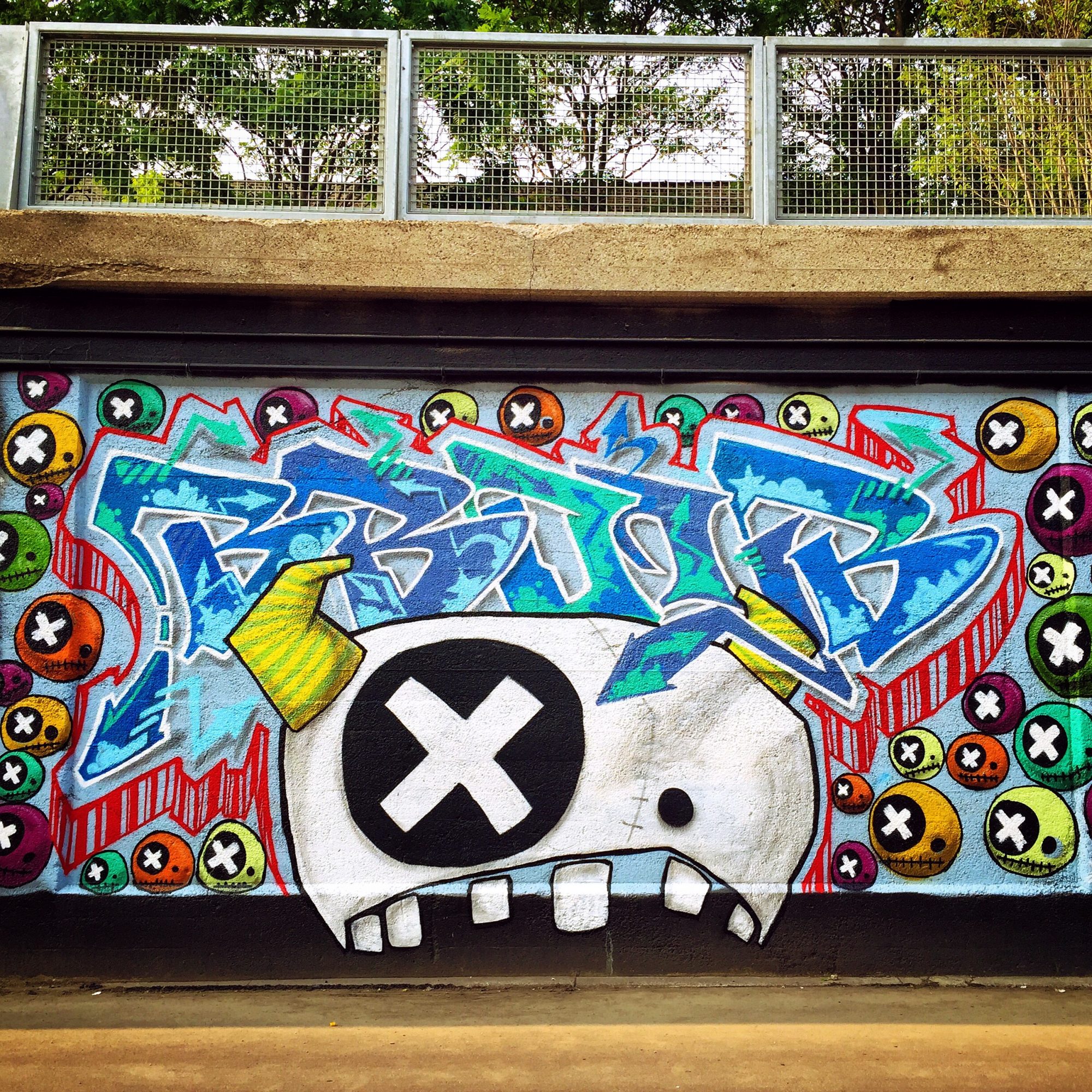
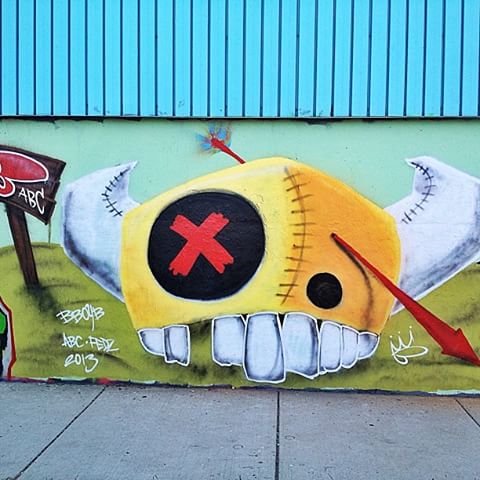
4. PRODUCTIONS (Graffiti Artist): This is a full scare mural, complete with finished background, characters, themes, and perfectly crafted letterforms. No one has a problem with this.
The problem for Graffiti in Chicago is that the city put out an ordinance to ban Spray Paint in 1992. The solution, buy paint outside the city limits. This Chicago ordinance only hurts local businesses. This social challenge to keep spray paint out of Chicago is absurd and has never stopped Street Gangs from marking their territories, not has it ever stopped any Graffiti Writer from getting-up.
We’d love to hear more about your business.
My “specialize in” changes over the years. I started out as a b-boy, graffiti writer, then organizer, promoter, journalist, publisher, activist, to beef squasher.
As I grew older, the things that concern a pre-teen didn’t matter as much. Then the concerns of a teen didn’t matter as much in my 20s. In my 30s, the concerns of a young 20-year old changed, as so on and so on. So as Hip Hop grew older I grew with it, and I’ve never left the culture. Therefore, I’m involved in a culture that is multi-generational now. When I was a kid, there were no adults in Hip Hop. Today, it is not strange to have elders in their 50s (age) be as much a part of a jam as a 7-year old b-boy or 13-year old tagger. I can say tagger because that 13-year old tagger has not earned the title Writer yet. Now mind you that young person may not want to ever be a Graffiti Artist, he may just want to be a bomber or a well-known writer, who is to say. And I’m not saying any of those progressions are better or worse. They are just actions that define who one may be.
Now, as a full grown adult in Hip Hop, I’ve been at the point where I feel I have to give back. That’s where the FlyPaper came from. From peers in the culture to the culture. Which also helped form the culture at the same time. As an adult, I give back by creating events and event spaces for my culture and future generations to practice the art, and in hope to grab the attention of that kid who is at a turning point between choosing street gang life or becoming a multi-faceted Hip Hopper. Not my job to save a kid, but my job to give a kid a different option. This is what a Hip Hop head as an adult should be doing, teaching the next generation to keep Hip Hop thriving.
So, those are some of the things Hip Hoppers know me for. I’m known for being a Hip Hopper who started ABC, FlyPaper, and the Writers Bench. You already know I started one of the first Graffiti crews in the city of Chicago, ABC. I’m known for starting the Logan Square Writers Bench. I’m known for starting and the Fly Paper. Today I’m known as that old schooler involved in the Chicago Hip Hop community for over 35 years.
Who else deserves credit – have you had mentors, supporters, cheerleaders, advocates, clients or teammates that have played a big role in your success or the success of the business? If so – who are they and what role did they plan/how did they help.
Breaker Ray, Flash, Brave Monk, Teel, Nerd, is a mentor, and I have collaborated with them on countless events and activities. Jaquanda Villegas, Leida Garcia-Mukwacha, and Jacinda Bullie of Kuumbaa Lynx are also a great inspiration to me.
What were you like growing up? Personality wise, interest wise, etc.
I was a punk ass kid growing up. I was a “Pee Wee D” (Latin Disciple under the age of 13) headed for a troubled life. But then, I discovered Hip Hop, and it changed my life.
Contact Info:
- Website: http://artisticbombingcrew.com and http://flypaperz.com/
- Email: bboyb1@gmail.com
- Instagram: https://www.instagram.com/bboyb_abc
- Facebook: https://www.facebook.com/BboyB1
- Twitter: https://twitter.com/bboyb
Getting in touch: VoyageChicago is built on recommendations from the community; it’s how we uncover hidden gems, so if you know someone who deserves recognition please let us know here.