




Today we’d like to introduce you to Joanna Pinsky.
Every artist has a unique story. Can you briefly walk us through yours?
My earliest memories are colors, colors of rooms, colors of furniture, the colors in my favorite crib blanket. When I was about four years old, I discovered you could melt Crayola crayons on the bathroom radiator. I remember my mother being angry and telling me not to do that again, but I think she thought it was beautiful too.
Years of coloring books proceeded tempera paints, watercolors and oils. As an only child, making art became my companion, a place to imagine, invent and escape from tension at home or at school.
I was fortunate enough to have teachers who encourage me from elementary to high school where my art teacher structured my schedule to give me two consecutive hours a day for painting. I loved looking at paintings in museums and books. Growing up in the Washington D. C. area, I loved the Picasso Rose period, Renoir and Mary Cassatt in the National Gallery of Art, and Paul Klee, Diebenkorn and especially Rothko at the Phillips Gallery.
Shape became important to me in my last year at Cornell University. We spent fall semester in New York City visiting artists’ studios, galleries and museums. I first saw Frank Stella’s work at a Whitney Biennial and I was knocked out by how the paintings asserted themselves into the environment. Shaping paintings became a lifelong exploration beginning with abstract geometric shapes to slices of areal perspectives of landscape to my current work of architectural fragments and heroes. Always, there is the juxtaposition between freedom and constraint, logic and emotion.
Please tell us about your art.
I work in two ways: two dimensional shaped paintings and rectangular works on paper. My current shaped works are based on architectural fragments and busts of famous people in history. For several years I was drawn to structures that were falling apart and created large shaped canvases derived from them. As Artistic Director for Art Encounter, a non-profit art education organization, I led 15 trips to Cuba between 2000 and 2016. Cuba was a visual paradise with buildings in disrepair, tropical weather and vegetation and rich history. It became the subject of my work over that time. I creating smaller shapes on gator board which allowed me to cut shapes that were impossible to make with wooden stretchers. While in Cuba, I would photograph architectural fragments in different perspectives, using the images at home as a starting place to begin creating shapes. All over Cuba are busts of Jose Marti, the Cuban essayist, poet and revolutionary who died fighting for independence from Spain in 1895. I began to photograph different Marti sculptures and paint them with open eyes and different emotions from sad, to hopeful, to contemplative to fierce. Layered and incised colors play and important role.
While each work is an individual piece, I install the paintings so that almost nothing is parallel or perpendicular to the floor. The busts and architectural fragments seem to float on the wall. Size and placement gives the illusion that some pieces are closer to you and others further away. The pieces are painted to look three dimensional adding to the illusionary quality of the work. The concept of these floating pieces is that they are like memories you have at night especially when you travel. Images of objects you saw may float through your mind, connect in different ways and become colored in different ways over time.
I alternate creating shaped with periods of working with acrylics on paper. During these times, I enjoy working in the traditional format which allows for foreground, background, atmosphere and composition. Most of these works deal with the same subject matter I use in the shaped pieces. I like acrylics because they can be applied thinly like watercolor for heavily to create contrasts of texture.
After a large solo exhibit of my Cuba inspired works including large shaped canvases, installations with gator board shapes and works on paper, I decided to concentrate on architectural fragments and heroes from home. I am currently working on a series that includes Abraham Lincoln. I like to work from photos of sculpture as opposed to images that are flat because the sculptures are already an interpretation by an artist. My paintings are then an interpretation of an interpretation symbolizing what we know of the past, history reinterpreted.
Given everything that is going on in the world today, do you think the role of artists has changed? How do local, national or international events and issues affect your art?
I think the role or artists has always been to help us see the world and think about life in new ways. This can be explorations of the human condition, cerebral, spiritual or political. Ideas can reach people from the narrative and specific to the abstract. Even though we are living in a highly charged political situation at the moment, I don’t think it’s the job of every artist to talk about it. For art to be successful, it has to come from our deepest emotions and reflect who we are.
My own art is a mix of creating paintings and 2-dimensional painting-objects that are beautiful, edgy or mysterious. I like to create installations of pieces that are ungrounded and visually question where we are. The mix of pieces combines images that are recognizable with those that are not together emphasizing the uncertainty of information. My paintings of historical figures originate with historic busts and monuments created by others. I am interpreting interpretations which is how history is created. My paintings which are flat but look three dimensional suggesting that you have to look closely at things to know the truth.
How or where can people see your work? How can people support your work?
I am a member of Space 900 Gallery, a collective at 816 Dempster St. in Evanston. I will be having a two-person exhibition with Jill King November, 2018. I also welcome people to my studio in Evanston. Contact me at www.joannapinsky.com or joanna@artencounter.org. Please check out my website: www.joannapinsky.com.
Work can also be seen on the Space 900 site: www.space900.org, www.facebook.com.
Contact Info:
- Website: www.joannapinsky.com www.space900.com
- Phone: 8477672795
- Email: joannapinsky@msn.com joanna@artencounter.org
- Facebook: facebook. joanna pinsky; facebook space900
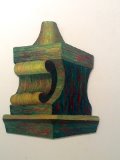
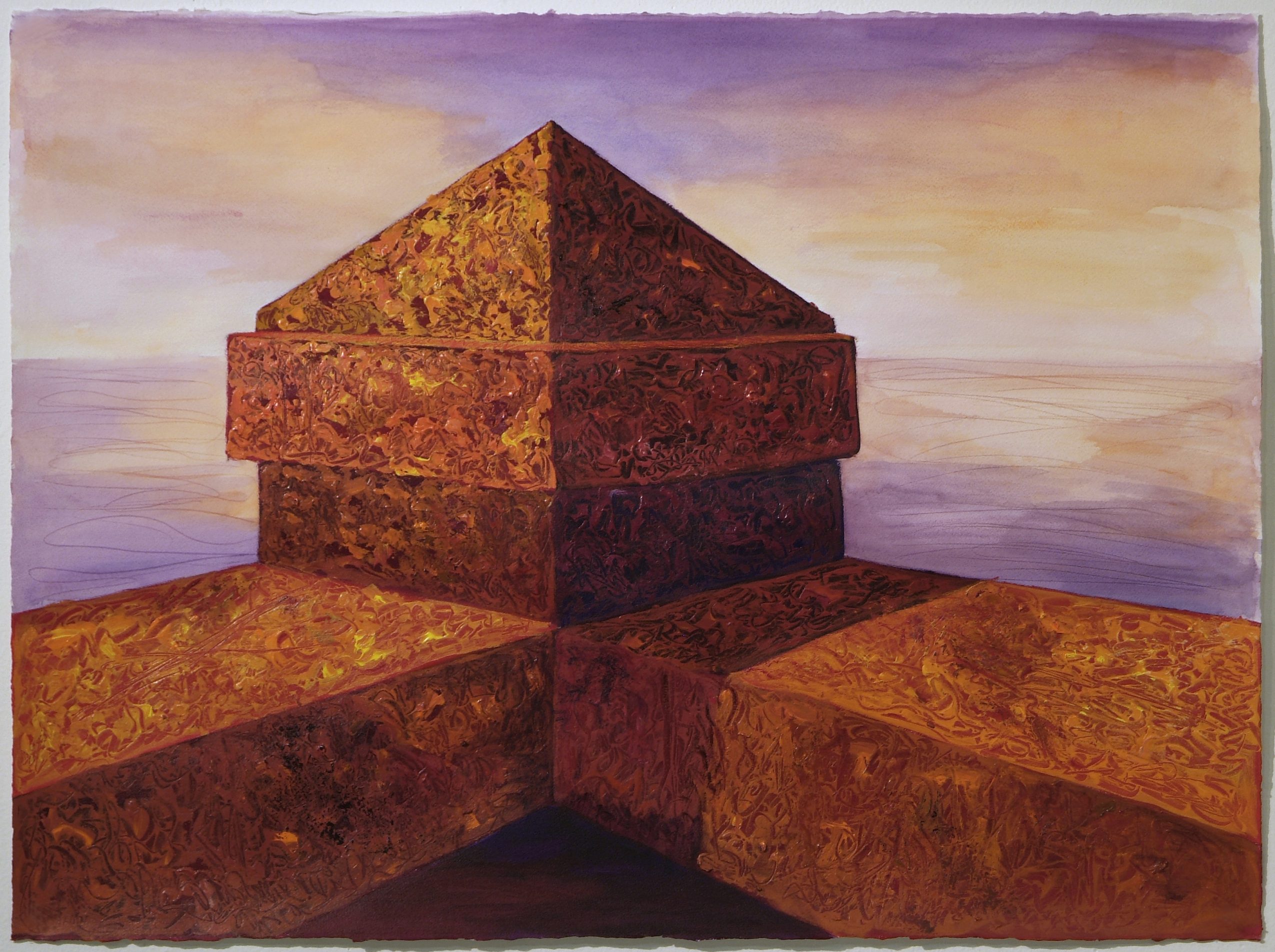
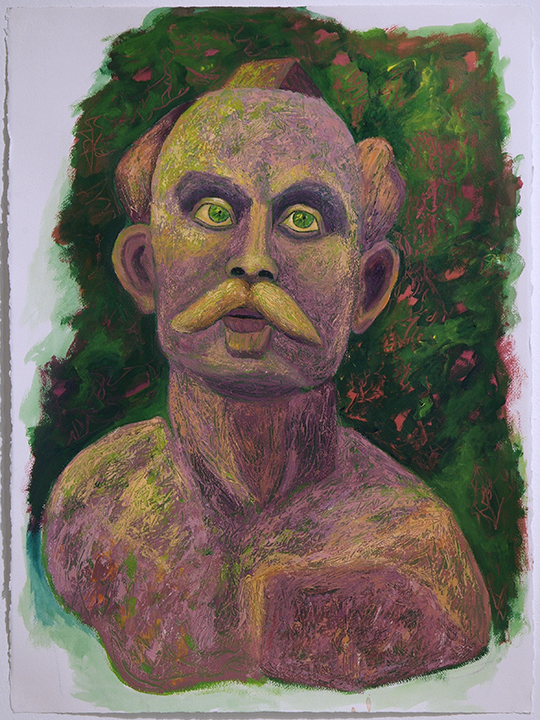
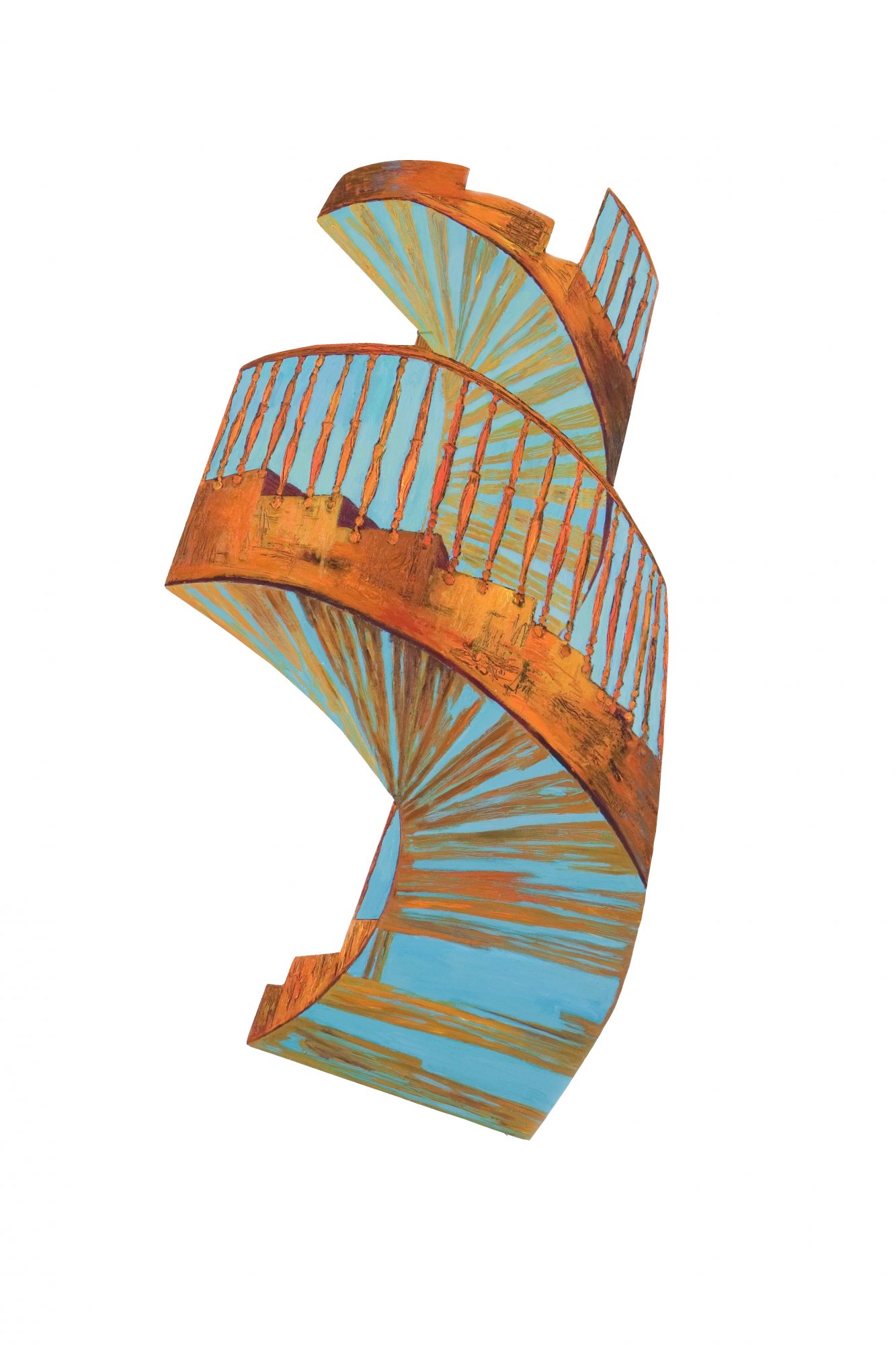
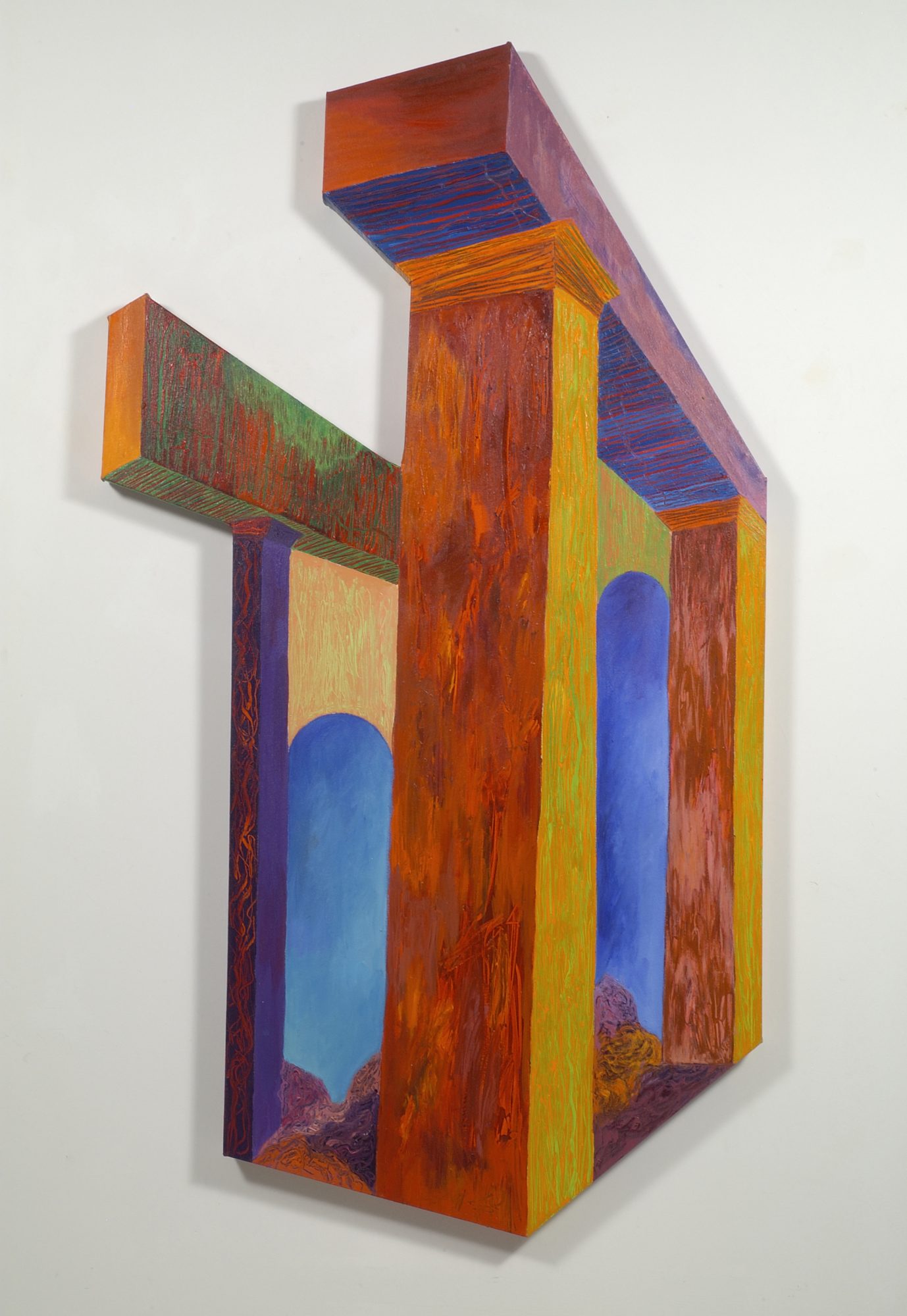
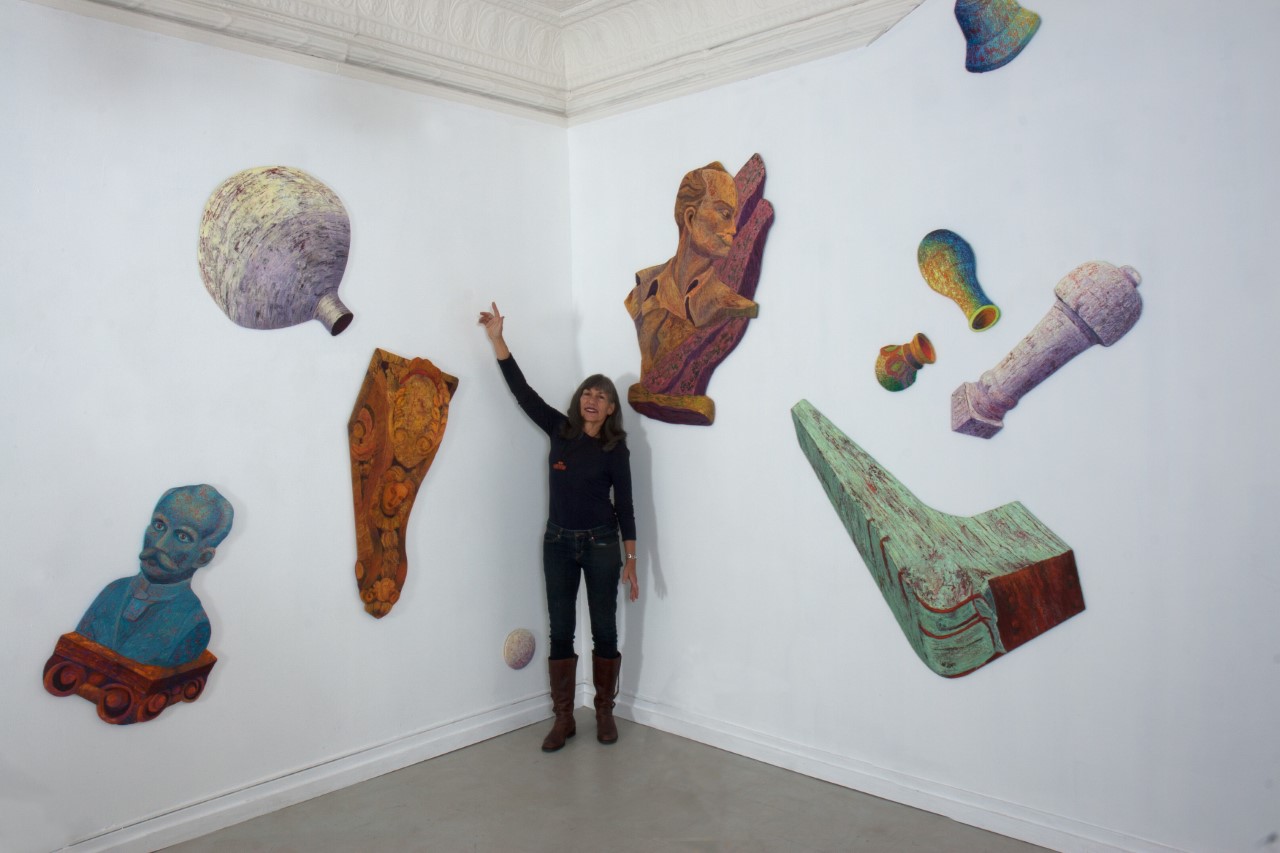
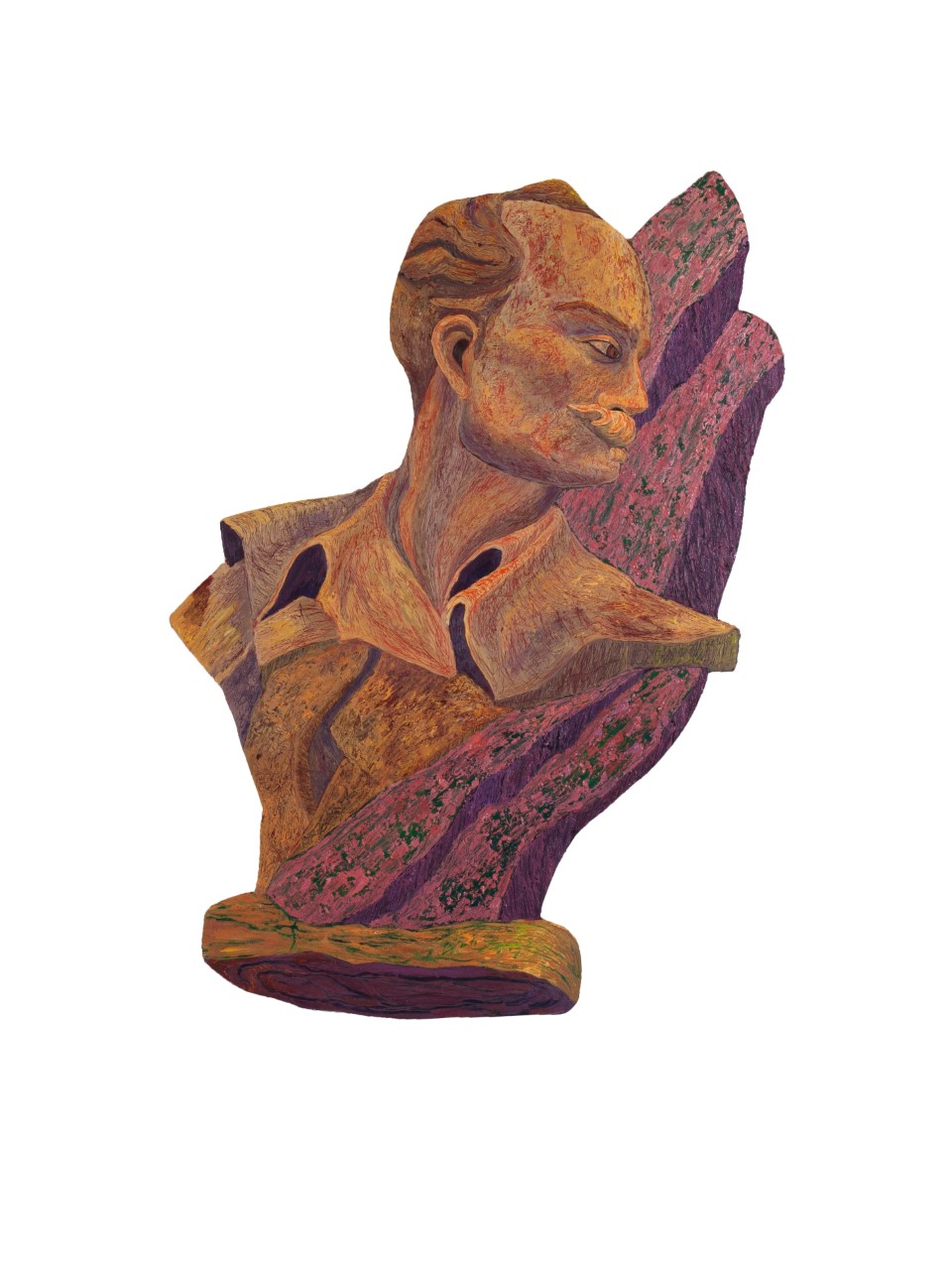
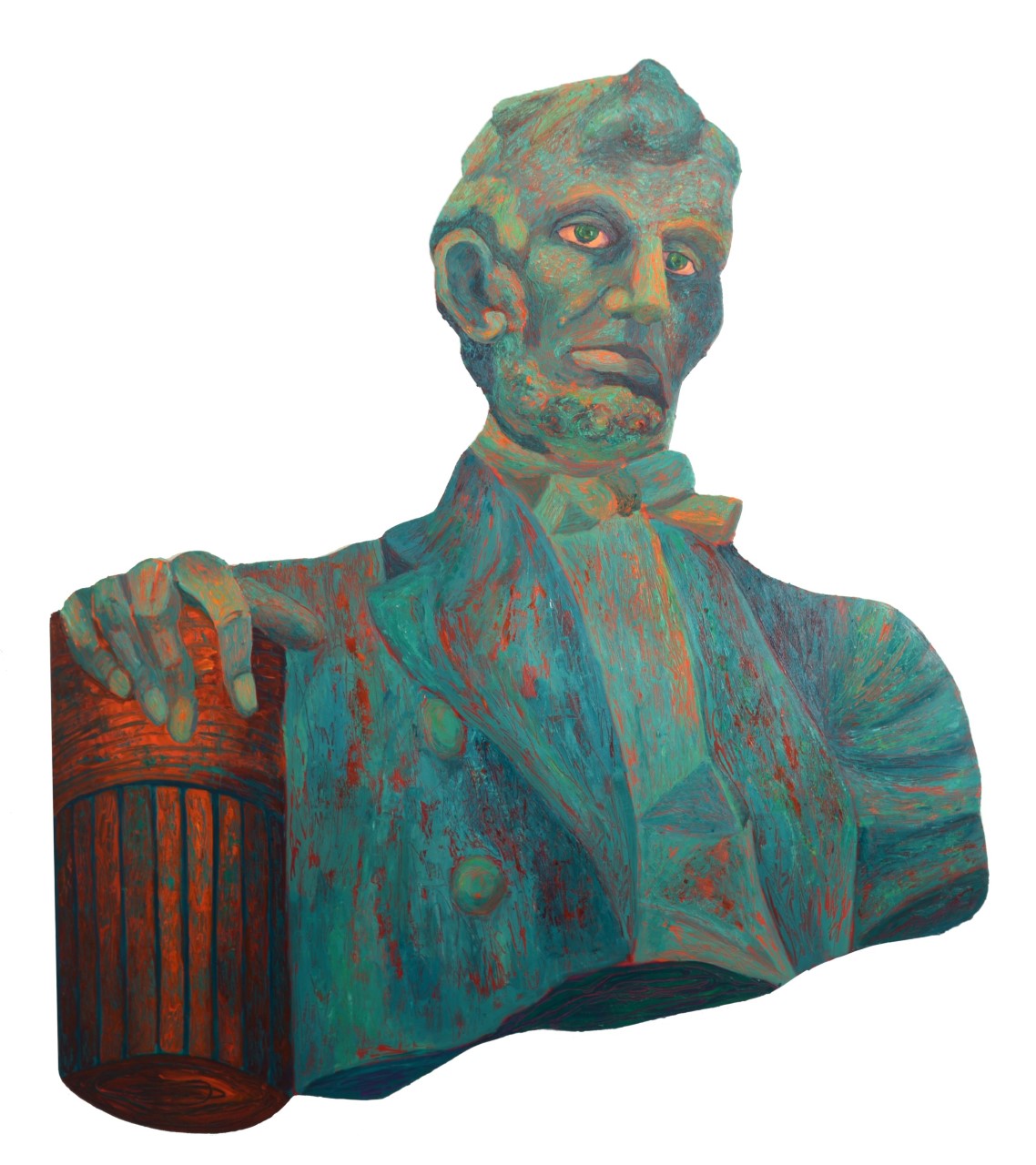 Image Credit:
top picture Joanna Pinsky in Studio
1. Beams acrylic on shaped canvas 6’x4’x 3″
2. Green Pillar Decor acrylic on 2d shaped gator board 30″ x 26″
3.Malecon Sunrise acrylic on paper 30″ x 22″ collection of Beverley Mortensen
4.Passionate Marti acrylic on paper 30″ x 22″
5. Spiral Staircase, Cuba, Acrylic on 2d gatorboard 46″ x 28″
6.Joanna Pinsky with Space 900 Gallery installation
7. Proud Marti, Acrylic on 2d gator board, 46″ x 30″
8. Worried Lincoln, Acrylic on Gator Board 42″ x 47″
Getting in touch: VoyageChicago is built on recommendations from the community; it’s how we uncover hidden gems, so if you know someone who deserves recognition please let us know here.


