



 Today we’d like to introduce you to Joy Decker.
Joy, can you briefly walk us through your story – how you started and how you got to where you are today.
I have always been drawn to helping and serving others, it’s just in my DNA. I come from a family where that example was set for me at a young age – my father is a minister and my mother is a nurse. They have instilled in me the personal values of selflessness, compassion, and responsibility. These core values led me into the nonprofit sector and continue to be the guiding principles for my work today.
For a high school service project, I volunteered with the Western DuPage Special Recreation Association. We spent our Saturday afternoon playing sports with kids and adults with intellectual disabilities. As I got to know them, I learned that some of them lived at Marklund Center, and soon after I was volunteering there during my summer break.
In college, I interned at a daycare center for kids and adults with intellectual disabilities and helped with summer camp and after-school programs. What started as a service project grew into something that I care deeply about and really solidified that I wanted to make a difference for others.
Over the past 25 years, I’ve had the privilege of working with many social services agencies, all serving people with intellectual disabilities. I’m fortunate to have served this population in a variety of roles, and this has helped me to really understand all aspects of operations.
For 17 years, I was with Orchard Village. I started as a case manager, then became a program director responsible for the operation of their residential homes, which provide 24-hour support for adults. From there, I was promoted to VP of Programs and served as President and CEO for three and half years. In 2014, I finished my Master’s Degree in Nonprofit Administration from North Park University.
I’ve been in my role as Executive Director of Esperanza Community Services for four years. Esperanza’s focus is on supporting children and adults with autism and other intellectual disabilities to build skills and become as independent as possible.
Esperanza’s goals and my personal goals are very much the same – helping people build the skills that increase independence and dignity, and providing the sense of belonging and community that leads to happy, fulfilled lives.
Nonprofit organizations do vital work for many underserved communities, and we need to keep an eye on the future. I’m passionate about increasing capacity in the nonprofit sector and serve a mentor for YNPN Chicago Leadership Institute, which develops future leaders for the Chicago nonprofit and public service sectors.
Overall, has it been relatively smooth? If not, what were some of the struggles along the way?Everyone’s story has setbacks, and mine is no different. Since you can’t grow or learn without a struggle, I believe that the challenges and hard times can be the most valuable periods in life. This is an especially timely question – right now, social service organizations across Illinois that serve people with intellectual disabilities are weathering an extraordinarily challenging time.
For years, Illinois has consistently ranked at the bottom of the list of all states as far as funding allocated to people with intellectual disabilities in our community. This leads to increased competition among service providers for private funding and organizations are forced to stretch their already limited resources.
While state funding has recently increased slightly, the accumulated financial strain has caused several organizations that serve people with intellectual disabilities to close and/or restructure programs. Esperanza is not immune to these challenges. We recently we made the difficult decision to relocate and downsize our adult day training program.
Working toward this decision with staff and our board of directors was the most difficult of my career. While this is the right decision in terms of the long-term stability of Esperanza and will help ensure that we are able to continue helping families for years to come, not being able to serve everyone who needs our services has been heartbreaking.
This experience has strengthened my resolve and emphasizes that all we must work together – families, individuals receiving services, service providers, advocacy groups, the community, state officials and our legislators— to improve our system and services!
Esperanza Community Services – what should we know? What do you guys do best? What sets you apart from the competition?
Esperanza provides a variety of programs, and the goal of every program is to help people with intellectual disabilities build a strong foundation of skills that will help them live happy lives in their community. We don’t charge a fee for the services we provide, and that’s critical as the majority of our students and participants come from lower-income families.
We have a day program that helps adults build life skills and pre-vocational skills while supporting participants to express themselves through art. We provide 24-hour care to women and men in our four supported living homes. These homes provide just the right amount of support to ensure that residents can stay connected to the community and live as independently as possible.
We also provide in-home case management and linkage to a variety of wrap-around supports—things like medical care, legal support, you name it! And Esperanza School is providing academic, social and behavioral supports to students ages 5-21. And this is a great example of the ability of Esperanza to transform lives.
For students who have a disability on the autism spectrum, helping them manage behaviors (like outbursts and self-harming) is absolutely critical. Many students with autism are not able to communicate with words, which understandably leads to frustration.
Instead of being able to tell you they’re having a bad day, or have a headache, they attempt to express this by hitting their head or through another maladaptive behavior, which creates challenges for the student in pretty much every aspect of life. It gets in the way of their ability to learn, to build friendships, or to do things with their family.
To help alleviate this, we use Applied Behavior Analysis, which is an evidence-based approach that has a successful track record and lots of data behind it. ABA helps us determine the function of behaviors – essentially, for every behavior, ABA helps us understand why the behavior happens.
Then, we put a plan in place to help the student build skills that will reduce the behavior or another way to positively communicate. By supporting the student to grow sign language, picture-based communication, or technology-enhanced communication skills, the student will have an accessible way to express him or herself.
And once that door is open, behaviors decrease, and students can focus more on learning. It’s wonderful when a parent tells us how much our support has transformed the lives of their child –and theirs as well!
Who else deserves credit – have you had mentors, supporters, cheerleaders, advocates, clients or teammates that have played a big role in your success or the success of the business?
First and foremost, the people who receive our services inspire me every day! I mentioned that growth comes from struggle and in the hardest times, the people we serve have taught and reminded me of humility, laughter, and resilience. I am also very fortunate in that I have always worked alongside wonderful, caring people.
The team at Esperanza is tremendous and it’s an honor to work with them every day. I admire their unwavering dedication to helping people with intellectual disabilities. It’s not easy work, but the team and people we serve keeps me inspired. And of course, my family for always being there with encouragement and to challenge to me to continue to grow.
Contact Info:
- Address: 520 N. Marshfield Avenue, Chicago IL 60622
- Website: EsperanzaCommunity.org
- Phone: 3122436097
- Email: jdecker@EsperanzaCommunity.org
- Instagram: https://www.instagram.com/esperanzacommunity/
- Facebook: facebook.com/EsperanzaCommunity
- Twitter: twitter.com/ECSinChicago
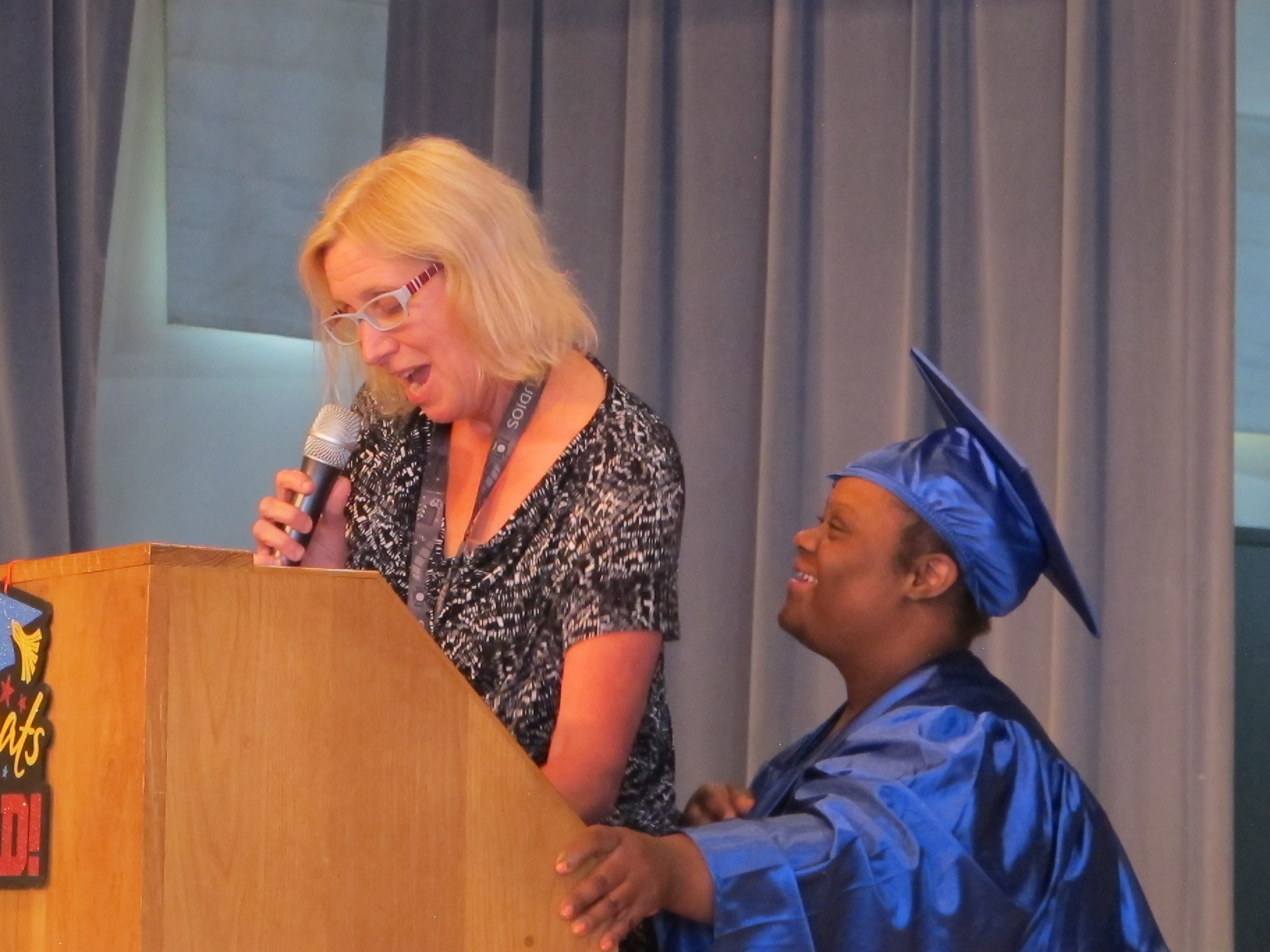
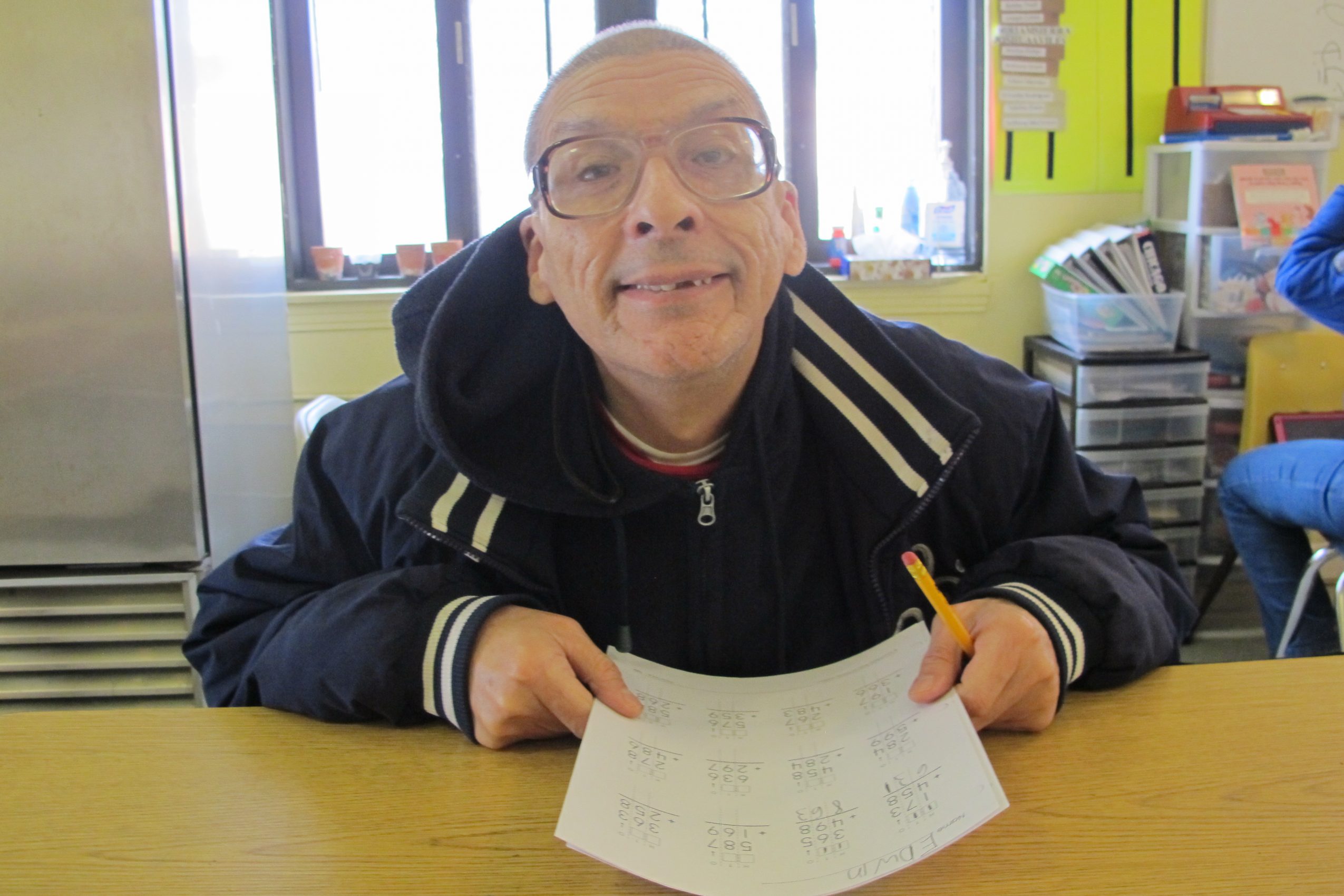


Image Credit:
Erin Doppelt, Thomas Vangel, Paul Strabbing, Esperanza, Jeff Fenwick
Getting in touch: VoyageChicago is built on recommendations from the community; it’s how we uncover hidden gems, so if you know someone who deserves recognition please let us know here.


