



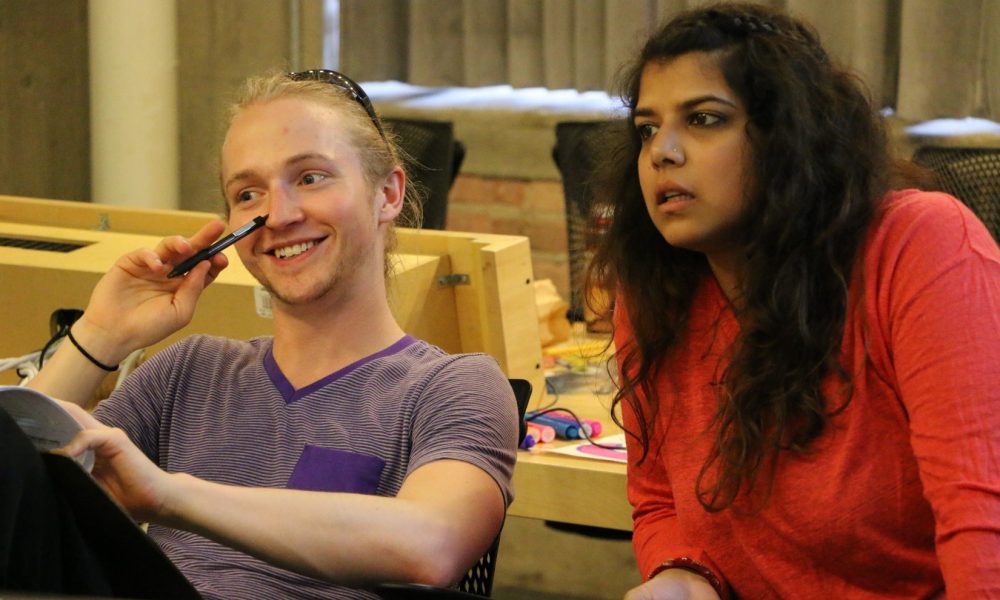
Today we’d like to introduce you to Phillip White.
Phillip, let’s start with your story. We’d love to hear how you got started and how the journey has been so far.
I came to the city from a rural area in Ohio on a scholarship to Film School. In my final year of university, I was selected to Direct one of five school-wide final projects which would screen at our end-of-the-year three-day festival. This project was effectively a simulation of the Hollywood studio system and is the centerpiece of the school’s Cinema Arts+Science curriculum. The final film, which addressed issues of personal identity in ridged systems, ended up being accepted to 7 festivals across the country and in Canada. I was a bit caught up in the splendor of these successes that I almost forgot that you have to make money to actually live on the planet.
I splashed around between a few jobs at some Chicago universities and Wrigley Field before I decided to apply for a Media position at the newly opened Laugh Factory Chicago. I remember leaving the club after my first day with a very strong feeling that I’d never had before. I come from a bit of a broken family, which made me very slow to trust people, and I remember not feeling that at all after a night with this stuff. It was more than just trust though, and I don’t know how to explain it. It was very weird and foreign to me. It was like I was a battery, fully charged for the first time. In the three years I worked at the Laugh Factory I met some of the countries top comics, traveled across the world with some of my co-workers, and most importantly honed my skill and proved myself to a larger audience of people who, in turn, began to trust my opinion.
Laugh Factory has some of the best years of my life and greatest memories. But, toward the end, even they knew it was not a place I should stay at for too long. We had fun, but the place was chaos. Ownership had very little interest in the community, all the employees were in relations with each other, managers came and went faster than staff members, and were paid close to nothing, which gave them very little power over a highly trusted veteran server. There was a lot of freedom and energy to get things done, but the structure in place was lacking to an extent that anything out of the ordinary routine became too much weight to bare. It was a great place to grow, but not a great place to be grown. By the time I left I’d been grown for a while.
Laugh Factory had always allowed me to put a high priority on outside work. (The least they could do, really, since the pay was so little.) The projects I undertook while still in their employ put me into the view of content creators & purchasers in LA/NYC, which was great for prospects in the realm of narrative filmmaking. At the same time, I had started a business with a friend from school to provide video services for corporate events, internal business uses, and weddings. As both these aspects started to grow in scope and quality I began to get offers from investors to take the company to the next level. They would inject capital investment now allowing for structural and equipment upgrades, and in return, they would have priority access to services (which almost always meant they wanted to make a show starring themselves.)
At the time, I was always disappointed when one such a deal would fall through. They’d always seemed like my ticket. Now, as I sit in my own home writing this to you having slept in just a bit and facing a day set out on my own terms, I can see that all of these chances I saw as opportunities were actually just about-ways routes to having a boss-person always over my shoulder. Exactly what I had gone into this field to prevent myself from. It’s funny how looking at things with the wrong mind changes what they are. It’s not the easiest thing, to take the risk of finding clients and providing for them properly or starving, but it’s the thing that is the most empowering.
Once I was with a girlfriend’s family at Versailles, and when we were looking at the breathtaking mural-sized paintings kept and hung in the castle for only the sight of Royalty, her lawyer stepfather said to me, knowing exactly his intent, “Well, would you look at these. And to imagine that none of them would have ever been painted if the artist refused the King’s commission.” I think I’m trying to paint the painting without the King.
Has it been a smooth road?
Nope. Been totally smooth sailing. Easiest thing in the world.
Kidding. Problems generally come in three different forms:
Business: These are very concrete and often obvious – You need certain gear to achieve a product, you need to acquire certain knowledge to navigate complex systems, you need to know how and to who you can sell your product with a relative amount of success.
Example: I was living in a 2br apartment with 5 guys, none of whom had any money. I knew how to work with sophisticated equipment, but I didn’t have any equipment at all, let alone sophisticated stuff. I had been ‘saving money’ (which means less than nothing when you are dead broke) and just had my birthday, so there was a stockpile of ~$250 or close to that. That’s not going to buy much of anything in video… but if I threw in my rent money also… So I booked a gig on Craigslist which would pay me enough to make rent back in time and bought the camera that I then used for the next ~2 years. It wasn’t a powerful machine, but it was a solution to the business reality of the time.
Creative: Your feelings play a bit more of a role in these problems. Creative problems come from an inability to connect your vision with what you can make reality. Their solution is often to abstract the core of vision and reanimates it in a different form.
Example: I wanted to shoot a character introduction on a yacht. I didn’t have a yacht (surprise), but I was so tied to this image that we had manufactured that I had actually closed my mind off to new ideas. It took someone else pointing out all the aspects of the shot that could be replicated in a different setting to realize that I was functioning improperly.
Psychological: These are the most difficult problems to conquer and also the most important. Your mindset creates your reality.
Example: There was a time, when living in an apartment with 4 other guys, that I really thought of myself as a true nothing. And because my political ideology and worldview reinforced those beliefs, they started to become true. It wasn’t until I started pursuing a more advanced life of the mind that I started getting anywhere.
So let’s switch gears a bit and go into the Iconic Arts story. Tell us more about the business.
We really do go the extra mile to create a unique experience and product for the client. We make it a point to try a new tactic or a new piece of gear every time we shoot. I’m sure a lot of people say that, but we take it on board as our identity. Constant improvement is what keeps us motivated to do it at all.
How do you think the industry will change over the next decade?
Equipment costs already are and will continue to go down as their capabilities increase. This will make knowledge and organization all the more valuable. Embracing of robotic technologies will become mainstream for certain pieces.
Demand for content will certainly increase, adding saturation to the market. It’s possible that Hollywood restructuring will decentralize or alter the sources of power in the industry.
And look out for 8K resolution cinemas.
The future is, of course, unknowable but these things appear to be fairly locked in.
Contact Info:
- Website: IconicArtsChicago.com
- Email: IconicChicago@gmail.com
- Facebook: https://www.facebook.com/iconicartschi/

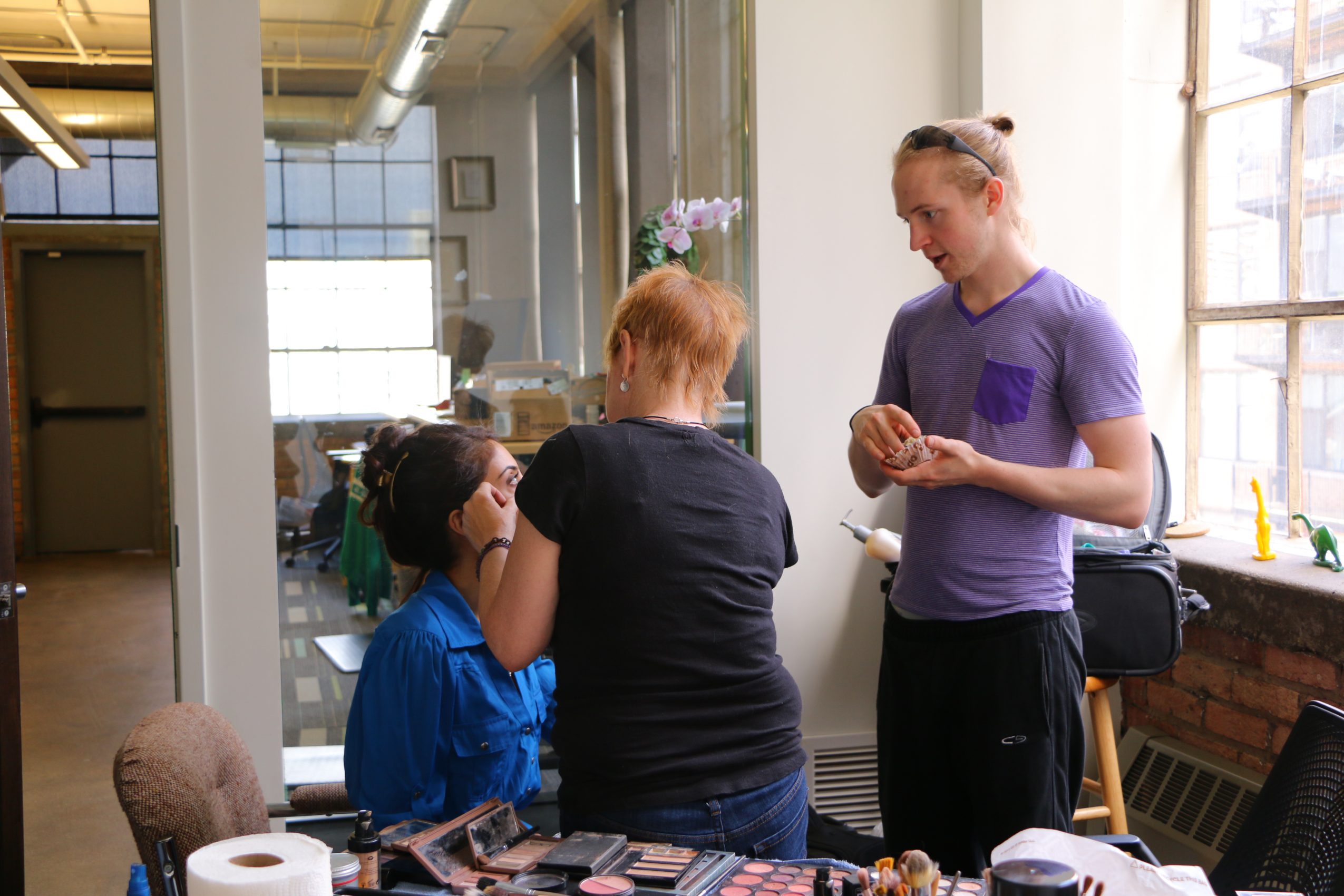



 Image Credit:
Sarah Tesfai
Getting in touch: VoyageChicago is built on recommendations from the community; it’s how we uncover hidden gems, so if you know someone who deserves recognition please let us know here.


