



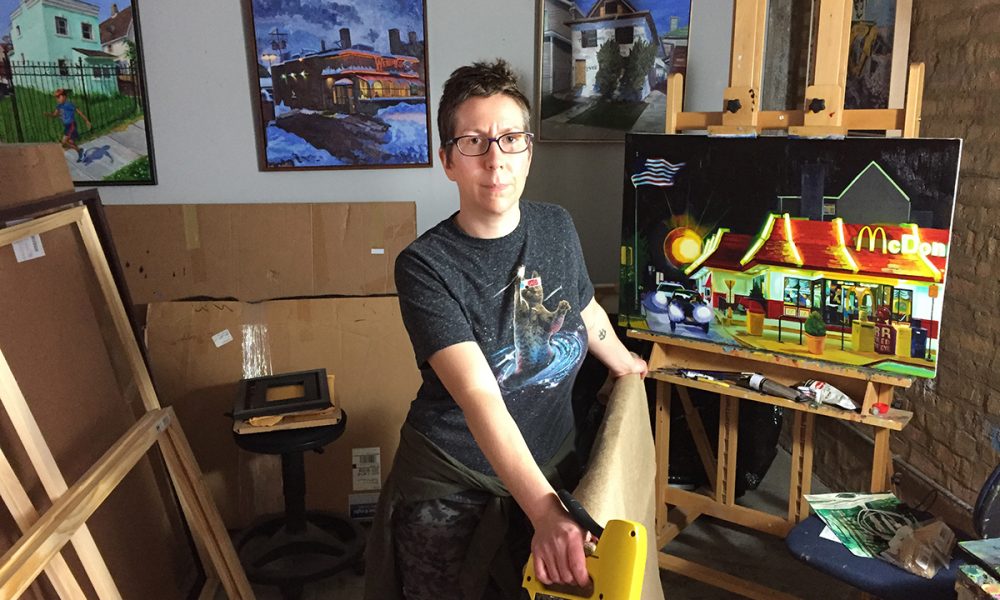
Today we’d like to introduce you to Emily Rapport.
Emily, let’s start with your story. We’d love to hear how you got started and how the journey has been so far.
Growing up in a rural area outside of Rochester, NY, I was pretty isolated and spent a lot of time drawing and listening to music. I started painting when I was a junior in high school. A friend suggested I stick to drawing the fashionable figures I was good at (that first painting was pretty bad) but I had already seen the vista of possibility with this new medium and knew that I wanted to pursue it.
The School of the Art Institute of Chicago offered me a Merit Scholarship but after my second year, I was forced to take a leave of absence for financial reasons. I returned to Rochester, NY, to live in my parent’s basement while working at Sherwin Williams and other odd jobs. One year of that was plenty. Deciding to return to school, I applied and was accepted to the Cooper Union for Science and Art in New York. At the time, Cooper Union offered students a full scholarship.
New York lived up to all of my expectations. The kinetic energy of the place was palpable. Many of my fellow students had attended art high schools and already had the discipline that I sorely lacked. Cooper Union provided a small studio space which I took full advantage of. But, my bad habits persisted. I attended only the classes that I enjoyed and quickly spent all of my savings. I’ll spare you the details but I flunked out of Cooper Union and had to retrench yet again to Rochester, NY.
After some consideration of my future prospects, I decided to finish my degree at The School of the Art Institute of Chicago and took out some more loans (which I am still paying off, thank you). It turned out I was still terrible at showing up for classes but I loved Chicago. I started taking my own photographs and painting urban landscapes and everyday scenes.
During this time, I also began exhibiting my work at local festivals like the (now defunct), “Around the Coyote” fair in Wicker Park. Participating in art fairs was an excellent experience as a young artist. Sitting with your work while strangers walk by can be intimidating but it’s also a great opportunity to engage with people who are (or aren’t) engaging with your art. You get a crash course in presentation, pricing, and self-promotion.
Through a former SAIC professor, Marion Kryczka, I landed a studio share in Ravenswood. I was longing for a sense of community and I shortly become involved as a volunteer in a neighborhood arts fair called “ArtWalkRavenswood”. Circa 2005, Ravenswood was still known as an industrial corridor housing a diverse blend of manufacturing, artist studios, and professional businesses.
Building on the existing “tour of industry” that had been coordinated by JARC in the past, I worked to make the “arts tour” more representative of the caliber of work produced in the Ravenswood neighborhood by highlighting the unique experience of visiting working artists’ studios. I made a website for the event which showcased all participants and initiated a documentary project to explore how the arts and manufacturing were intertwined.
The Ravenswood ArtWalk (RAW) become a nonprofit the following year (2006) and we grew the festival from a tour of about 20 locations to over 50. I thought that I had found my calling but despite the hard work of some extremely thoughtful and dedicated people, there was a lot of nonprofit board drama. I realized that while I was building this exciting community-based organization, I hadn’t painted in nearly a year.
Since I had built the first website for the Ravenswood Art Walk and managed their online presence for over a year, I felt reasonably qualified to build websites for other people. A few friends at first then, quite unintentionally, I found that I had grown a referral business that would sustain me over the next eight years. I no longer work for myself, but I am still a web designer/developer. I continue to maintain my painting studio in Ravenswood corridor.
This past Spring I had my first solo gallery show in Chicago at Firecat Projects called, “Subject to Change: Urban Landscape and the Architecture of Place”. [link to: https://emilyrapport.com/subject-change-opens-april-28-firecat-projects-chicago/]
Has it been a smooth road?
Failure and rejection are inevitable. There will always be people who say, “No, you can’t do that.” You may even say it to yourself at times. With experience and practice, I’ve learned to take other people’s expectations about what I should value or what direction I should take with a grain of salt. This doesn’t mean I ignore genuine, helpful criticism: we can and should learn from people that we respect and from other professionals in our field.
The statistic for artists who graduated from art school and continue to maintain their art practice after graduation is something like 10% (2014 study). There is no formula for success as an artist. I find that my stubbornness and determination to follow my own direction, qualities which were frustrating to teachers, have become positive assets.
I feel successful if I am able to create work that challenges me and is fulfilling. Being adaptable, understanding that some days are just not going to be productive, and cultivating a slightly oversized ego allow me to maintain my studio practice and survive the many disappointments and setbacks that are bound to occur in real life. There’s no such thing as “an overnight success”. This is a long game. You just have to keep showing up, making the work, and possibly accept that that is its own end.
So, as you know, we’re impressed with Eat Paint Studio – tell our readers more, for example what you’re most proud of as a company and what sets you apart from others.
I am a figurative painter inspired by the urban landscape of Chicago. My work relates to American painters such as George Bellows, Isobel Bishop, Charles Burchfield, Reginald Marsh, and others. Like the American realist painters who came before me, I am interested in describing a distinctly American experience. I find my subjects in vacant lots, neighborhood houses, fast food restaurants and other urban scenes. These subjects have a strong sense of locality but they also belong to a larger American landscape and culture.
In contrast to the multitasking, screen-oriented way we manage our day to day lives, a painting invites the viewer to exist in a visceral, textured moment. It is linked to other paintings (past) and moments and experiences that may happen (future) but it’s also a self-contained thing (right now). Painting ordinary scenes is an active practice, an exploration of beauty and resonance in daily life.
Let’s touch on your thoughts about our city – what do you like the most and least?
What I like best are the different neighborhoods, riding my bike up to Roger’s Park or through Uptown, and generally how walkable it is here. I admire the train lines and architecture, especially taking the Brown line into the city in the late afternoon or early morning, crossing the river as the sun hits the buildings. That view of the city is still like seeing Chicago for the first time. It is filled with a sense of potential and history.
What I don’t like is when neighborhoods become unaffordable for renters and perfectly fine pieces of architecture are torn down and replaced without consideration of the existing place and community.
Contact Info:
- Website: https://emilyrapport.com/
- Email: emily@emilyrapport.com
- Instagram: https://www.instagram.com/eatpaintchic/
- Facebook: https://www.facebook.com/emilyrapport.painter
- Twitter: https://twitter.com/emilyrapport

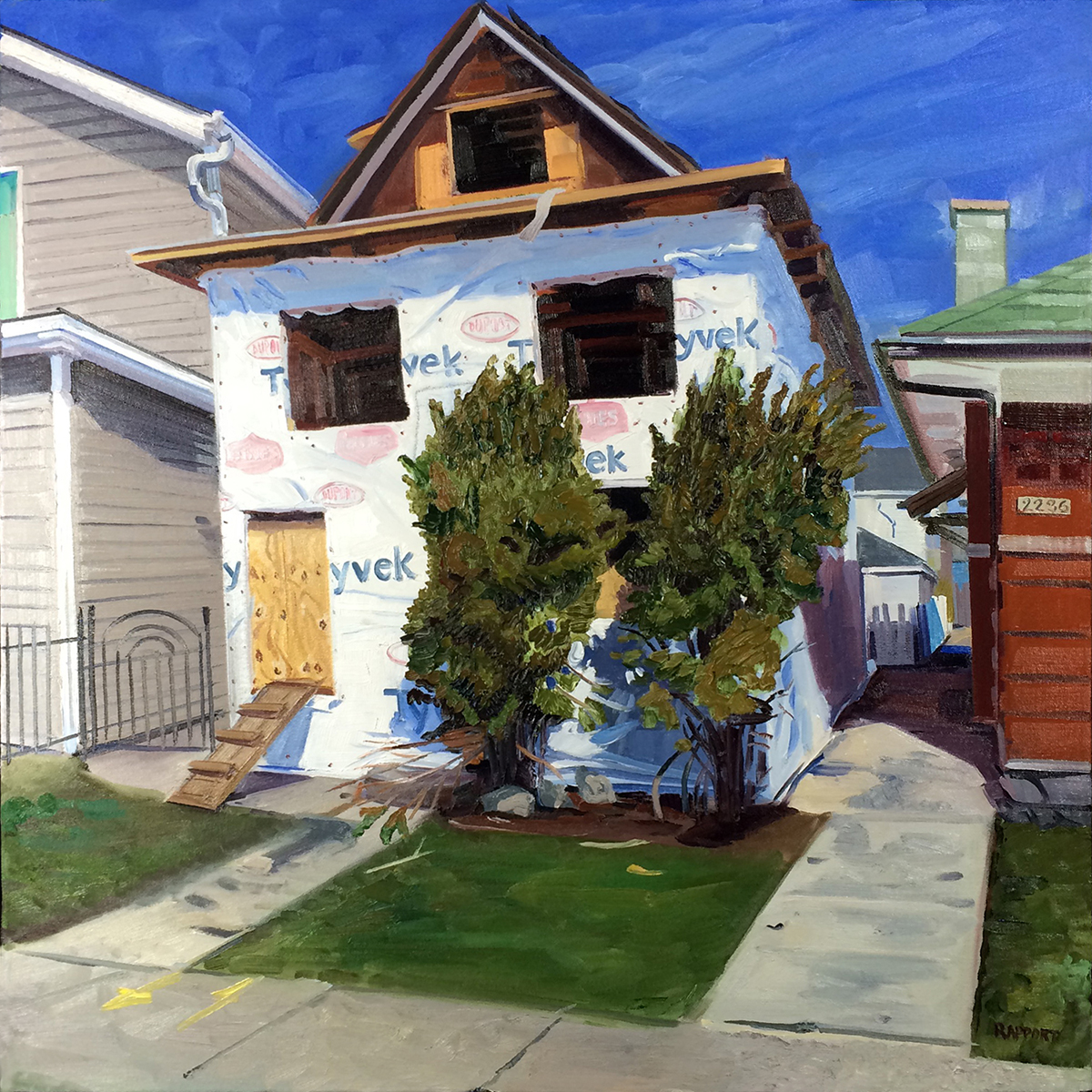
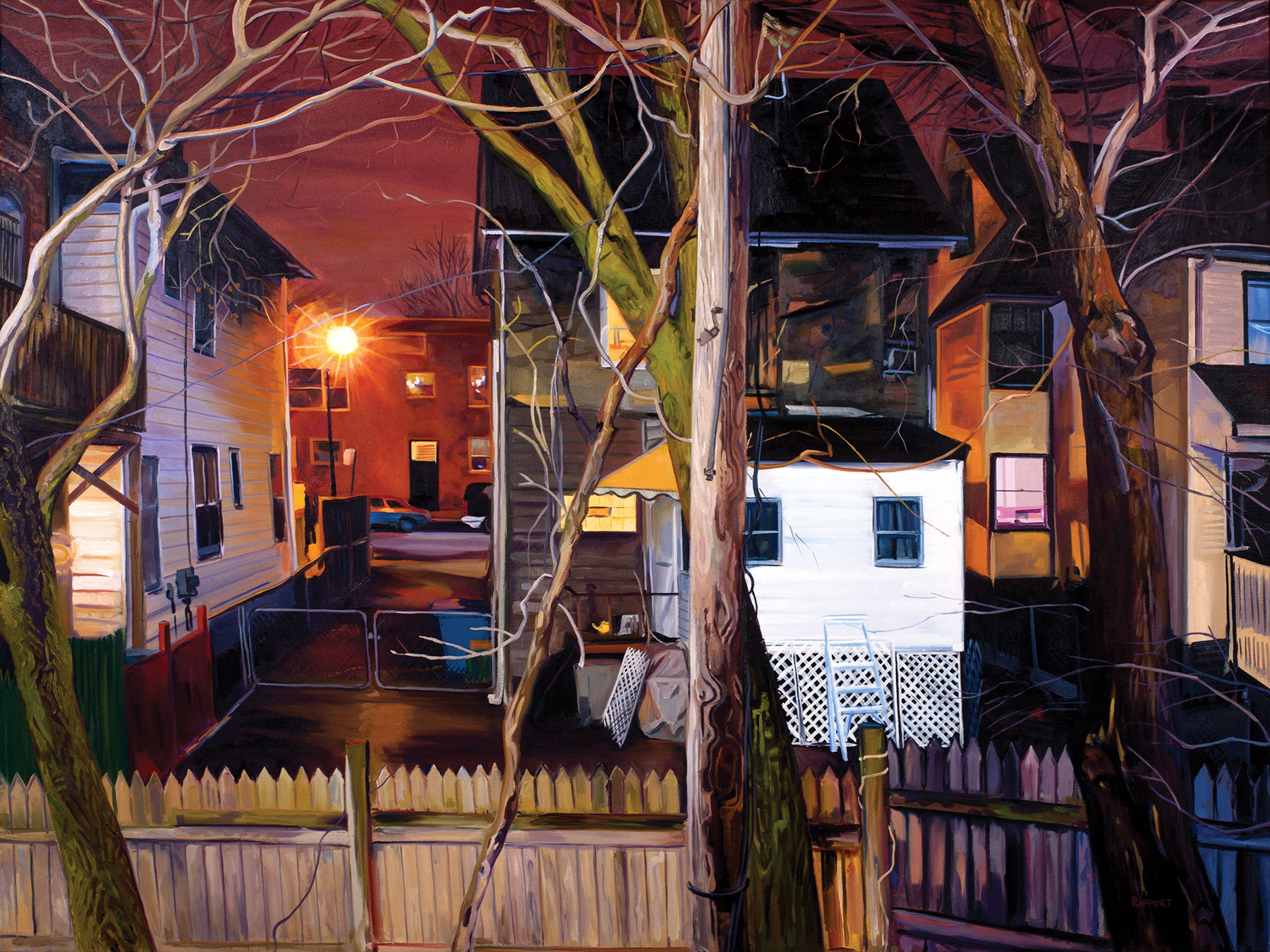
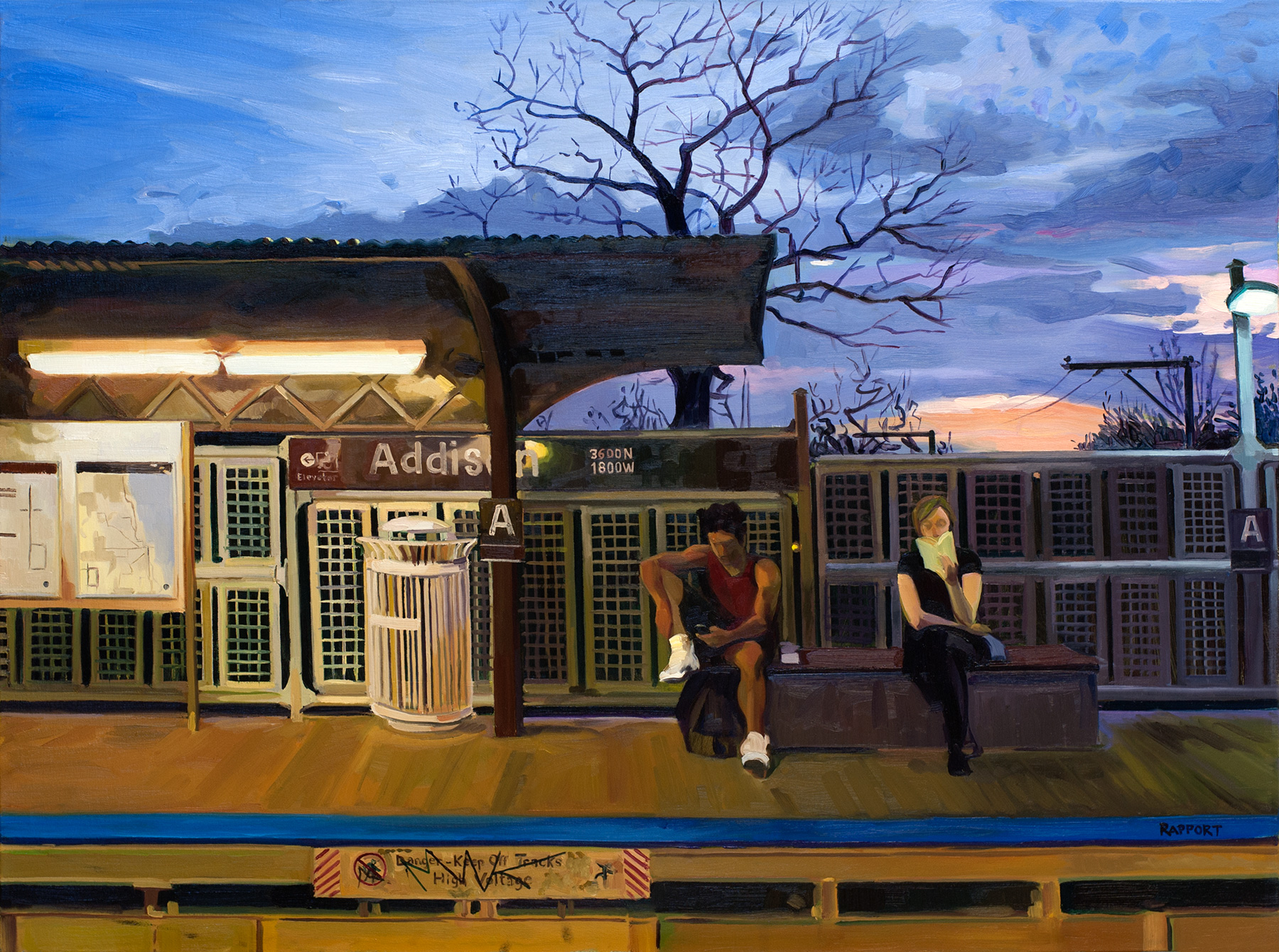
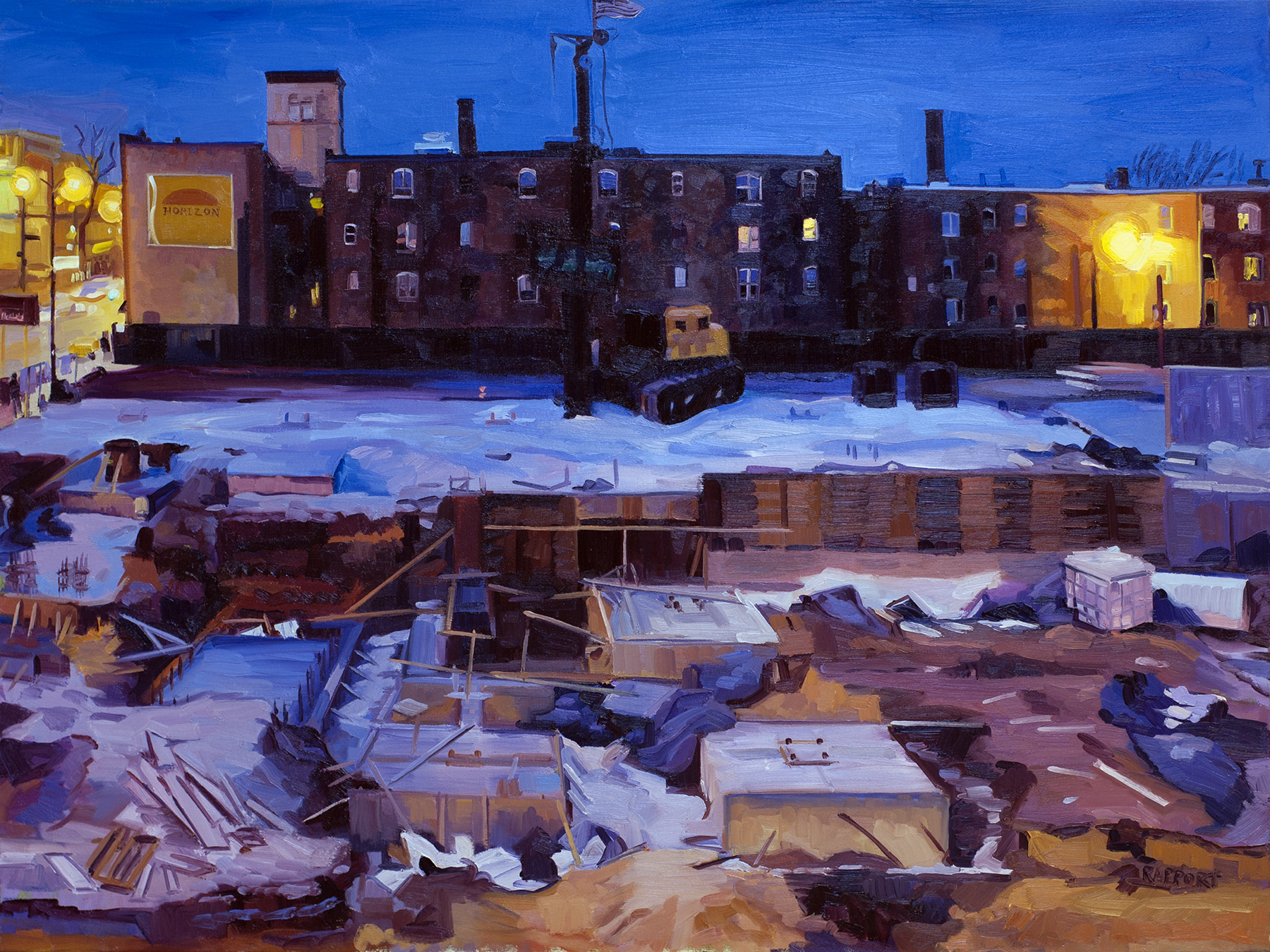
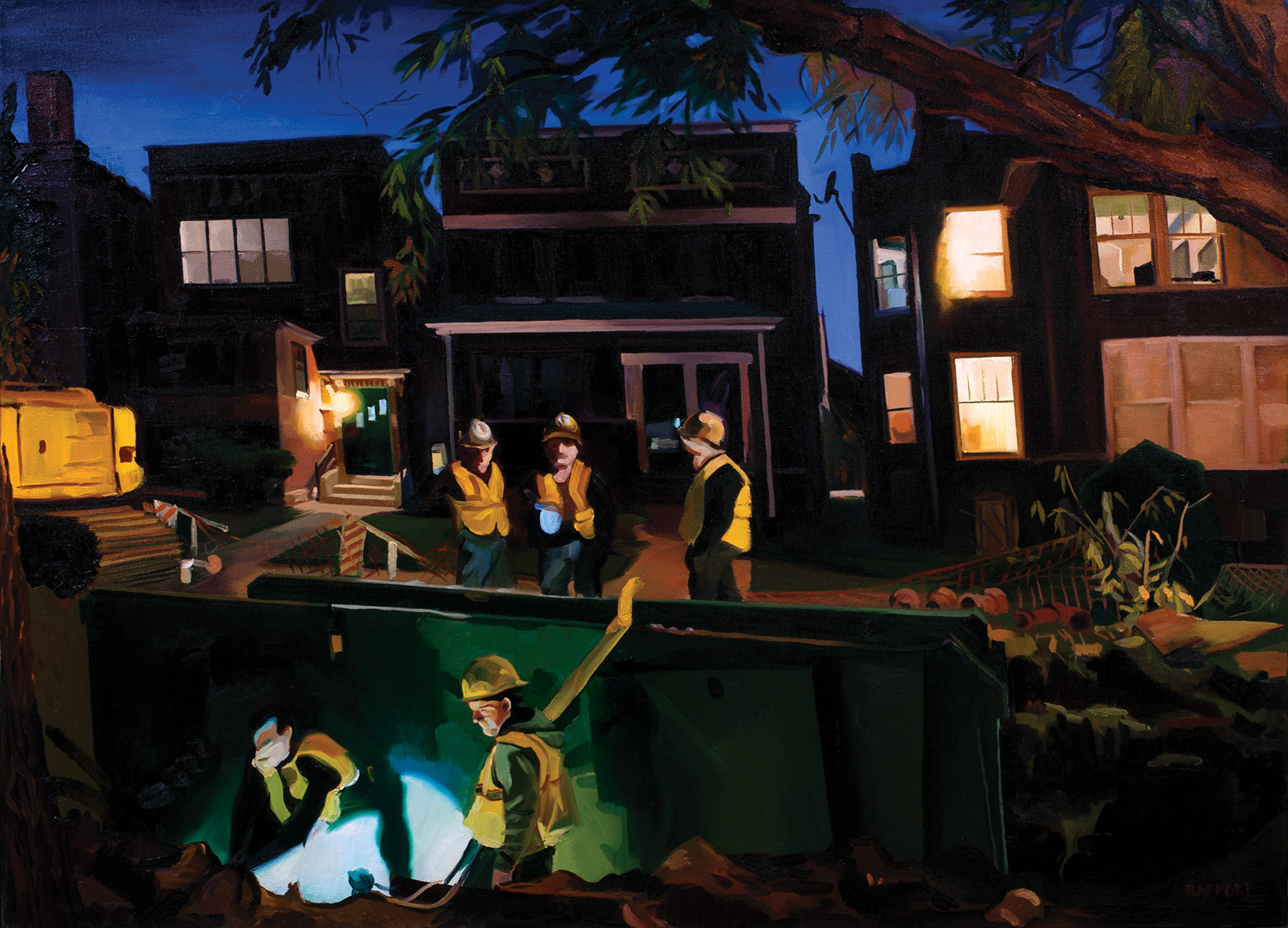
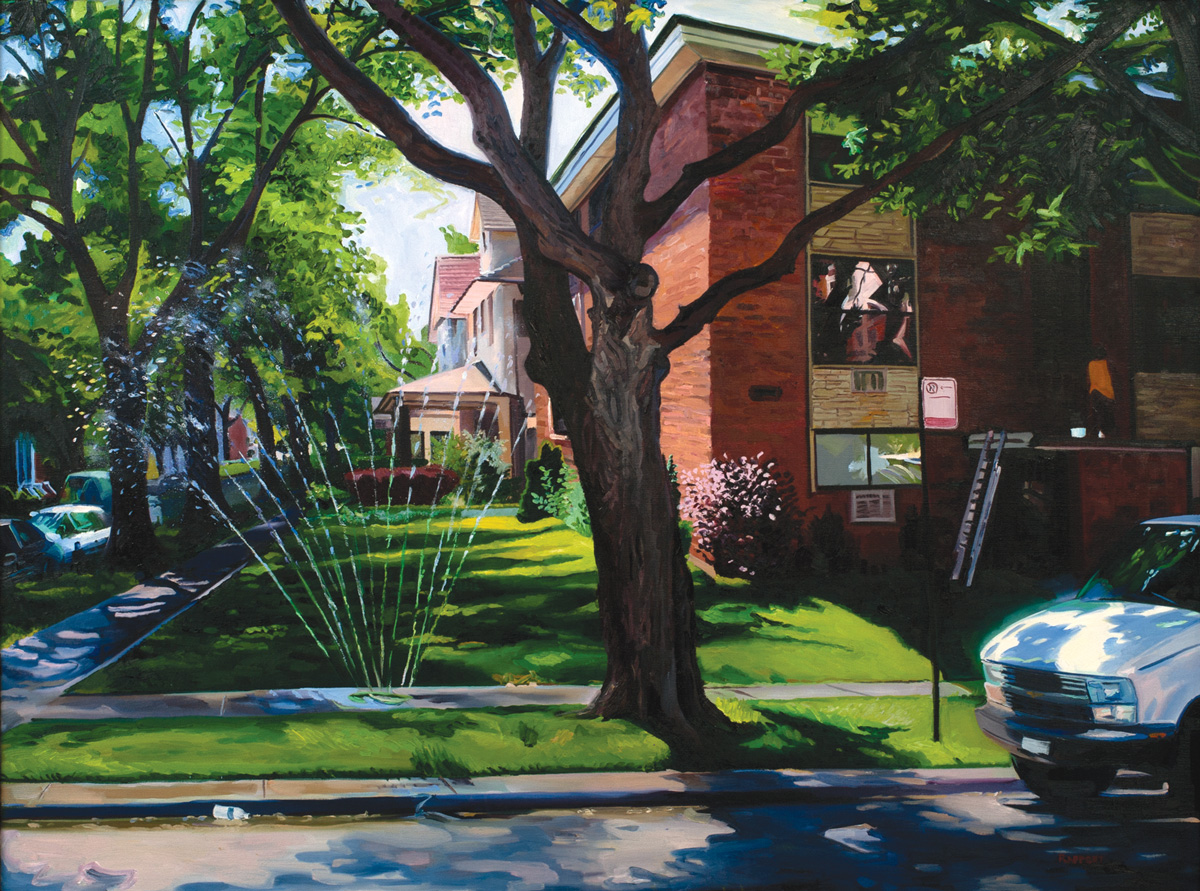 Image Credit:
(c) Andrew Steiner
Getting in touch: VoyageChicago is built on recommendations from the community; it’s how we uncover hidden gems, so if you know someone who deserves recognition please let us know here.


