



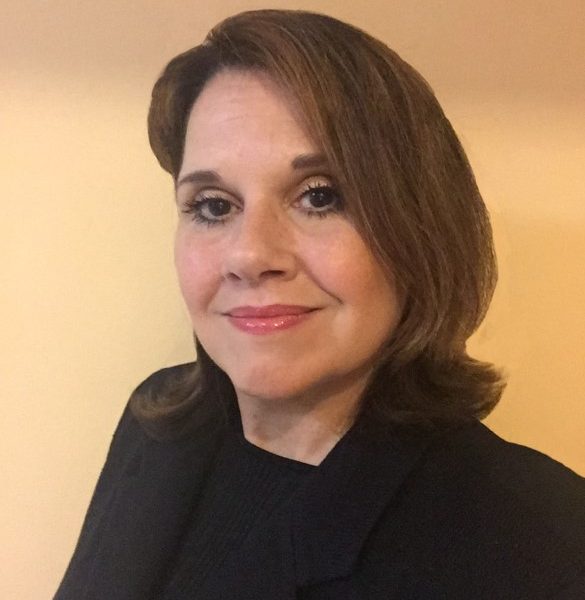
Today we’d like to introduce you to Maribeth Vander Weele.
Maribeth, let’s start with your story. We’d love to hear how you got started and how the journey has been so far.
I launched the Vander Weele Group in 2003 after working as a journalist for the Chicago Sun-Times, then as a member of the Chicago Public Schools’ management turnaround team, and eventually as the system’s Inspector General. With each transition—from journalism, to the government, and then to the corporate sector—I learned new methodologies, new styles of communication, and new competencies. Despite the learning curves, the journey ably equipped me for my current work, which requires a broad base of knowledge over multiple sectors.
Whatever the sector, our company mission has been consistent: to equip leaders with information they need to drive change. Leading a large organization is challenging—and accurate information in environments fraught with competing agendas and siloed divisions is hard to come by, particularly when it comes to sensitive investigative and compliance matters. We use multiple tools and approaches to uncover obscure, but game-changing, information.
In 2005, the Vander Weele Group received its first federal contract. Five employees worked out of the back bedroom of my Lake Shore Drive condo. My living room was my office and conference room. Employees sometimes stayed until midnight. The condo association was patient as we worked to buy and quickly move into headquarters blocks away.
One of our first corporate projects was to analyze an organization that persuaded a manufacturer it could raise significant capital. On the verge of writing a check, the manufacturer instead engaged us to conduct an investigative analysis. We found that the organization fictionalized a board member and was incorporated to promote a controversial overseas guru alleged to have molested children misused funds, and traded body parts. A support group had formed to help ex-converts heal.
More engagements followed. We investigated and designed systems to prevent fraud in supply chains in China, Malaysia, Singapore, and Mexico. We conducted more than 170 investigative projects for a Fortune 500 company. We currently monitor government grants for services delivered to children in Illinois and visited more than 140 schools on Native American reservations in a national monitoring program. We also support an anti-corruption project for the government of Indonesia.
We’re always bombarded by how great it is to pursue your passion, etc – but we’ve spoken with enough people to know that it’s not always easy. Overall, would you say things have been easy for you?
Twenty years ago, prosecutors prioritized violent crimes, drug crimes, political corruption, and organized crime over white-collar crime. In large organizations, internal schemes were frequently kept internal, undisclosed to the public or to regulators.
Then a series of societal changes occurred. The Internet exploded, information moved online, and data could be manipulated on a massive scale. A series of frauds of epic proportions and new laws required stepped-up enforcement. In the area of foreign bribery, for example, SEC fines amounted to more than $3.3 billion in 2016 alone.
With the explosion of regulatory investigations, many types of firms entered the investigative business. One challenge is helping corporations understand the appropriate role for each type of investigative talent. Attorneys, accountants, traditional fraud investigators, and information technology experts each have a specific role to play in large-scale investigations, but corporations can spend an enormous amount of resources unnecessarily if they don’t discern the difference.
Our second challenge is communicating the advantage of one particular aspect of our work: investigative intelligence. People think of this work as a background check—a commodity—when, in fact, it’s a risk analysis, drawing on thousands of pieces of information derived primarily from public records. We pull together information that tells a story, frames discussion, and fuels strategy.
Helping buyers of investigative services understand these nuances can be a challenge.
So, as you know, we’re impressed with Vander Weele Group – tell our readers more, for example what you’re most proud of as a company and what sets you apart from others.
Whatever sector we serve, we employ multi-disciplinary teams that gather detailed information that fuels strategy. We excel not only at discreet fact-finding but at analysis. I have made it my life’s work to understand the drivers of sound judgment—and a critical aspect of this rests on having accurate information about sensitive matters.
Another key is objectivity. It amazes me that accomplished leaders draw their intelligence about high-stakes matters from advisors incentivized to make deals go through. Negative facts get conveniently buried or never surface at all. In contrast, our work has changed the selection of a public company CEO, stopped potentially disastrous deals, and saved one client from astounding losses because of a customer that, a year and a half after we identified significant red flags, was shut down amidst massive fraud, leaving $800 million of liabilities in its wake. Through data analytics to detect fraud, one project led to the reduction in credit card expenditures of approximately $5 million a year. Our grant monitoring programs employ a softer approach that includes a great deal of technical assistance to improve services to children and families.
Many of our methodologies are rooted in my work as an investigative journalist for the Chicago Sun-Times and, in my earlier years, the Daily Herald. Reporters do not have the luxury of gaining investigative information through subpoenas. They must rely on ingenuity, persuasion, and a deep knowledge of the vast array of public information that is available, either in hard copy or online. Of course, transitioning to business requires a low profile and discretion—and that comes second nature to us. My own skill sets are just the beginning. We have 20 talented employees with a broad base of knowledge beyond my own. They teach me things.
So, what’s next? Any big plans?
We believe corporate owners will become more sophisticated in how their companies manage investigative projects, which have cost corporations as much as $1 billion. As corporations—and government—gain sophistication, so will their ability to discern what firms to engage in what matters. Our goal as a boutique firm is to serve as an effective resource in the mix and provide an independent perspective on how investigative resources are applied. We are working also to expand our grant monitoring practice, particularly in education and human services. Finally, I am releasing a new book called, The Joy of Job, An Investigator’s Perspective on the Most Righteous Man on Earth, which provides insights into the Biblical character of Job.
Contact Info:
- Address: 4725 North Sheridan Road, 1-S, Chicago IL 60640
- 16103 LaSalle Street, South Holland, IL 60473
- 975 South Durkin, Suite 201, Springfield IL 62704
- Website: www.vanderweelegroup.com
- Phone: (773) 929-3030
- Email: info@vanderweelegroup.com

Getting in touch: VoyageChicago is built on recommendations from the community; it’s how we uncover hidden gems, so if you know someone who deserves recognition please let us know here.


