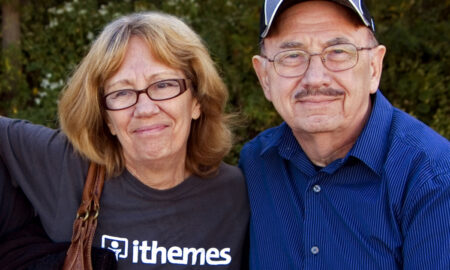




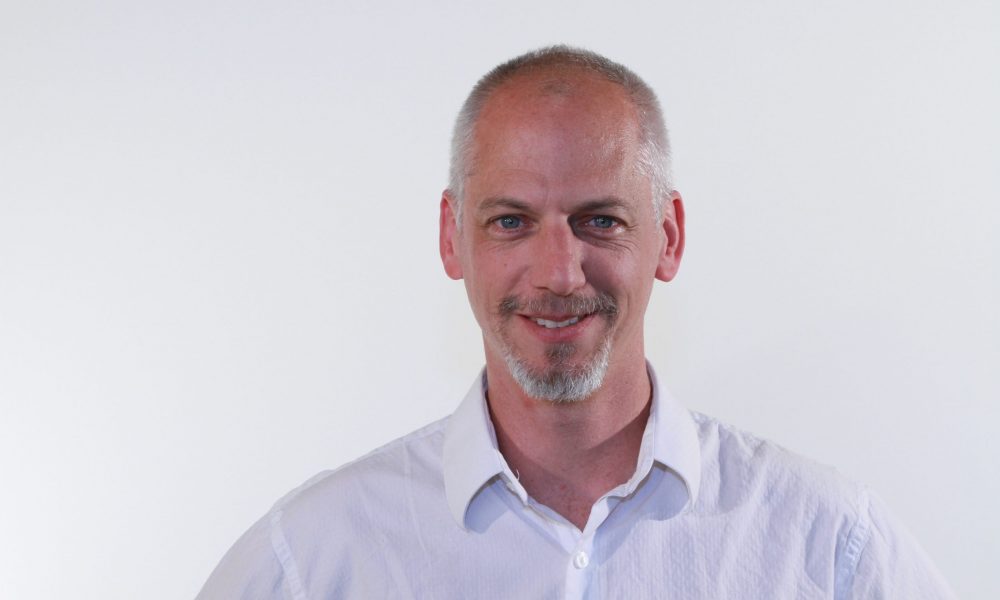
Today we’d like to introduce you to Ric Edinberg.
Ric, let’s start with your story. We’d love to hear how you got started and how the journey has been so far.
Once upon a time, before Instagram and Pandora (before there was even texting), in some earlier life, I had passionate dreams of becoming a professional artist. I studied at the Art Institute of Chicago. Libraries were my sanctuary, coffee shops my living room; I cherished this time to just create.
I started doing projects that were larger in scope; I stretched to find skills I did not yet have – a dynamic that has followed me throughout my life. These projects were often more integrated with the world than a single art piece could be. I once developed an exhibition called “The Fight to Fly” to tell The Department of Aviation’s story. I interviewed many of the Chicago chapter of the Tuskegee Airmen, collecting their stories, along with photos and objects I used to present their incredible saga in large images along two long connector tubes at the airport. I would later understand that I was actually using ethnography and the tools of research and design to create this story, not just art.
Out of nowhere, tragedy struck. My brother, then an emerging architect in Miami was suddenly killed in a rampage shooting one night. This marked me in ways I suppose I am still figuring out, even though it was a long time ago now. One positive thing was that it reinforced my love of people. As an artist, I think I had always had this desire to stay on the margins and this idea lingered that there were many things I simply could not do from that point of view. This fear seemed trivial in the wake of such an event, and disappeared.
When I ventured out into the world again, I began writing for a CRM tech startup near Dean Kamen’s company in Manchester NH. I married the most amazing person. I had a tiny salary, but made a lot of money with shares from the startup when it went public, so we both quit our jobs to travel. We tried to stretch our money and explore as much of the world as we could. I remember the arguments we would have about splurging, whether to stay in a room with an actual window. While we were in the middle of the Thar Desert in NW India, most of our money was lost in the crash of 2000. So, my advice: get the room with the view while you can.
Too young and naive to comprehend the seriousness of our financial loss, I did what any self-respecting artist would do: I enrolled in a graduate school of fine art — this time in NZ. I was in heaven there! The built structures, creatures and even insects fascinated me. I used to call that inspiration; now, I call it research. I experimented by making things in ways and with materials new to me. At work, we now call that process prototyping. For me, the art that survived my experiments were the byproduct of learning. But my wife needed to start her career and I was securing contacts on the other side of the world, so I followed her back to Chicago and enrolled again as a graduate student with the Art Institute.
A few weeks in, the twin towers fell. Ironically, the thing that was most pivotal in my life (Art) suddenly seemed inadequate to me in that world that followed. It felt like the veneer was removed from some awful ugliness, it was familiar but this time on a much more public scale. I did sense then that things might have a chance to be rethought, that the world was ready for a shift and I wanted to be a part of that in some way.
I accidentally found my way to study this arcane alchemy we now call User Centered Design at the Institute of Design. Doors opened; I entered, and soon, I was addicted. My patient wife, understandably, was getting a bit perplexed by the plan as my passion shifted from art to user centered design, but she stuck through my weekly intern commutes to the Mayo Clinic Innovation Lab in Rochester Minnesota, then after to Steelcase in Grand Rapids. I recall I left Steelcase for good on a Friday, interviewed with a firm in Chicago at 7:30 am the next Monday, and was hired a few hours later to start on a project. It went like that for the next 7-8 years, as I grew my solo practice working for many clients locally and internationally.
Great, so let’s dig a little deeper into the story – has it been an easy path overall and if not, what were the challenges you’ve had to overcome?
I guess I have always felt like a stranger in a strange land. I came to Chicago from a small-ish city in Massachusetts, so I was sort of the country kid in big city. I always felt some of my artist peers wanted to be artists more than they made work, so that made me a kind of prude who didn’t socialize as much (I did, but others went a little overboard). I always found ways to take classes out of order, to make my own path through the system. I guess innately I always felt these systems were there for me to use as I saw fit, not the other way around. Somehow, I was taking graduate literature classes as a freshman, though I won’t discuss the outcome of that class. I always figured that life was going to be like that anyhow, so I’d better get used to being able to deal with chaos and put things together for myself as best I could. That hasn’t really changed.
I did flunk the brutal all-day Saturday accounting class I took later in graduate school (don’t ask why I took an accounting class in design school – I like to claim I had a prophetic vision that someday I would need it, which is half true, but the real truth is that my friend convinced me). For the record, I consider him very smart, and he got a C). I experienced being the worst at something; I think I got a 3 on my midterm. The irony isn’t lost on me, as only a few years later, I was destined to spend a lot of quality time looking at QuickBooks and taking my favorite accountant to repeated lunches mining his mind about running a business. I would be remiss if I did not also mention the countless conversations with my lawyer, which shaped my understanding of contracts and structuring international businesses. It was a far cry from ceramics, printmaking, woodworking and paper sculpture, but my material was no longer ink, wood or paper; the medium became my business. Just as in my artist days, I needed to understand the limits of what these strange and magical materials of capital, people and organization could achieve. It turns out they can combine to do quite a bit.
When I was a freelance consultant, I loved the variety and the people I worked with. Little did I know that I was actually observing at a bit higher level what makes a great place to work and what doesn’t. This helped me enormously when I became a partner at INSITUM and opened the US office at the very bone-chilling bottom of the recession. (Yes, I’ll admit it. I started a business then. I was pretty naive). My past life as an artist, who was shall we say economically marginalized had trained me to be quite resourceful – I had learned how to make the best of what I had. That mental model helped us claw our way forward and as the economy recovered, I found we were ready to recover with it. It was slow-going at first, as we learned hard business lessons – dealing with the IRS and understanding and purchasing such esoteric things as liability insurance. It was not all glamorous, I will say. (But neither is being an artist, I am here to tell you!).
I won’t lie, there were many times I had no idea if we would survive the month too many times over the years. I often used images of roller coasters and zombies in my annual meetings with my international partners to communicate our reality. I think my partners to the south thought it was funny as America is not known to have such volatility compared to the economic volatility of Central and South America. I have to give them credit for having faith and patience in me, or maybe they just liked my sarcasm. Fast forward to now, and we are a highly trusted firm with many repeat clients doing projects all over the world. It’s hard to believe as I still feel like that wide-eyed artist not really knowing what or where the next project will be. I suppose in some ways I still am. It still feels as exciting and unpredictable but now it’s about making a bigger impact with our clients and more ambitious projects that take us to Nigeria to understand how people may use new Wi-Fi infrastructure, or to try to figure out how to spread better farming practices among chocolate farmers in the Ivory Coast, or how to help transform a financial company’s technical infrastructure without losing its human capacity.
Insitum – what should we know? What do you guys do best? What sets you apart from the competition?
We get paid to be deeply curious about the world, share what we find and then we get to try to change some part of it. I love what we do and, even more, I love what we enable. I consider myself one of the luckiest people alive. It didn’t start out that way, of course.
It really has been a fun ride! In addition to Chicago, we have offices in 6 countries in Latin America and one in Barcelona. We work all over the world. Right now, we are working in projects right here in Chicago, but also in Indonesia, China, Brazil, Philadelphia and New Jersey. They are all interesting in their own way. I guess we are known to do solid exploratory work to uncover opportunity, especially in larger more complex situations. We can then capitalize on this with innovation work, which is a structured way to identify and then develop solutions. Our capabilities are not endless, so we partner with many firms who have what we don’t. (I guess we play well with others, which is not always true, sadly).
I am now a partner running a strategic innovation company that helps organizations of all types understand and then execute innovation around the world. We have recently reorganized ourselves into 9 practices and I am leading the Healthcare Practice, which means in addition to managing the US office, I am working with a networked set of people across all our offices to get organized, learn from each other and deepen our talent within the sector. I am also involved in many of the other ones at various levels as well, such as what we call Digital Strategy (the digitization of everything) and Service Design (designing services as the name would imply) and what we call Organizational Innovation (helping organizations set up internal innovation strategies, structures and capabilities). I have a desperate problem of being genuinely interested in a wide variety of things all at once I guess. But, there is so much going on and it’s very hard to sit to the side of something interesting.
Our firm is not alone. There are many great firms out there doing incredible work. This trend has been going on and building on itself for decades, in fact. Many of my peers and friends have been acquired by large companies or large consulting firms to prove the point. I think the value INSITUM brings is to mediate between the company as it exists today and the reality in the world. There is often a kind of tension or blindness – maybe a lag time is a better way to put it gently. Consumers are mostly ahead of the thing they are consuming and the service is often lagging behind what it could be. An extreme example of this is jury duty. I tried to find out who owns that experience, who defined it, and if there was a possibility of reinventing it.
Turns out no one I talked to really had any idea, “It is just the way it is” is the answer I got, “It’s good enough. Who the hell are you to question it?” Well it turns out that we are. Service designers, experience designers and anthropologists try to help redefine the status quo into something much better for people in our day. I don’t have anything against the concept of Jury Duty, but the way we treat people who are serving, the way we spend our time selecting people – Jury Duty as it is now as a process frankly probably sucked in the 1900s too. I don’t rant anymore about that at the office but we had some good ideas on how to save a lot of precious time and money in the courtroom of taxpayer money, which probably could scale quite a bit. (Government services and NGO institutions are two very exciting areas waking up to our type of service, by the way).
Sometimes our clients come to us with specific challenges and sometimes we have to find out what the challenges are. We often find ourselves acting as a sort of translation layer between many disciplines inside with various stakeholders and outside the company with customers, or layers of external stakeholders in a supply chain or business to business context. We often find ourselves dealing with a big degree of complexity in topic, variances in levels of diplomacy; we deal with humans, systems and technology trends, among other things. We have ways to understand and communicate complex situations, find consensus, facilitate ways to prioritize what is important and develop appropriate solutions.
I would be narcissistic to gloss over one small thing I have always tried to do. I find, hire and grow much smarter people than me. Don’t tell my team; it will go to their heads. Truly, I think I have the best team I have ever assembled right now, they are really the main reason for our success. I give them a wide berth to be curious about the world to question things and to think through what we are dealing with in a given situation. This is probably the best part of my job, seeing people bloom and really push their minds into spaces we as designers never imagined 10-20 years ago. A few years ago, we were collaborating with another firm and I found myself in Nigeria studying how information flowed through the Nigerian police system. It’s a longer story than I can get into right now, but that is a very long way from researching the process consumers go through making Mac and Cheese, which I did as project several years before.
So, to do this type of work, we have to be constantly curious about lots of things: AI, internet of things, new technologies and how they shape human behavior such as in behavioral economics. It doesn’t mean we are geniuses (though I think some of my folks are); it means we are just aware enough to know there is something to pay attention to in a given situation and to dig deeper, find an expert and find out more when needed. So in our case, curiosity doesn’t kill the cat, it makes us more valuable.
How do you think the industry will change over the next decade?
I mentioned government and NGOs before. This has been coming for a while, but it’s just getting to be a full-fledged trend I would say. I think it’s safe to say we could use some help in these sectors, as the status quo is not going so well. NGOs, at least the smaller ones that actually do the work, often have less money to do much more and the larger ones need to spend what they have in much more intelligent ways to actually have their desired impact. Government, well maybe, I should just leave that one alone.
I’ll give you an example that is non-partisan. I just returned from my semi-annual partner meeting in Buenos Aires. My peers there are working on a project with the local government to revisit/reinvent the process (and experience) people have when someone dies. This has more to do with the back-end systems and sequences of information flows, but it has enormous ramification to the experience of a survivor after a death. For anyone who has had to deal with probate, you know what I am talking about. So, we are seeing firms like us work on reimagining systems and touch points that flow across multiple silos within and across organizations – in this case hospitals, government institutions, funeral homes, families. We have to be very careful not to simply digitize an inefficient system, which frankly happens a lot.
I heard a wise man named Sam Pitroda once say that “we have 19th century mindsets, 20th century processes and 21st century problems.” I don’t believe we have the time or resources left to make these kinds of mistakes. They may have been useful at one point (Perhaps I am being generous.) though I think whoever invented the TSA experience should be punished by being given pre-check and having to wait in the security line at Thanksgiving for their paycheck. The truth is that most of the things in this world, whether it’s wiring money, waiting for a bus or paying taxes have many reasons for being designed the way they are. I am going out on a limb and saying that not many those reasons have anything to do with real user needs. They have everything to do with internal system needs, technology/business needs, perverse incentives, or worst of all, the tragedy of the commons where an experience is really just the sum of a set of requirements from lots of different silos and, really, it is not designed, it is merely executed to check all the requirement boxes off. I would put Jury Duty in this category!
Our favorite clients are ones who have awakened to the fact that they actually have to provide something of real value – that today you cannot only market and advertise your way to success. We have done 21 projects now for one client, (without being hokey, they are more like family now), and what excites us most is that they are truly transforming a massive company in a new direction, enabled with cutting-edge technology blended with capable human experiences for their customers. In the end, they will be a new company, able to compete in the 21st century. And, unfortunately, we are seeing the reality of companies who do not recognize this brutal fact as they slowly wither and enter into hospice mode.
So, there are many sectors we are working with now and many more we expect to be involved with. We are helping to establish internal innovation capabilities within organizations. We are also working in industries that are somewhat new to our work. For example, we have done about 6 projects in Africa. About half of those have been agriculture and farming practice/supply chain-focused. These were in highly fragmented markets with hundreds of thousands of smallholder farmers. We are also seeing opportunities for evolution and revolution in the mechanized or big agriculture sector/food systems right here at home. We are working with startups, so I am imagining at some point Venture capital will come to realize they might make better use of their capital; and instead of using startups as market probes, they will find ways to use design thinking and systems innovation to better enter the market with fewer and more efficient offerings. Right now, they have too many offerings and are only realizing this after all of their money has been spent.
I think, ultimately, it’s pretty simple. The world we have is the world we have designed, perhaps some of which is by default. But, by and large, it’s on purpose. Red light cameras, anyone? Privatized parking meters? We believe it is our collective obligation to design it in another way. And bit by bit, that is what we are doing. And we certainly have much to do!
Contact Info:
- Address: 930 Pitner Ave., Unit 12
- Website: www.insitum.com
- Phone: 3122827656
- Email: ricedinberg@insitum.com
- Instagram: https://www.instagram.com/insitum/
- Facebook: https://www.facebook.com/insitum
- Twitter: https://twitter.com/insitum


Getting in touch: VoyageChicago is built on recommendations from the community; it’s how we uncover hidden gems, so if you know someone who deserves recognition please let us know here.