



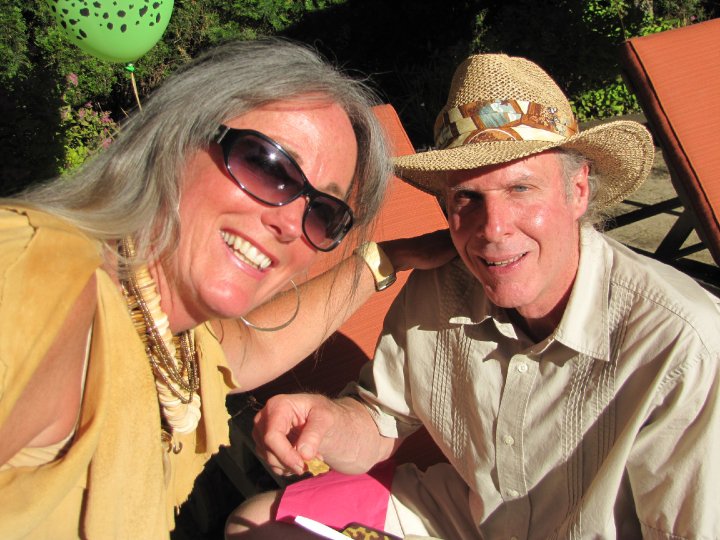
Today we’d like to introduce you to Peter Spann.
So, before we jump into specific questions about the business, why don’t you give us some details about you and your story.
I enrolled at a liberal arts college in New Orleans in 1969 with no particular career path or interest in mind other than the vague notion of attending law school in the future and having a student deferment to keep me out of the war in Vietnam. To earn spending money I took a job waiting tables at Brennan’s Restaurant and before my first shift the captain I trained under asked me how much I knew about wine. I told him I’d had Boone’s Farm Apple Wine and Blue Nun Liebfraumilch and he said “O.K., so you know nothing” to which I heartily agreed. He then said “here’s your first lesson, fine wine is made to compliment food”. At 19 years old I found this concept fascinating and finely found direction for my life.
The wines we served were mostly European, as U.S. wines were considered far inferior to imported ones at the time. Many diners were asking for recommendations and advice on wines because compared to today, very few people in the U.S. drank wine with any regularity. I knew I’d never be at or near the top of my class at college but after a few months of waiting tables I probably knew more about wine than 90% of the people in this country.
Upon graduation I went into management at the restaurant and a few years later left to start my own French restaurant with a group of partners. One recession later we were out of business and I decided that the wine business had to be easier than the restaurant business so I started a new career path that took me through retail wine store management, wine wholesale, wine importing, sales and marketing.
The 1970s were an opportune time to be involved with wine as fine wines were still underappreciated and multiple vintages of great wines were readily available at comparatively low prices, although the best were still out of reach for me. In the mid-1970s over-supply and over-speculation in futures-buying of top Bordeaux wines caused a market crash and prices dropped to half of what they’d been and suddenly at age 25 I could enjoy the best wines in the world. I joined a wine tasting group with others in the industry and for several years found myself at a vertical tasting of six vintages of Chateau Latour one week, followed by six from Lafite Rothschild the next week and a similar line up of Chateau Margaux the next. Then we’d do a horizontal tasting of all of the Bordeaux First Growth Wines from 1970, followed by the same lineup from 1966, then all the premier crus of Puligny-Montrachet and so on. These tastings were done “blind” so the challenge was to name the vintage, the producer or the region based on what we’d learned or read about the typical characteristics each element might be identified by. This not only sharpened my palate but also gave me a great education on classic wine styles and helped to define my preferences. We split the cost of these wines and typically paid around $15 each for the tasting. A similar tasting today would cost more like $300 to $1,000, if you could even secure the wines. I’ll never again be able to afford to imbibe as well as I did when I was in my 20’s.
The wholesale company I worked for handled the wines of Beaulieu Vineyards, then considered the best winery in America, with Andre Tchelistcheff as its winemaker. My next great lesson in wine came during a lunch with him when I asked if there was one quality he felt was inherent in all good wines. Paraphrasing him, “in your mouth wine should be round, like a ball, with nothing sticking out and no rough edges”. This expressed exactly the qualities I liked in wines but had never been able to state so succinctly. I enjoyed wines that felt rich in my mouth but didn’t like them if I felt sharp acidity, high alcohol or rough tannins.
This lesson was completed while working as a harvest intern at Pine Ridge Winery in 1986. I asked then-owner/founder Gary Andrus, who had trained in Bordeaux, what the differences were between the five classic red grapes of Bordeaux and what each contributed to a blend. He poured barrel samples of each for me, then turned the tables. He told me to describe each wine to him without talking about aroma or flavor. I said “what else is there” and he replied “touch, tell me where they touch you”. For me this was a whole new way of thinking about wine and it taught me why and how to blend. In tasting through the varietals I realized that each one was prominent in a different part of my mouth and the right combination of grape varieties could give a wine the round, complete mouth-feel that I liked and that certain grapes could cover over the tannins or roughness of others. Since then, every time I tasted a new grape variety or wine region I’ve thought about the aroma, the taste and where it goes in my mouth.
With a wealth of knowledge gleaned from these and other great winemakers, my wife Betsy and I started Spann Vineyards in the Mayacamas Mountains of Sonoma Valley in 2001. Most of our wines are blends of between two and six grape varieties. All are both enjoyable by themselves as well as being food-friendly and all are very smooth in the mouth, touching you everywhere.
Has it been a smooth road?
We bought an existing vineyard in 2000, at the height of the .com boom, with the idea of growing and selling grapes while I worked for a San Francisco-based wine importing company. The following year came the .com bust, a recession and then the 911 terrorist attacks, the combination of which made the bottom fall out of the grape market. With no demand for our grapes our only choice was to make wine. The question was where and how. We started calling wineries to ask if they would “custom crush” our grapes for us and found that everyone was in the same predicament, tanks full and no room for any excess wine.
One spec of relatively level ground near the gate to our vineyard had been left unplanted so we built a 10′ by 20′ deck with some redwood boards that had been milled from trees cleared from where the vines now were and left behind by the previous owners of our property. We bought a canvass carport for $300 to put on the deck and that was our first winery. There was no electricity in the vineyard so we bought a gasoline-powered generator to run a small de-stemmer/crusher on. We also bought a basket press that operated on water pressure. For this we used the generator to power a pump connected to a hose running to a nearby spring.
Just after picking and crushing the fruit the daytime temperatures rose to unseasonable highs which caused the fermentations to go more rapidly than we wanted. Our only way to cool off the juice and slow down the ferments was to sleep in the vineyard and take turns getting up through the night to push down the skins that rose to the top of the juice in each bin and expose the wine to the much cooler night air. That first Cabernet Sauvignon, made under the most rustic conditions by novice winemakers with no formal winemaking education won a Silver Medal at the Sonoma County Harvest Fair and we knew it could only get better from there.
So, as you know, we’re impressed with Spann Vineyards – tell our readers more, for example what you’re most proud of as a company and what sets you apart from others.
Betsy and I are the only full time employees in our company. We divide up the duties based on what each of our strengths and interests are. She is the vineyard manager, winemaker, bookkeeper, government compliance specialist, packaging designer and bottling coordinator. I’m the cellar master (I get to drive the fork lift!), the sales and marketing director, the tasting room manager, the barrel buyer and I handle most of the relationships with grape growers we buy from.
We are artisan producers making the style of wine that is most pleasing to us and we seek out customers whose taste preferences match ours. We’re known for our incredibly smooth wines that have good flavor intensity without feeling heavy or tasting “oaky” or rough. Many of our blends are unique, using grape combinations that no other wineries have ever done. We love having the opportunity to taste with and talk to customers in our tasting room and teach them the lessons we’ve learned about wine.
After selling wines made by many other people it’s been very rewarding to start our own brand from scratch, designing not only the wines but also the label and the winery building.
Let’s touch on your thoughts about our city – what do you like the most and least?
What I love about Sonoma County is the energy that is all around us. After living in the flat lands of New Jersey, New Orleans and Dallas, it seems that the mountains and the 100 foot tall trees that surround us give an uplifting, can-do spirit that keeps us going despite any obstacles.
Pricing:
- The retail price range for our wines is $19 to $65, with the average price being $33 per bottle.
Contact Info:
- Address: 8910 Sonoma Highway, Kenwood California 95452
- Website: www.spannvineyards.com
- Phone: 707-282-9143
- Email: peterspann@spannvineyards.com
- Facebook: https://www.facebook.com/search/top/?q=spann%20vineyards
- Yelp: https://www.yelp.com/biz/spann-vineyards-kenwood


Getting in touch: VoyageChicago is built on recommendations from the community; it’s how we uncover hidden gems, so if you know someone who deserves recognition please let us know here.


